 Photo: Deconstructhis · Public domain
Older housing stands out in Exeter: 42% predates 1961
Exeter has 2.4 times what the typical town has (18%). Parkhill, 25 km from Exeter, heads a list of 25 historic places within 50 km. The nearest town with a top designation is Parkhill, 23 km away. Of the 9 people born in Exeter before 1914, Charles Trick Currelly came first.
Around Exeter, within 50 km, the dated heritage reaches back to 1827
The nearest historic places to Exeter, out to 50 km, by the first construction date on each record.
The earliest is Middlesex County Court House in Central London, begun in 1827. Within 50 km, building dates exist for 23 places. Before Confederation: 7.
25 historic places within 50 km of Exeter
By designation: 16 provincial or municipal listings, 8 National Historic Sites and a heritage railway station. Closest of all is Parkhill, in Parkhill, 25 km off. Central London, Stratford and Goderich hold most of them, among 11 towns.
The 12 nearest, within 50 km
| ParkhillNational Historic Site · 25 km away, in Parkhill |
| St. MarysDesignated heritage property (part IV) · 31 km away, in St. Marys |
| St. Marys Junction Railway Station (Grand Trunk)National Historic Site · 1858–1859 · 31 km away, in St. Marys |
| Elsie-Perrin Williams EstateDesignated heritage property (part IV) · 1916 · 39 km away, in Masonville |
| St. Peter's SeminaryDesignated heritage property (part IV) · 1912 · 41 km away, in North London |
| Wolseley BarracksNational Historic Site · 1886–1889 · 43 km away, in Carling |
| Stratford City HallNational Historic Site · 1898–1900 · 43 km away, in Stratford |
| Victoria ParkDesignated heritage property (part IV) · 1874 · 43 km away, in Central London |
| First Christian Reformed ChurchDesignated heritage property (part IV) · 1882 · 43 km away, in Central London |
| Labatt ParkDesignated heritage property (part IV) · 1877 · 43 km away, in West London |
| Eldon HouseOntario Heritage Trust easement · 1834 · 43 km away, in Central London |
| Former Canadian National Railways (VIA Rail) Station, Stratford, OntarioHeritage Railway Station · 1913–1914 · 43 km away, in Stratford |
42% of Exeter’s homes were built before 1961
Only 11% of Exeter’s homes were built from 2001 to 2015, less than the typical town’s 15%. New building in Exeter runs at the usual pace: 3.3% of homes from 2016–21, the typical town 4.1%. Over half of the homes in Exeter were already standing by 1981.
2021 Census, private dwellings by period of construction (Statistics Canada); the typical town is the middle Canadian town of 2,500 or more.
2 national historic persons among Exeter’s people of the past
The latest, Walter H. Johns, was born in 1908. Harriet Brooks is the most written about, in 23 languages. Counting only births before 1914, there are 9. It starts with Charles Trick Currelly, born in 1876.


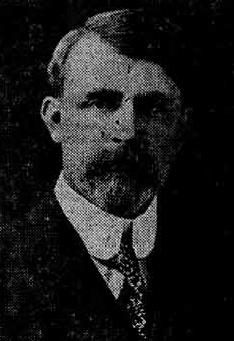
Everyone born in Exeter → Born before 1914. Birthplaces from Wikidata, each checked against Wikipedia; national historic persons from Parks Canada’s Directory of Federal Heritage Designations, matched by name and life years.
How Exeter compares with 16 towns its size
Towns of 10,700 to 10,800 residents, by places on the registers.
Just these have more: Eastern Passage, Contrecoeur and Alexandria. The typical town its size has 0. 13 of them have nothing on the registers.
Exeter and its neighbours
Exeter in brief
Older stock first: 42% of homes in Exeter were standing by 1961, against 18% in the typical town. Of its people of the past, the best known are Harriet Brooks (1876), James Garfield Gardiner (1883) and Donald Fleming (1905). Towns its size usually have more historic places; the middle one has 0.
What this data can and can’t tell you
- The grade. History is described, not graded, for every Canadian town.
- Provincial and municipal lists. The local and provincial lists outside Québec aren’t published openly, so this page counts what Wikidata records and pages only the places an encyclopedia describes.
- The tiers. Three tiers: the top for National Historic Sites, classified federal buildings and Québec’s classements, a second for the other federal designations, a third for provincial and municipal listings.
- Protection. National historic designation honours a place but binds only federal owners; a private building’s protection depends on its province or municipality.
- People and events. Persons of national historic significance come with no location; a town gets one only by birthplace (name and both life years agreeing) or by one of its own places that bears the name and whose record tells the story. Events, which can’t be tied, are left out.
- The federal register. Federal places come from Parks Canada’s directory, which counts National Historic Sites, federal heritage buildings, stations and lighthouses; their statements are the register’s own.
Questions about Exeter’s history
How many historic places does Exeter have on the registers?
Exeter has none of its own; Parkhill, in Parkhill, the closest at 25 km, holds the highest designation.
How old are the homes in Exeter?
Before 1961: 42% of its homes; the typical town has 18%.
Why might a heritage building in Exeter be missing here?
Its province’s and council’s own lists can’t be reused here; one further listing in Exeter shows up only as a Wikidata number.
Contains information licensed under the Open Government Licence – Canada (Parks Canada).
Sources: Parks Canada, Directory of Federal Heritage Designations · Canadian Register of Historic Places (federal extract) · Wikidata (CC0) for map points, other names and articles · Statistics Canada, 2021 Census (homes by period of construction). Under the Statistics Canada Open Licence.
Adapted from Statistics Canada (Census of Population 2021, population estimates 2025, 2021 census boundaries) under the Statistics Canada Open Licence; this does not constitute an endorsement by Statistics Canada. Neighbourhood names in some cities © OpenStreetMap contributors (ODbL).