#1
Science & Medicine
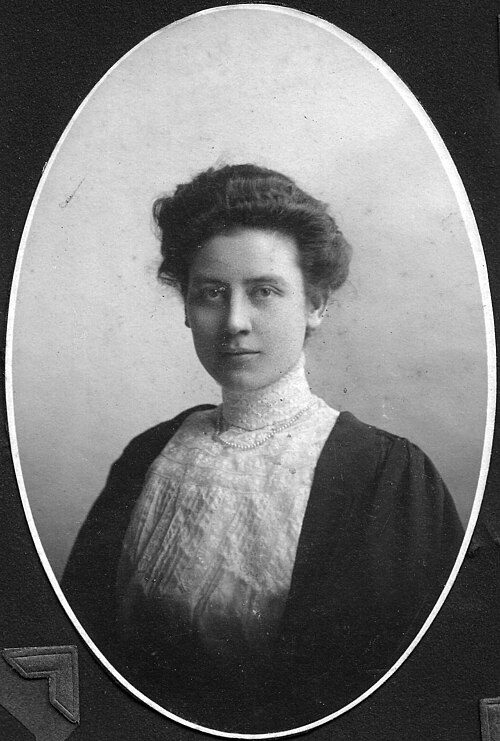
Harriet Brooks
1876–1933Canadian nuclear physicist
23 Wikipedia and sister-site articlesWikipedia ↗
Each edition grades its towns against each other only.
The best known is the Canadian nuclear physicist Harriet Brooks, with articles in 23 languages. James Garfield Gardiner and Donald Fleming follow. Between Confederation and 1913, 9 were born, the most of any period. For every 10,000 residents the town has 16.7, while at least half the towns in Ontario list nobody born there.
Exeter has 4.8× the usual share of scientists and doctors.
For comparison, the usual town: how the people listed across Canadian towns split by field. Tap a field to list its people.
Scientists and doctors take two of the three places.
#1Canadian nuclear physicist
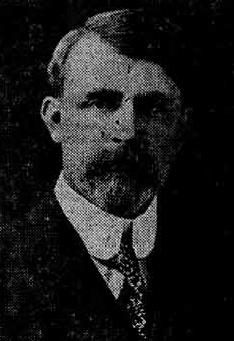
Canadian farmer, educator, and politician
 #3
Canadian parliamentarian and lawyer
More were born in the 1870s than in any other decade: 4.
One dot per person, piled up by decade of birth.
The rest number 15, with 5 leaders among them.




No one matches both filters.
Around it, Bayfield has the most people on record, 11 of them.
Harriet Brooks (Canadian nuclear physicist) comes first, by the number of Wikipedia languages that cover them. Next come James Garfield Gardiner and Donald Fleming.
24 are placed here on Wikidata; the rest have no article to confirm it.
That is 33% of the town’s list, against 22% across Canadian towns.
Harriet Brooks (1876). At the other end, the youngest was born in 1994.
Wikidata’s record must put the birth inside Exeter’s municipal boundary (Statistics Canada’s 2021 census subdivision) or one of its hospitals or districts, and an English or French Wikipedia article must agree. The list leaves out adult performers, people known mainly for crimes and anyone born elsewhere.
Often Wikidata names only Canada or a province as the birthplace, or a rural area, a hamlet or another town; sometimes the Wikipedia article names somewhere else, or nowhere. A person appears here once both agree, so a correction on either site reaches this page at the next refresh.
Birthplaces, descriptions, years, occupations and the count of Wikipedia and sister-site articles come from Wikidata (CC0). Each birthplace is checked against the person’s English Wikipedia article, or the French one where English says nothing or has no article; the articles are linked, never quoted. Wikidata’s Statistics Canada code, the place’s name or its point inside the 2021 census outline puts a birth in a town, and a birth given only as a split city stays on that city’s page. Fields are read from the description and occupations, and the list runs by number of articles. “The usual town” is everyone listed across Canadian towns. Portraits: each person’s Wikidata image, from Wikimedia Commons under the licence below (our copy, resized).
Adapted from Statistics Canada (Census of Population 2021, population estimates 2025, 2021 census boundaries) under the Statistics Canada Open Licence; this does not constitute an endorsement by Statistics Canada. Neighbourhood names in some cities © OpenStreetMap contributors (ODbL).