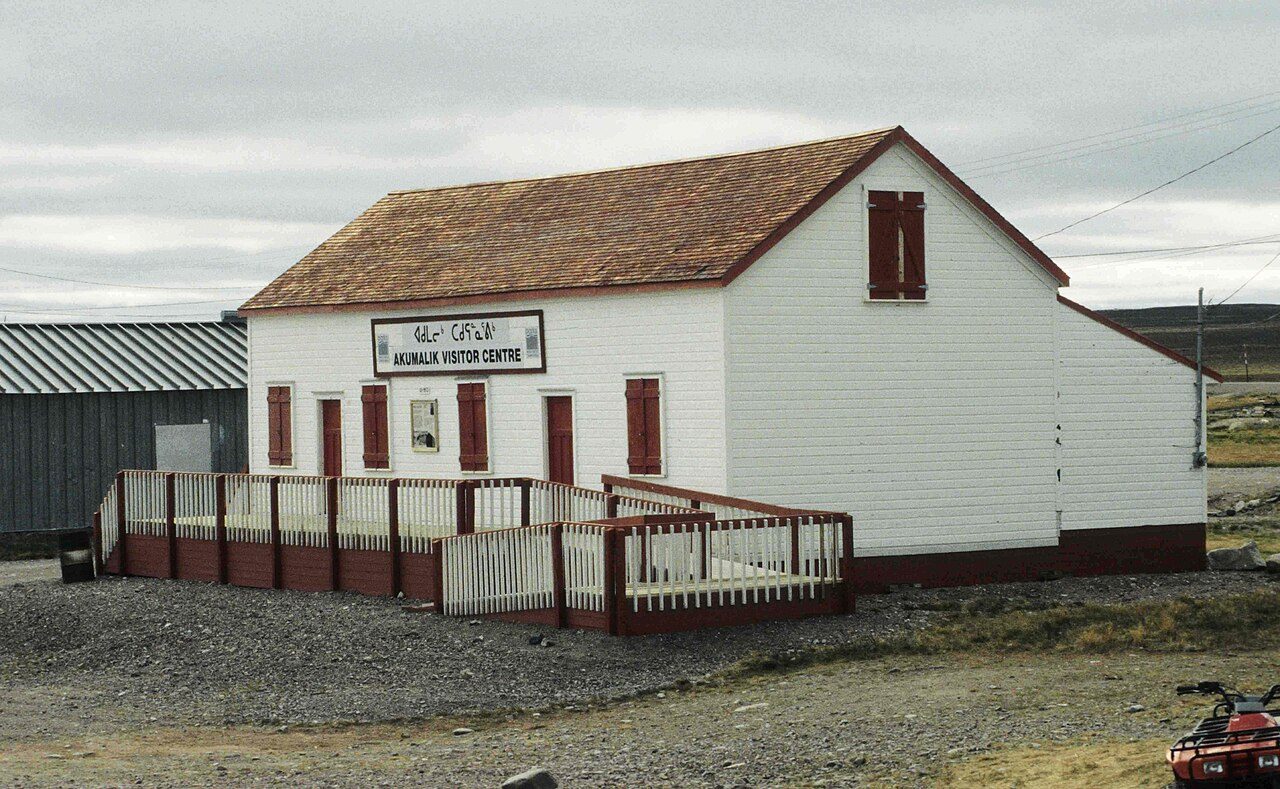
 Photo: Ansgar Walk · CC BY-SA 2.5
A median age of 25.6: Baker Lake is younger than 99% of Canadian towns
With residents aged 15 to 24 at 17%, Baker Lake is ahead of 97% of Canadian towns on that count. Fewer one-person households than in 70% of Canadian towns: 22%. Some 2,250 people live locally, by the estimate for July 2025. The share of households in single-detached houses stands at 50%.
What stands out about the people of Baker Lake
First Nations, Métis and Inuit residents
93% of residents identify as First Nations, Métis or Inuit, more than in 99% of Canadian towns; 0% are Registered or Treaty Indians, and 24% have an Indigenous mother tongue. Identity & religion ↓
Younger than most towns
Baker Lake’s median age is 25.6; the typical median across Canadian towns is 42. 32% are under 15 and 4.4% are 65 or over. Ages ↓
A town of renters
83% of households rent their home, more than in 99% of Canadian towns; 21% live in an apartment. Homes ↓
Written from the data on this page: Statistics Canada, 2021 Census.
±0% since 2016, a pace below 80% of Canadian towns
All figures are the 2021 Census’s unless another date is shown. The census counts of 2016 and 2021, the estimate after them, and the change set beside other towns.
Change, 2016 to 2021
Across Canada’s towns the median change was +4%. Statistics Canada’s estimate for July 2025 is 9% higher again.
Residents aged 65 and over: 4.4%, a lower share than 99% of Canadian towns
Age bands of five years, the town’s bars against the typical town’s ticks.
Children under 15: 32%, above 99% of Canadian towns. As a yardstick, 19% of residents are 65 or over across Canada’s towns.
Broad ages · share of residents
Women and men · all residents
48% women, 52% men
About 110 men for every 100 women.
Baker Lake: 17% of households are one-parent families, above 99% of Canadian towns
Household types, then household sizes.
Against Canada’s towns
People per household
Canada’s towns.
In Baker Lake the average household is 3.6 people, beside 2.4 across Canada’s towns. As a reference point, 8.2% of households are one-parent families across Canada’s towns.
A smaller share of married residents 15 and over than 94% of Canadian towns: 27%
Residents 15 and over by marital status; the census counts common-law couples separately.
Marital status · residents 15 and over
Against a figure of 11% across Canada’s towns, the share of common-law partners in Baker Lake comes in at 21%. The wider picture: 46% of residents 15 and over are married across Canada’s towns.
Renter households make up 83% in Baker Lake, more than in 99% of Canadian towns
Occupied homes by type, by owners and renters, and by when they were built. Prices, rents and shelter costs are on Cost of living.
Type of home
Owners and renters · share of households
When homes were built · share of homes
30% of homes need major repairs, against a typical 5.8%. To put it in context, a quarter of households rent their home across Canada’s towns. Households in buildings of five or more storeys are rarer here than in 74% of Canadian towns.
Median household income: $105,000 a year
The income year is 2020: a year of pandemic benefits such as CERB, which the figures count. Income per household, before tax, with the groups it falls into.
Households by income · share of households
Half of Baker Lake’s households had a total income above $105,000, 22% more than the median across Canada’s towns ($86,000). Emergency and recovery benefits reached 36% of those with an income, beside a typical 28%.
Baker Lake sits below 63% of Canadian towns for residents who moved in within the year (9.7%)
Immigrants, newcomers and movers.
Immigrants, by continent of birth · share of all residents; the bar runs to 20%
When immigrants arrived · share of immigrants
Citizenship and moving · share of residents
With residents without Canadian citizenship at 0.5%, Baker Lake is behind 96% of Canadian towns on that count. In Baker Lake, 1.9% of residents are immigrants. For comparison, 11% of residents lived at another address a year earlier across Canada’s towns.
Above 99% of Canadian towns: 93% of residents have an Indigenous identity
Visible minority and Indigenous identity, then religion.
Visible minority and Indigenous identity · all residents
Religion · all residents
Visible minority residents: 1.7%, below 88% of Canadian towns. Across the comparison, 2.8% of residents have an Indigenous identity across Canada’s towns. Residents with no religion account for 24%.
English is the mother tongue of 56%, and 1.5% speak French as well
Knowledge of the two official languages, first languages, and the language of home.
Can hold a conversation in · share of all residents
Mother tongue · share of all residents
Residents whose mother tongue is French are rarer here than in 99% of Canadian towns. 7% most often speak a language other than English or French at home, and 0.5% speak neither official language. Compared with 7.5% across Canada’s towns, 1.5% of residents speak English and French here.
A lower share of degree holders aged 25 to 64 than 98% of Canadian towns, at 8.8%
Highest certificate, diploma or degree of residents aged 25 to 64.
Highest qualification · residents 25 to 64
Across Canada’s towns, 27% of 25- to 64-year-olds hold a degree; in Baker Lake, 8.8%, and 15% have a college or trades credential (typical: 29%). Those with no credential make up 61%, next to 9.5% in the typical town.
40% of adults were employed in May 2021
The census was taken in May 2021, during the pandemic, so these rates show a labour market still recovering. The census’s labour rates, in brief. Jobs, industries and the commute are on Work & commute.
40% of residents 15 and over have a job, against a typical 58% across Canada’s towns; 4.4% are 65 or more.
Health, work, housing and schools
What this data can and can’t tell you
- What these tables don’t give. The Census Profile has no unpaid care, cars or internet access, and no change by age since 2016; ethnic origins beyond visible minority and Indigenous identity aren’t charted here.
- The census’s own words. Indigenous identity, immigrant status and religion are as residents answered them. “Visible minority” follows the Employment Equity Act, meaning people other than Indigenous peoples who are non-white in colour or race. We compare these figures across towns; none is a label for a town.
- Against Canada’s towns. Nunavut has too few towns of 2,500 or more for a median of its own, so each figure is set beside the median of all Canadian towns of that size (whole cities and First Nations reserves left out).
Questions about Baker Lake’s residents
What religion are people in Baker Lake?
24% said they have no religion and 75% that they are Christian; 1.2% named another faith.
Is Baker Lake good for families?
32% of residents are under 15 (Canada’s towns: 16%); couple families are 41% of households and one-parent families 17%. Schools near Baker Lake are on its Schools page.
What is the median income in Baker Lake?
Half of Baker Lake’s households had more than $105,000 in 2020, before tax; across Canada’s towns the median was $86,000.
What is the population of Baker Lake?
About 2,250, by Statistics Canada’s estimate for July 2025. The 2021 Census found 2,061 people in Baker Lake, about the same as 2016.
What is the average age in Baker Lake?
The median age is 25.6. 32% are under 15 and 4.4% 65 or older.
Is Baker Lake bilingual?
Both official languages are spoken by 1.5% of residents, against a typical 7.5% across Canada’s towns. 98% speak only English and 0% only French; 0% grew up with French.
How diverse is Baker Lake?
Immigrants: 1.9% (Canada’s towns: 17%). Visible minority: 1.7%. Indigenous identity: 93%.
Sources: Statistics Canada, Census Profile, 2021 Census of Population · Statistics Canada, population estimates for 1 July 2025 (table 17-10-0155). Under the Statistics Canada Open Licence.
Adapted from Statistics Canada (Census of Population 2021, population estimates 2025, 2021 census boundaries) under the Statistics Canada Open Licence; this does not constitute an endorsement by Statistics Canada. Neighbourhood names in some cities © OpenStreetMap contributors (ODbL).