 Top
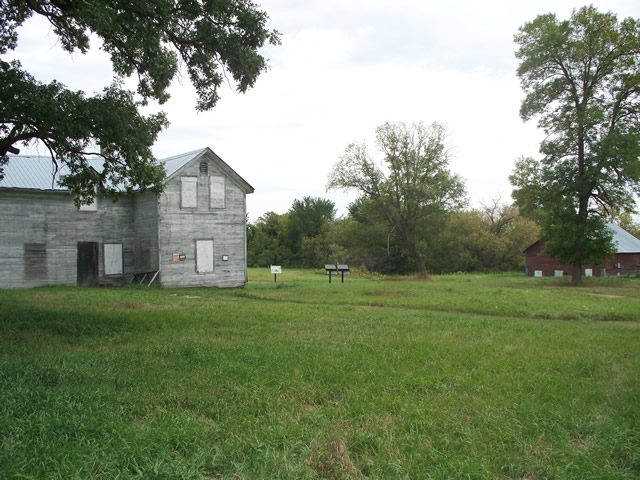
National Historic Site · 1872–1874Fort DufferinHighway 75, 3 miles north of EmersonPhoto: Rkehler3 · CC BY-SA 3.0 · Commons file
 Photo: Rkehler3 · CC BY-SA 3.0
3historic places on the registers
History of Emerson-Franklin · Canada’s heritage registers
The registers list 3 historic places in Emerson-Franklin, one at the top
Among the places are a provincial or municipal listing and a heritage railway station. Only a few towns match Emerson-Franklin per resident: 11 for every 10,000, ahead of 98% of Canadian towns. Of its homes, 32% were built before 1961, against 18% in the typical Canadian town. Of the dated places, Fort Dufferin is the oldest, from 1872.
Historic places
3
11 per 10,000 residents
Highest designations
1
National Historic Sites and Classified Federal Heritage Buildings
Other federal designations
1
Recognized buildings, railway stations, lighthouses
Provincial and local listings
1
provincial and municipal listings with an encyclopedia article
Oldest building
1872
the first construction date on its record
Homes built before 1961
32%
typical town: 18%
In pictures
Heritage Emerson-Franklin
The photo shows Fort Dufferin, one of Emerson-Franklin’s designated places.
Photos from Wikimedia Commons, each credited to its photographer with its licence; names open the place’s page. Tap a photo to step through them full screen.
Through time
Emerson-Franklin in old pictures
From before 1950 comes the oldest view of one of its historic places. Tap it to see it full screen.
 c. 1878
Public domain or CC0, made before 1950, from Wikimedia Commons; old views of places can be drawings, prints or maps of their time. Each credit opens the image’s page.
The map
Where Emerson-Franklin’s history is
Every place on the registers inside the town, by its designation.
Highest designationsOther federal designationsProvincial and local listings
Hover a dot for its name; tap one to open its page.
The 3, by tier
1 Highest designations1 Other federal designations1 Provincial and local listings
Most entries are federal, from Parks Canada’s Directory of Federal Heritage Designations; local listings outside Québec are known only through Wikidata items with an article.
Points from Wikidata (Parks Canada’s files carry none) and from Québec’s register, as mapped there.
Highest designations
One place in Emerson-Franklin with the highest designation
National Historic Sites and Classified Federal Heritage Buildings, Canada’s highest federal recognition. Each one opens its own page.
Other federal designations
One more federal designation in Emerson-Franklin
Recognized Federal Heritage Buildings, heritage railway stations and lighthouses. Each one opens its own page.
Heritage Railway Station · 1914–1915Canadian Pacific Railway Station, Emerson, Manitoba6th Street (at Morris St.)
Provincial and local listings
One more place Emerson-Franklin or its province protects
Provincial and municipal listings that Wikidata records and an encyclopedia describes. Each one opens its own page.
Municipal heritage site · 1879All Saints Anglican Church
Homes by age
Emerson-Franklin is still building: 5.5% of homes date from 2016 to 2021, against 4.1%
Over half of the homes in Emerson-Franklin were already standing by 1981. 31% of Emerson-Franklin’s homes were built from 1961 to 1980, close to the typical town’s 27%. Homes built from 1981 to 2000 make up 19% of Emerson-Franklin’s, about the typical 23%.
32%
Before 1961
31%
1961–80
19%
1981–2000
13%
2001–15
5.5%
2016–21
Emerson-FranklinTypical town
2021 Census, private dwellings by period of construction (Statistics Canada); the typical town is the middle Canadian town of 2,500 or more.
Born here
Born in Emerson-Franklin before the First World War: 6 lives
The widest known is Robert Pow: 4 Wikipedia editions. Arthur D. Kean comes first, born in 1882. At the other end is Paul Rivard, from 1896. Longest lived was Ernest McGirr, 95 years in all (1982).
Arthur D. Kean
Garnet Coulter
Frederick William Gershaw
Robert Pow
Ernest McGirr
Paul Rivard
18501875190019251950

Robert Pow1883–1958 · Politician and sportsman

Arthur D. Kean1882–1961 · Canadian filmmaker, journalist, broadcaster, photographer, and horsem…
GC
Garnet Coulter1882–1975 · Canadian politician

Frederick William Gershaw1883–1968 · Canadian politician
EM
Ernest McGirr1887–1982 · Canadian politician
PR
Paul Rivard1896–1991 · Canadian ice hockey player
Everyone born in Emerson-Franklin → Born before 1914 (the page’s periods: Confederation to the First World War). Birthplaces from Wikidata, each checked against the person’s Wikipedia article.
Towns its size
Emerson-Franklin has the most of 16 towns its size
Towns of 2,700 to 2,700 residents, by places on the registers.
Emerson-Franklin3
The middle one has 1. For 7, the registers list nothing.
In brief
Emerson-Franklin in brief
In Emerson-Franklin, 32% of homes were built before 1961, against 18% in the typical town. The count is 3 historic places, one with the highest designation, with Fort Dufferin first. Of the 16 towns closest in size, it has the most historic places. Robert Pow (1883), Arthur D. Kean (1882) and Garnet Coulter (1882) are the best known of its historic lives. The rest is about typical: its places were designated between 1937 and 1992.
How to read these numbers
What this data can and can’t tell you
- People and events. The open directory puts its national historic persons nowhere, so a town shows one only on firm ground: a birth there, matched by name and life years, or a historic place there named for the person whose record says so. Events are left out.
- The federal register. Parks Canada’s Directory of Federal Heritage Designations lists every National Historic Site, federal heritage building, heritage railway station and lighthouse; the Canadian Register of Historic Places adds their statements in English and French.
- The tiers. The highest designations are National Historic Sites, Classified Federal Heritage Buildings and Québec’s classements; then come the other federal designations; then provincial and local listings.
- Map points. Pins for federal places come from Wikidata rather than Parks Canada, which gives no points.
- The grade. This page gives no grade; history doesn’t count toward a Canadian town’s letter.
- Protection. National historic designation honours a place but binds only federal owners; a private building’s protection depends on its province or municipality.
- Provincial and municipal lists. The local and provincial lists outside Québec aren’t published openly, so this page counts what Wikidata records and pages only the places an encyclopedia describes.
Questions about Emerson-Franklin’s history
Which places in Emerson-Franklin have the highest designation?
Just one: Fort Dufferin.
How old are the homes in Emerson-Franklin?
32% predate 1961, where the typical town has 18%.
What is the oldest building in Emerson-Franklin?
Fort Dufferin, a National Historic Site, begun in 1872.
Why might a heritage building in Emerson-Franklin be missing here?
Its province’s and council’s own lists can’t be reused here; one further listing in Emerson-Franklin shows up only as a Wikidata number.
Contains information licensed under the Open Government Licence – Canada (Parks Canada).
Sources: Parks Canada, Directory of Federal Heritage Designations · Canadian Register of Historic Places (federal extract) · Wikidata (CC0) for map points, other names and articles · Statistics Canada, 2021 Census (homes by period of construction). Under the Statistics Canada Open Licence.
Adapted from Statistics Canada (Census of Population 2021, population estimates 2025, 2021 census boundaries) under the Statistics Canada Open Licence; this does not constitute an endorsement by Statistics Canada. Neighbourhood names in some cities © OpenStreetMap contributors (ODbL).