Canadian National Railway Station, Prince Rupert, British Columbia · Photo: Roger Puta · Public domain
1historic place on the registers
History of Prince Rupert · Canada’s heritage registers
1 historic place on the heritage registers in Prince Rupert
More of Prince Rupert’s homes are old than in most towns: 36% before 1961, against 18%. Canadian National Railway Station, Prince Rupert, British Columbia, from 1921, is the town’s heritage railway station. For every 10,000 residents Prince Rupert has 0.8, ahead of 77% of Canadian towns. One more stands just outside, within 5 km of the town’s edge.
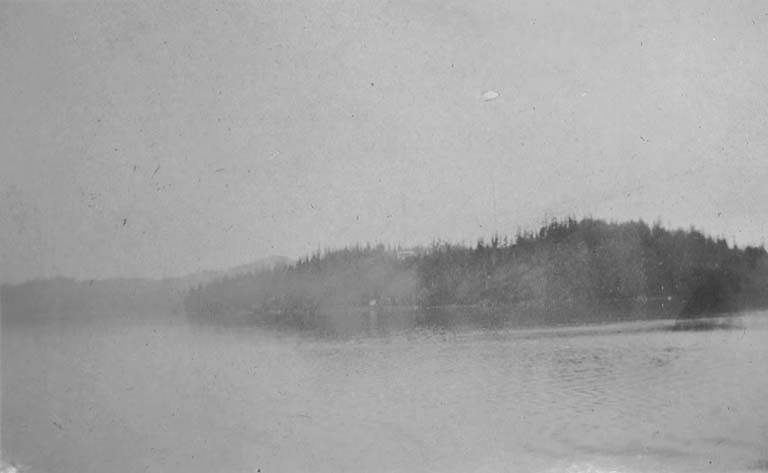
Public domain or CC0, made before 1950, from Wikimedia Commons; old views of places can be drawings, prints or maps of their time. Each credit opens the image’s page.
How it began
Milestones of Prince Rupert since 1910
As a municipality, Prince Rupert carries the date March 10, 1910 on Wikidata: a founding, an incorporation or an amalgamation. The name of Prince Rupert honours Prince Rupert of the Rhine.
Every place on the registers inside the town, by its designation.
Other federal designations
Names show on hover, and a tap takes you to the place’s page.
The 1, by tier
1 Other federal designations
Parks Canada’s Directory of Federal Heritage Designations lists the places the Government of Canada has recognized; outside Québec, provincial and municipal listings come only through Wikidata, and only those with an encyclopedia article get a page.
Points from Wikidata (Parks Canada’s files carry none) and from Québec’s register, as mapped there.
Other federal designations
Federal heritage in Prince Rupert: one more place
Recognized Federal Heritage Buildings, heritage railway stations and lighthouses. Each one opens its own page.
Little new building in Prince Rupert: 1.7% of homes date from 2016 to 2021, against 4.1%
The busiest building years in Prince Rupert were from 1961 to 1980, which account for 39% of today’s homes. Few of Prince Rupert’s homes date from 2001 to 2015: 2.1%, the norm 15%. Half of the homes standing in Prince Rupert today were built before 1981.
36%
Before 1961
39%
1961–80
21%
1981–2000
2.1%
2001–15
1.7%
2016–21
Prince RupertTypical town
2021 Census, private dwellings by period of construction (Statistics Canada); the typical town is the middle Canadian town of 2,500 or more.
Towns its size
Prince Rupert has the 4th most of 16 towns its size
Towns of 12,800 to 13,000 residents, by places on the registers.
Ahead of it: Centre-Ville, Downtown and Yonge-Bay Corridor. The middle one has 0. 10 of them have none.
In brief
Prince Rupert in brief
Prince Rupert’s homes from before 1961 come to 36%, against 18% in the typical town. In all there are 1 historic place. Just 3 towns of its size, out of 16, have more historic places. The rest is about typical: its one place was designated in 1992.
How to read these numbers
What this data can and can’t tell you
•
Protection. National historic designation honours a place but binds only federal owners; a private building’s protection depends on its province or municipality.
•
People and events. National historic persons carry no place in the open file. They appear on a town’s page when born there (same name, same birth and death years) or when a historic place inside it carries their name and its record names them with their dates; national historic events don’t appear.
•
The federal register. The federal list is complete and open: Parks Canada’s directory for the designations, the Canadian Register of Historic Places for what each one is and why it matters.
•
The tiers. National Historic Sites and the most protected buildings form the top tier; recognized federal buildings, stations and lighthouses the second; provincial and municipal listings the third.
•
Provincial and municipal lists. Provincial and municipal listings here come from Wikidata alone, since the provinces’ own registers can’t be reused; a listing needs an encyclopedia article to get a page.
•
Map points. Where a federal place sits on the map is Wikidata’s placing; the directory itself has no coordinates.
•
The grade. History isn’t one of Canada’s graded pillars, so this page describes and compares without a letter.
Questions about Prince Rupert’s history
How old are the homes in Prince Rupert?
36% of its homes were built before 1961, against 18% in the typical Canadian town.
How many historic places does Prince Rupert have on the registers?
1 historic place inside Prince Rupert, by the federal, Québec and Wikidata-known registers.
What is the oldest building in Prince Rupert?
Canadian National Railway Station, Prince Rupert, British Columbia — its record dates it to 1921 (Heritage Railway Station).
Contains information licensed under the Open Government Licence – Canada (Parks Canada).
Sources: Parks Canada, Directory of Federal Heritage Designations · Canadian Register of Historic Places (federal extract) · Wikidata (CC0) for map points, other names and articles · Statistics Canada, 2021 Census (homes by period of construction). Under the Statistics Canada Open Licence.

 1929–1930
 1929–1930
 1929–1930
 Fed