Folsom was first counted by the census in 1890, and 5 of its places are on the National Register
More historic than 38% of U.S. towns · #253 of 847 in California. What drives it
Most of Folsom was built recently: 1% of its homes predate 1940 and the median home dates from 1997. Below: 13 old photos and papers, maps from 1891 on, and the census since 1890.
Folsom first appears in the census in 1890. Six smaller post offices, Mormon Island (1851), Texas Hill (1851) and Folsom City (1856), opened inside today’s city and later closed.
First census: 609 in 18902020 census: 80,454136 years
How historic is Folsom?
C+
More historic than 38% of U.S. towns, on its age, its old homes and the National Register.
On its age, its old homes and the National Register, Folsom is more historic than 38% of U.S. towns, #253 of 847 in California. Its National Register listings hold the grade up; its share of homes from before 1940 pulls it down.
C+
HistoryA character grade: shown, never part of Folsom’s overall grade.
Few California towns list much on the Register (a typical California town has 0.0 per 10,000 residents, the U.S. 2.4), so Folsom’s 1.3 sits above most of its state (78% of California towns have fewer) while its 11 historic buildings outnumber those of 76% of U.S. towns.
How sure. Graded on any two of the three inputs instead, the letter would range from D to B. The pre-1940 share (±0.3 points) is firm at this size.
Founding year: the first census (other dates in Quick answers). Homes: Census ACS 2020–24. National Register: National Park Service, May 2026 list; each listing counted once (boundary changes and added documentation belong to their listing), and a historic district counts its contributing buildings. How TownRatings grades history →
What stands out about Folsom’s past
Read from the archive, the National Register and the record. The page puts what stands out first.
Lost post offices, old corners, places now gone and burying grounds
Folsom’s post office has been open since 1938. Six other post offices opened and closed inside today’s town.
Mormon Island
1851–1890
Texas Hill
1851–1856
Folsom City
1856–1938
Natoma
1884–1964
State Prison
1886–1892
Represa
1892–1971
Folsom
1938–today
18501940today
Hamlets and corners on the map
Folsom JunctionNatomaPrairie CityWhite Rock
Gone or out of use
Folsom PowerhousebuildingGranite SchoolschoolKiddie Woods Pre-SchoolschoolMormon Island SchoolschoolNegro Bar State ParkparkPhoenix Private SchoolschoolSouthern Pacific Depotbuilding
1cemetery inside Folsom
Lakeside Memorial Lawn
US Post Offices dataset (Blevins & Helbock, CC0). Places and cemeteries from the USGS Geographic Names Information System (2021).
On the National Register
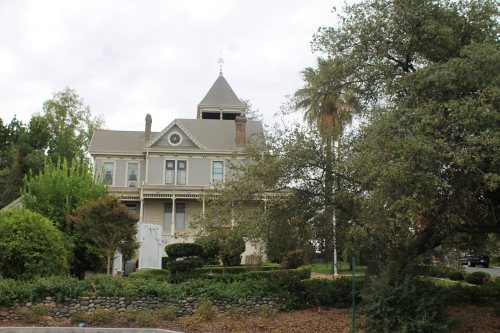
5 historic places in Folsom
The country’s official list of buildings and places worth saving. One is a National Historic Landmark, the highest tier.
Nothing in the archives for these yearsWeddings on Main Street, storms, parades, school pictures, the old store. If it’s in your family album, it belongs here.
Prior to European settlement, the area in what is now Folsom was inhabited by the Nisenan tribe of Native Americans. The Gold Rush of 1849 brought violence, disease and displacement for the tribes of California.
Passages that mention Folsom, cut from the printed page as they were published.
History of Sacramento County, California, with biographical sketches of the leading men and women of the county who have been identified with its growth and development from the early days to the present1923 · page 245Read the page →
Read the text
During 1862 the Sacramento, Placer and Nevada Railroad was built from Folsom to a point near Newcastle. The road had been organized in 1859 to build an extension of the Sacramento Valley Railroad from Folsom via Auburn to Grass Valley and Nevada City. The public-spirited citizens of Auburn furnished funds which enabled it to be constructed from
Text read by machine from the scan; it may contain errors.
History of Sacramento County, California, with biographical sketches of the leading men and women of the county who have been identified with its growth and development from the early days to the present1913 · page 196Read the page →
Read the text
built from Folsom to a point near Newcastle. The road had been organized in 1859 to build an extension of the Sacramento Valley Railroad from Folsom via Auburn to Grass Valley and Nevada City.
Text read by machine from the scan; it may contain errors.
History of Sacramento County, California1913 · page 196Read the page →
Read the text
built from Folsom to a point near Newcastle. The road had been organized in 1859 to build an extension of the Sacramento Valley Railroad from Folsom via Auburn to Grass Valley and Nevada City.
Text read by machine from the scan; it may contain errors.
History of Sacramento County, California, with biographical sketches of the leading men and women of the county who have been identified with its growth and development from the early days to the present1923 · page 130Read the page →
Read the text
Hon. W. A. Anderson, who resided at Folsom in the early days. Mr. Anderson wrote as follows : "A few memories of the town of Folsom might interest the present generation. The first settlement of that locality was at Negro Bar, which was between the present site of Folsom and the American River. In 1849
Text read by machine from the scan; it may contain errors.
Scans and text from the Internet Archive. Books published in 1930 or earlier, which are in the public domain.
Timeline
Folsom, 1851 to 1998
Woven from the archive, old maps, post office records, the National Register and the people born here.
Every edition of the U.S. Geological Survey’s map of Folsom. Tap a year, or press play to watch the town change.
1914Folsom sheet · 1:31,680
U.S. Geological Survey historical topographic maps (public domain), via Esri’s collection of the scans. The red ring marks the center of Folsom.
Every building
Folsom, building by building, 1891–1910
Fire insurance maps drew every building, what it was made of and what it was used for, so insurers could price the risk of fire. Pick a year, then a sheet.
The Folsom post office opened in 1890, the earliest record of the town by name (U.S. post office records).
How does Folsom rank for history?
Folsom is more historic than 38% of U.S. towns, #253 of 847 in California. The History grade combines the town’s founding era, the share of homes built before 1940 and its National Register listings. It’s a character grade, so it isn’t part of the overall grade. How it works.
What is on the National Register in Folsom?
5 listings: 4 buildings, among them the Folsom Powerhouse (a National Historic Landmark since 1981), and 1 site. 11 historic buildings in all.
How old are the homes in Folsom?
1% of Folsom’s homes were built before 1940 (Census estimate), against a typical 3.4% for a California town; the median home was built in 1997.
Founding dates: Wikidata, Wikipedia, the U.S. post office records of Blevins & Helbock (CC0) and the Census. Homes by year built: Census ACS 2020–24. National Register of Historic Places: National Park Service (list of May 22, 2026). Old photos, postcards and papers: Wikimedia Commons, the Library of Congress and other public archives, credited on each item’s page. Maps: U.S. Geological Survey historical topographic maps (via Esri) and Sanborn fire-insurance maps (Library of Congress). History text and census tables: Wikipedia (CC BY-SA 4.0). Places that used to be: USGS Geographic Names Information System (2021).
From Wikimedia Commons (1), the Library of Congress (14), Wikidata (2), the National Register of Historic Places (5), Wikipedia, Wikidata and Wikipedia for famous people, U.S. Geological Survey historical maps, U.S. Census counts (via Wikipedia), the US Post Offices dataset (Blevins & Helbock), the USGS Geographic Names Information System, Sanborn fire insurance maps (Library of Congress) and old county and town histories (Internet Archive). Archive images are copied here with their credits and licenses, shown on each photo’s page. Refreshed monthly.


 ★ Landmark


 1914
 1914
 1914
 1914
 1914
 1914
 1914
 1914
 1914
 1914
 1926
 1958
 1980
 2012
 2012


