Fair Oaks’ post office opened in 1896, and 2 of its places are on the National Register
More historic than 35% of U.S. towns · #284 of 847 in California. What drives it
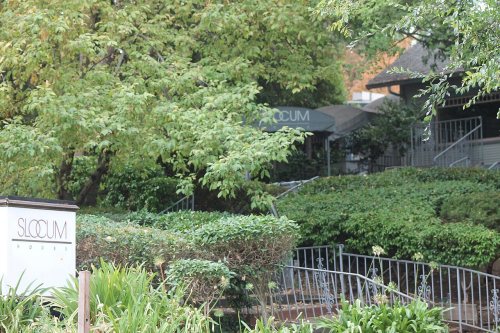
Its Register listings are the Slocum House and the Fair Oaks Bridge, Old,. Most of Fair Oaks was built recently: 2% of its homes predate 1940 and the median home dates from 1977. Below: maps from 1902 on and the census since 1980.
Founding year: the first Fair Oaks post office (Blevins & Helbock, CC0).The full story ↓
History grade
What drives Fair Oaks’ History grade
On its age, its old homes and the National Register, Fair Oaks is more historic than 35% of U.S. towns, #284 of 847 in California. Its National Register listings hold the grade up; its share of homes from before 1940 pulls it down.
C
HistoryA character grade: shown, never part of Fair Oaks’ overall grade.
Few California towns list much on the Register (a typical California town has 0.0 per 10,000 residents, the U.S. 2.4), so Fair Oaks’ 0.6 sits above most of its state (72% of California towns have fewer) while its 2 listings outnumber those of 60% of U.S. towns.
How sure. Graded on any two of the three inputs instead, the letter would range from C− to B−. The pre-1940 share (±0.8 points) is firm at this size. The founding year is the first post office, not a stated founding date.
Founding year: the first post office (other dates in Quick answers). Homes: Census ACS 2020–24. National Register: National Park Service, May 2026 list; each listing counted once (boundary changes and added documentation belong to their listing), and a historic district counts its contributing buildings. How TownRatings grades history →
What stands out about Fair Oaks’ past
Read from the archive, the National Register and the record. The page puts what stands out first.
The community began as part of the 1844 Rancho San Juan Mexican land grant. In 1895, Brevet Brigadier General Charles Henry Howard and James W. Wilson of the Howard-Wilson Publishing Company of Chicago acquired rights to present Fair Oaks community, then primarily covered by citrus farms, from California Senator Frederick K. Cox and businessman Crawford W. Clarke. The Howard-Wilson company surveyed and mapped the land and began to promote Fair Oaks as one of their “Sunset Colonies.” The Howard-Wilson company advertised Fair Oaks as an innovative and growing citrus colony after destructive freezes in Southern California and Florida and a national depression hitting in 1893. Many of the purchasers were professionals and other friends of the investors and the Fair Oaks community was initially composed primarily of businessmen and other professionals, including bankers and engineers.
Passages that mention Fair Oaks, cut from the printed page as they were published.
History of Sacramento County, California, with biographical sketches of the leading men and women of the county who have been identified with its growth and development from the early days to the present1913 · page 887Read the page →
Read the text
Having made visits to California in 1896 and '98 and having purchased property in Fair Oaks in 1896, Mr. Gore located permaently in California in the year 1900. Settling at Fair Oaks, he identified himself with the district by the purchase of a tract which he has since developed and still owns. His activities have been varied, for he has been a fruit rancher, merchant and owner of a lumber yard. In addition he promoted the organization of the Fair Oaks Bank, bought stock in the concern and now serves as one of the di-
Text read by machine from the scan; it may contain errors.
History of Sacramento County, California1913 · page 371Read the page →
Read the text
Fair Oaks Relief Corps No. 13 was organized in May, 1884, as auxiliary of Fair Oaks Post, and is still in existence, although the Post has been discontinued for several years.
Text read by machine from the scan; it may contain errors.
Scans and text from the Internet Archive. Books published in 1930 or earlier, which are in the public domain.
Timeline
Fair Oaks, 1896 to 1997
Woven from the archive, old maps, post office records, the National Register and the people born here.
The Fair Oaks post office opened in 1896, the earliest record of the town by name (U.S. post office records).
How does Fair Oaks rank for history?
Fair Oaks is more historic than 35% of U.S. towns, #284 of 847 in California. The History grade combines the town’s founding era, the share of homes built before 1940 and its National Register listings. It’s a character grade, so it isn’t part of the overall grade. How it works.
What is on the National Register in Fair Oaks?
Two places: the Slocum House (listed 1979) and the Fair Oaks Bridge, Old, (2006).
How old are the homes in Fair Oaks?
2% of Fair Oaks’ homes were built before 1940 (Census estimate), against a typical 3.4% for a California town; the median home was built in 1977.
Founding dates: Wikidata, Wikipedia, the U.S. post office records of Blevins & Helbock (CC0) and the Census. Homes by year built: Census ACS 2020–24. National Register of Historic Places: National Park Service (list of May 22, 2026). Old photos, postcards and papers: Wikimedia Commons, the Library of Congress and other public archives, credited on each item’s page. Maps: U.S. Geological Survey historical topographic maps (via Esri) and Sanborn fire-insurance maps (Library of Congress). History text and census tables: Wikipedia (CC BY-SA 4.0). Places that used to be: USGS Geographic Names Information System (2021).
From the National Register of Historic Places (2), Wikipedia, Wikidata and Wikipedia for famous people, U.S. Geological Survey historical maps, U.S. Census counts (via Wikipedia), the US Post Offices dataset (Blevins & Helbock), the USGS Geographic Names Information System and old county and town histories (Internet Archive). Archive images are copied here with their credits and licenses, shown on each photo’s page. Refreshed monthly.