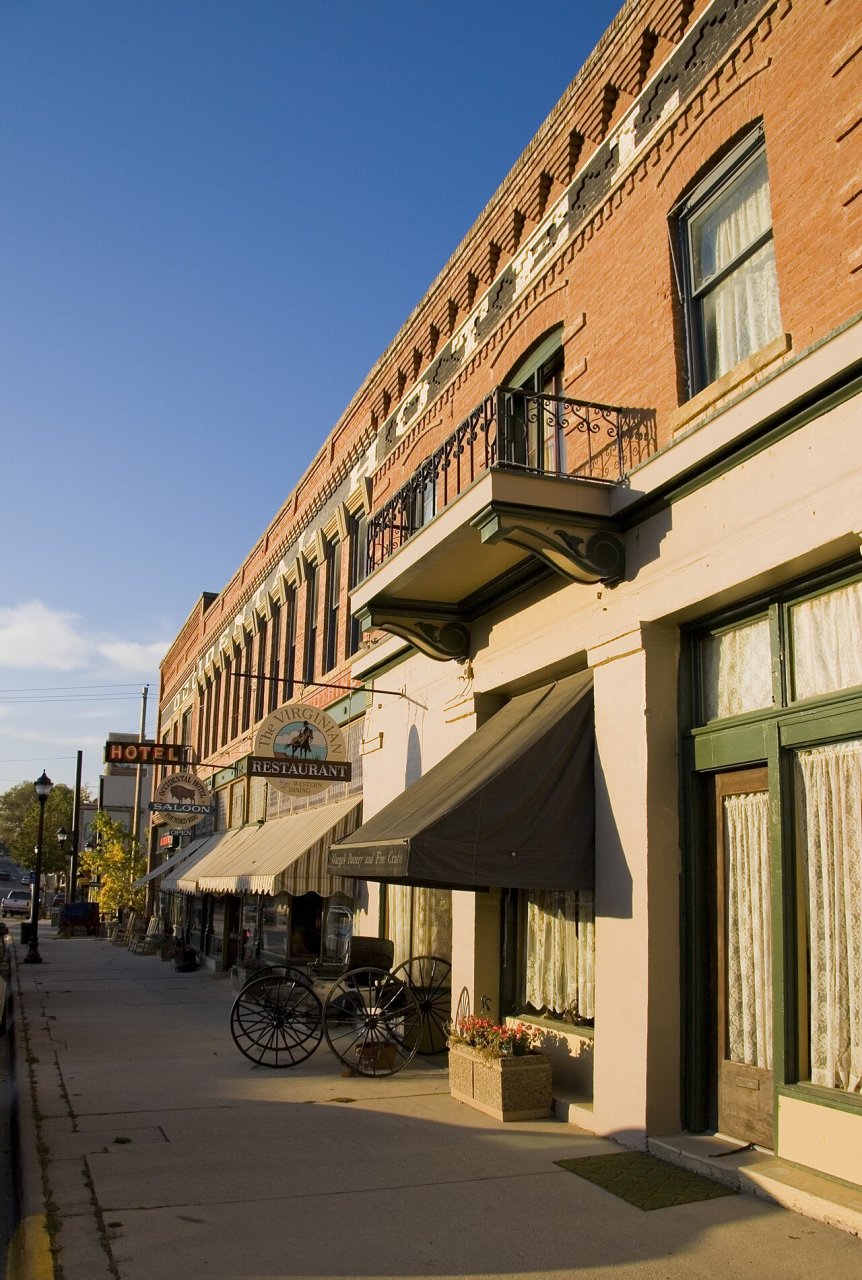
 Photo: Acroterion · CC BY-SA 4.0
Buffalo reports less crime per resident than 72% of U.S. towns
On crimes reported to the FBI by Buffalo’s police in 2023–2025, it grades B+ for safety: #2 of 19 graded towns in Wyoming.
Crimes reported to the FBI per 1,000 residents a year, 2023–2025. “Rest of WY” is every other Wyoming city and town in the FBI’s tables; the U.S. figure is the FBI’s national estimate as published, averaged over the three years. The FBI publishes no national homicide or robbery rate in our data, so those compare with all U.S. cities and towns in its tables.
What stands out about safety in Buffalo
Among Wyoming towns, higher
Wyoming’s cities and towns report less crime than most states’, so Buffalo’s place among its own towns differs from its national one: it reports less crime than 89% of the 19 Wyoming towns we grade, against 72% nationally. Safety Grade ↓
Written from the FBI data on this page. Figures are crimes reported to police, not convictions.
What’s behind Buffalo’s grade
Property crimes plus four times violent crimes reported to the FBI per resident, 2023–2025, on a national curve. Both violent and property crime are lower than in most U.S. towns; violent crime is the stronger of the two.
Violent crime, by year and by type
Buffalo’s police reported 12 violent crimes to the FBI over 2023–2025, about 0.9 per 1,000 residents a year, against 2.4 in the rest of Wyoming and the FBI’s national estimate of 3.6.
Show as a table
| Year | Buffalo | Rest of Wyoming | U.S. (FBI national estimate) |
|---|---|---|---|
| 2022 | 0.9 | 2.3 | 4.0 |
| 2023 | 0.6 | 2.4 | 3.9 |
| 2024 | 0.9 | 2.5 | 3.6 |
| 2025 | 1.1 | 2.3 | 3.3 |
Violent crimes per 1,000 residents
By type 2023–2025, counts
For every 1,000 residents, about 7 property crimes reported
And about 1 violent crime, in 2025. Below are 1,000 dots, one per resident; each colored dot is one reported crime.
Violent crime per 1,000 residents, 2025
Property crime per 1,000 residents, 2025
Crimes reported to police in 2025 per resident; one person can be the victim of more than one, and some reports involve visitors.
Reported crime is steady
Reported crime per resident was steady from 2023 to 2025: the change is within ordinary year-to-year swings. Per 1,000 residents, 2022–2025, against the rest of Wyoming.
Show as a table
| Year | Buffalo property | Rest of Wyoming property | Buffalo violent | Rest of Wyoming violent |
|---|---|---|---|---|
| 2022 | 9.4 | 19.9 | 0.9 | 2.3 |
| 2023 | 7.7 | 20.7 | 0.6 | 2.4 |
| 2024 | 7.7 | 17.4 | 0.9 | 2.5 |
| 2025 | 7.2 | 14.6 | 1.1 | 2.3 |
Crimes per 1,000 residents
39 crimes reported in 2025
5 violent and 34 property, as reported to the FBI by Buffalo’s police.
2025 offenses reported
Offenses reported to police, not convictions. FBI Uniform Crime Reporting. The last row is counted outside the property total.
One person died in crashes on Buffalo’s roads in 2019–2023
Buffalo had 1 fatal crash in five years, in which one person died; 1 was a pedestrian.
That is about what is typical for Wyoming towns of 2,500–5,000 people: at their median rate (0.0 deaths per 100,000 residents a year), a town of Buffalo’s size would see about 0 in five years. With numbers this small, a death or two either way changes the picture, so Buffalo’s own rate (4.4) is context, not a ranking.
Deaths are counted where the crash happened, not where the people lived: a highway through town adds through-traffic deaths, and residents’ own risk on roads elsewhere isn’t here. Town rates sit below state and U.S. rates because a third of fatal crashes happen outside any town. Road safety is described here and is not part of the Safety Grade. Source: NHTSA Fatality Analysis Reporting System (FARS), 2019–2023.
Buffalo and its neighbors
How reported crime compares across the town line. Tap a town to see its safety page.
| Town | Grade | Violent | Property |
|---|---|---|---|
| Buffalo | B+ | 0.9 | 7.5 |
Crimes reported to the FBI per 1,000 residents a year, 2023–2025.
What this data can and can’t tell you
- It’s reported crime. Only incidents reported to and recorded by police appear here. Many crimes are never reported to police.
- One number for all of Buffalo. A town-wide rate doesn’t show where incidents happen, and that can differ a lot from one part of town to another.
- Visitors count too. Incidents involving people who work, shop or visit are counted against Buffalo’s residents, which raises the per-resident rate.
- Whose population. Rates use the FBI’s population for the department (4,714 in 2025); our figure for Buffalo is 4,733 (2025 Census estimate).
- Gaps are real gaps. A missing year means the department didn’t report a full year, not that nothing happened.
How the grade is calculated, for every town: How TownRatings grades safety →
Questions about safety in Buffalo
Is Buffalo, WY safe?
On crimes reported to the FBI in 2023–2025, Buffalo reports less crime per resident than 72% of U.S. towns, a B+ Safety Grade and #2 of 19 in Wyoming. Its police reported 0.9 violent crimes per 1,000 residents a year, against 2.4 in the rest of Wyoming and the FBI’s national estimate of 3.6.
What is the crime rate in Buffalo?
0.9 violent and 7.5 property crimes per 1,000 residents a year, 2023–2025, as reported to the FBI. The rest of Wyoming reports 2.4 and 17.5; the FBI’s national estimate is 3.6 and 17.6.
Is crime going up or down in Buffalo?
Reported crime per resident was steady from 2023 to 2025: the change is within ordinary year-to-year swings.
Who polices Buffalo?
Buffalo’s own police department, which reports to the FBI as “Buffalo”. Its figures are the ones on this page.
Heads-up board
Neighbors looking out for each other in Buffalo.
Your answer becomes a post in Town Square.
Please don’t name or describe individuals. In an emergency, call 911.
Crime: FBI Uniform Crime Reporting Program, Crime Data Explorer: offenses known to law enforcement by city, 2025, and state and national rates. Counts are crimes reported to police, not convictions. The Safety Grade is our own summary of that data, not an official rating. Road deaths: NHTSA Fatality Analysis Reporting System (FARS), 2019–2023. This isn’t an official statement of public safety. In an emergency, call 911.