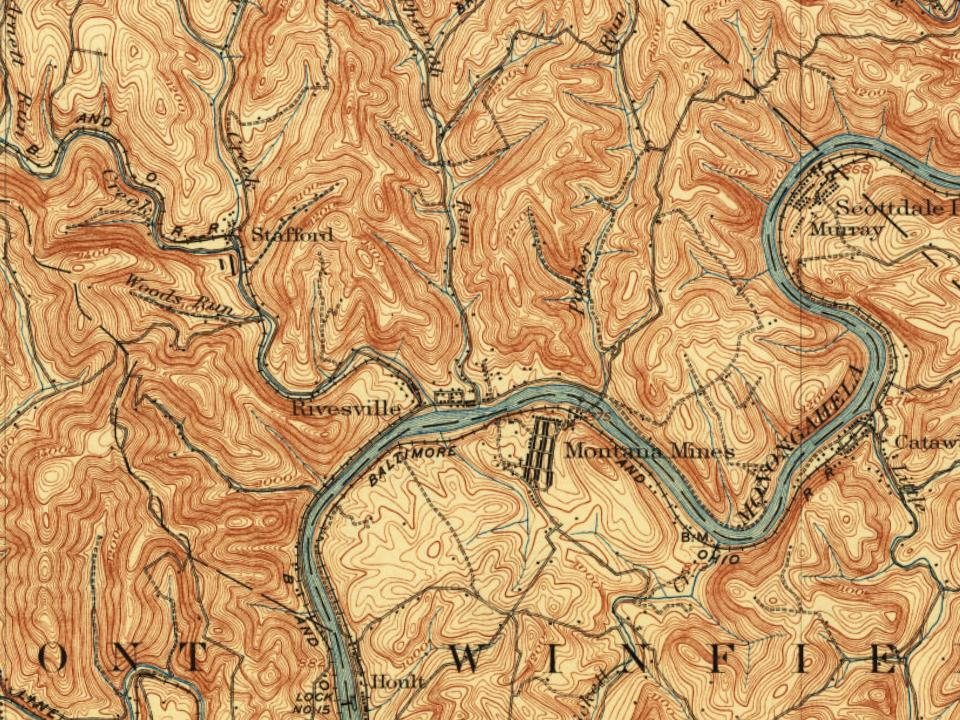
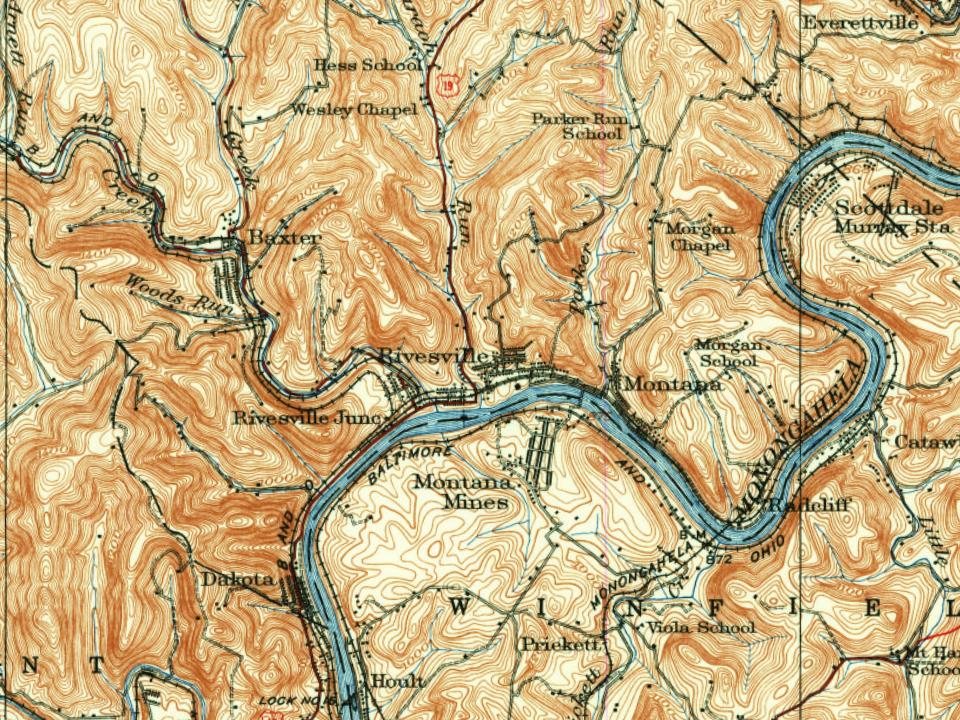
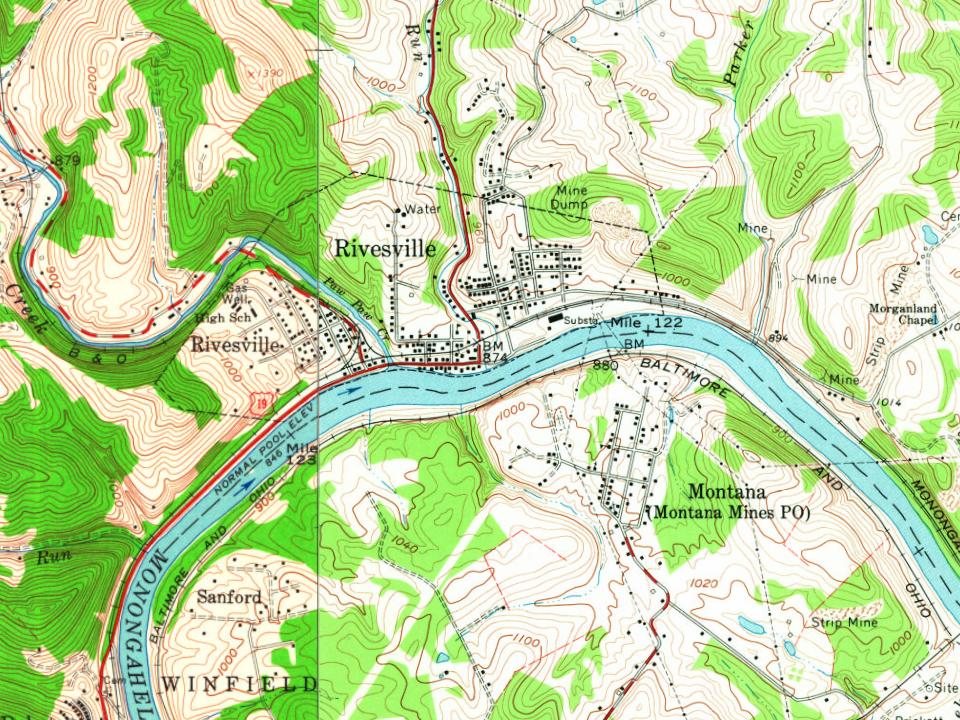
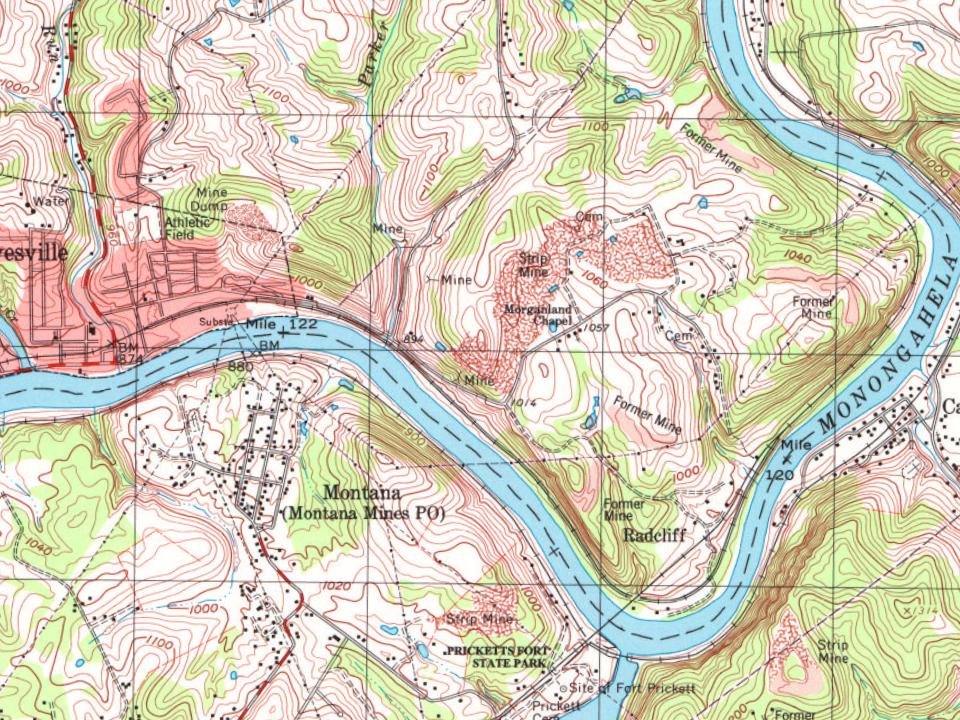
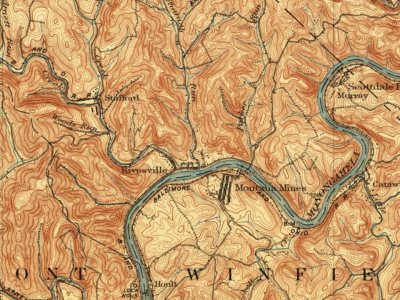
The area was populated by some of the earliest settlers to the area, with the safety of Prickett's Fort sitting directly across the Monongahela River. David Morgan (frontiersman) moved there in 1772. That's also the location where he saved his family from an attack by Indians in 1778, based on a fevered dream he had, while recuperating from an illness at the fort. The house still stands there in Rivesville. Now known as the Morgan-Gold House, it was listed on the National Register of Historic Places in 1985.
Rivesville was platted in 1837, and named after William Cabell Rives.
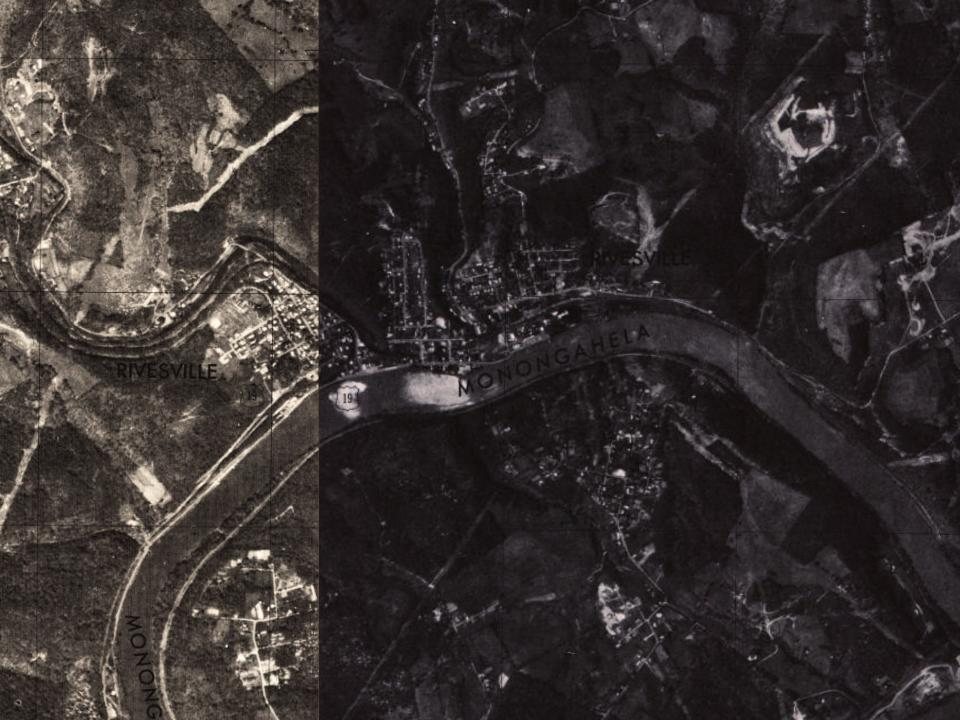
Founding dates: Wikidata, Wikipedia, the U.S. post office records of Blevins & Helbock (CC0) and the Census. Homes by year built: Census ACS 2020–24. National Register of Historic Places: National Park Service (list of May 22, 2026). Old photos, postcards and papers: Wikimedia Commons, the Library of Congress and other public archives, credited on each item’s page. Maps: U.S. Geological Survey historical topographic maps (via Esri) and Sanborn fire-insurance maps (Library of Congress). History text and census tables: Wikipedia (CC BY-SA 4.0). Places that used to be: USGS Geographic Names Information System (2021). How TownRatings grades history →
From the National Register of Historic Places (1), Wikipedia, U.S. Geological Survey historical maps, U.S. Census counts (via Wikipedia), the US Post Offices dataset (Blevins & Helbock) and the USGS Geographic Names Information System. Archive images are copied here with their credits and licenses, shown on each photo’s page. Refreshed monthly.