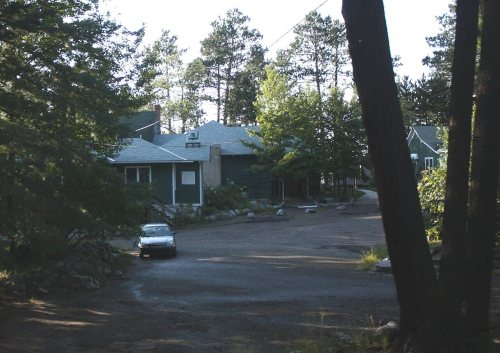
Washington in pictures
The archive holds 3 old photos and papers going back to 1896 and a map from 1970 on.
5 places on the National Register of Historic Places.
Explore the history →Each edition grades its towns against each other only.
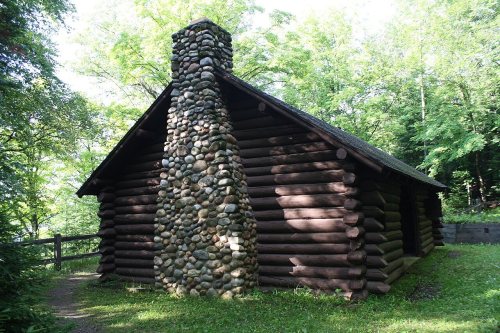
A town of 1,640. 79% more nonprofits per person than the typical Wisconsin town.
The best of Washington’s subject grades is an A− for civic life; the weakest is a C for incomes. 32% of the land in Washington is conserved, against 3.8% in Wisconsin’s towns and 4.3% across U.S. towns. The biggest park or preserve is Blackjack Springs Wilderness, at 4,407 acres. Washington has fewer than 2,500 residents, so it gets subject grades but no overall grade.
Where Washington beats most towns.
Mayo SchoolWhere Washington’s working residents go each day. Line width shows the share.
Census LEHD 2023
Each subject compared with towns across the country (schools within Wisconsin), ordered by how far Washington is from typical.
How TownRatings grades towns →
The archive holds 3 old photos and papers going back to 1896 and a map from 1970 on.
5 places on the National Register of Historic Places.
Explore the history →Who provides power, water and the rest in Washington, and how to reach them.
EPA SDWIS (Oct 9, 2026) · HIFLD + EIA-861 2025 · Census 2020 ZCTAs · NCES 2024–25 · registration: vote.gov, updated Nov 18, 2024.
Ordered by what stands out in Washington.
Count the trails in 4 parks and preserves and they come to 12 miles. For Washington, the trail density is 0.3 miles per square mile.
| Biggest places to walk | Trails | Acres |
|---|---|---|
| 1. Blackjack Springs Wilderness | — | 4,407 |
| 2. Northland Pines School Forest | — | 120 |
| 3. Vilas County Forest | — | 28 |
Trails & parks © OpenStreetMap contributors · Conserved land: USGS PAD-US
Washington’s average trip to work stands at 20 minutes, where Wisconsin’s towns sit at 22 minutes and U.S. towns at 25 minutes. Just 6% of the town’s working residents have a job in town. Since 2013, Washington has added 132 jobs, to 301 in 2023. Half the trips to work are shorter than 17 miles.
| Washington | Wisconsin towns | U.S. towns | |
|---|---|---|---|
| Average trip to work | 20 minutes | 22 minutes | 25 minutes |
| Below the poverty line | 11% | 6.4% | 9.6% |
| Working residents who work in town | 5.8% | 8.3% | 8% |
Census LEHD 2023 · ACS
Among residents in Washington, 15% are under 18. Since 2020, Washington has grown 3.1%, to 1,640 residents in the Census Bureau’s 2025 estimate. People 65 and older are nearly a third of residents (19% statewide); adults 18 to 34 are 11% of residents (22% statewide).
| Washington | Wisconsin towns | U.S. towns | |
|---|---|---|---|
| Median age | 56.6 years | 42.1 years | 40.5 years |
| Under 18 | 15% | 21% | 22% |
| Bachelor’s degree or more, 25+ | 38% | 32% | 29% |
51% women, 49% men
That’s an even split within the survey’s margin of ±2.5 points. Across Wisconsin, 49.9% of residents are women.
| Washington | WI | U.S. | |
|---|---|---|---|
| Under 10 | 8.6% | 11.2% | 11.6% |
| 10 to 17 | 6.3% | 10.2% | 10.3% |
| 18 to 24 | 2.2% | 9.3% | 9.1% |
| 25 to 34 | 8.8% | 12.6% | 13.7% |
| 35 to 44 | 6.5% | 12.7% | 13.2% |
| 45 to 54 | 15.2% | 11.8% | 12.2% |
| 55 to 64 | 20.7% | 13.8% | 12.7% |
| 65 to 74 | 18.3% | 11.2% | 10.2% |
| 75 and older | 13.4% | 7.3% | 7% |
| No diploma | 2.2% | 6.4% | 10.4% |
| High school | 22.8% | 29.4% | 26% |
| Some college | 22.3% | 19.5% | 19.1% |
| Associate’s | 14.7% | 11.3% | 8.8% |
| Bachelor’s | 26.1% | 22% | 21.6% |
| Graduate | 11.8% | 11.4% | 14.1% |
Census population estimates, 2025 · U.S. Census Bureau · ACS 2020-2024 5-year estimates · in a town of 1,600, single groups can be off by several points
Storm and flood damage is expected to run lower than in 68% of U.S. communities. 47% of Washington’s expected losses from natural hazards come from cold waves, followed by inland flooding at 41%.
FEMA National Risk Index · OpenFEMA
Expect cold, snowy winters and pleasant summers in Washington. July afternoons reach 77°, January nights drop to 3° and about 77 inches of snow falls in a winter.
NOAA U.S. Climate Normals, 1991–2020
Two in five adults in Washington have high blood pressure; 14% report frequent mental distress. This Wisconsin town does better than the Wisconsin average on 7 of 32 CDC measures and worse on 9. The share of adults in Washington who sleep under 7 hours: 29%.
| Washington | Wisconsin towns | U.S. towns | |
|---|---|---|---|
| Sleep under 7 hours (CDC PLACES) | 29% | 32% | 36% |
| High blood pressure (CDC PLACES) | 40% | 33% | 35% |
| Frequent mental distress (CDC PLACES) | 14% | 15% | 17% |
| Feel lonely (CDC PLACES) | 29% | 30% | 33% |
| What stands out | Washington | WI |
|---|---|---|
| Fewer adults facing housing insecurity | 7.6% | 9.7% |
| Fewer adults facing a utility shut-off | 4.5% | 5.5% |
| More adults who have had cancer | 12% | 8.6% |
CDC PLACES 2025 · modeled estimates for adults · CMS · HRSA
None within 15 miles of Washington; the nearest are
About 2 of every 100 Washington residents are enrolled in college, against 6 across Wisconsin.
5 places in Washington on the National Register of Historic Places.
Town in Wisconsin, United States
Washington is a town in Vilas County, Wisconsin, United States. The population was 1,587 at the 2020 census.
From Wikipedia, licensed CC BY-SA 4.0 · facts via Wikidata (CC0)
4 towns share a border with Washington.
| Town | WI rank | Overall | Cost | Safety | Schools | Health |
|---|---|---|---|---|---|---|
| Washington | — | — | B | — | B− | B− |
| Lincoln | #240 | B− | B− | — | B− | B− |
| Three Lakes | — | — | B | — | A− | B |
| Phelps | — | — | B+ | — | D | B− |
| Hiles | — | — | — | — | — | — |
Washington, Three Lakes and Phelps have fewer than 2,500 residents, so they get subject grades but no overall grade. Washington, Lincoln, Three Lakes and Phelps report no FBI crime data of their own. Hiles isn’t graded (fewer than 1,000 residents, or not enough data). Compare Washington with a neighbor →
Short answers, built from the data on this page.
79% more nonprofits per person than the typical Wisconsin town.
Cost of living, which also weighs rents, property taxes and how many households pay 30% or more of their income for housing, grades B.