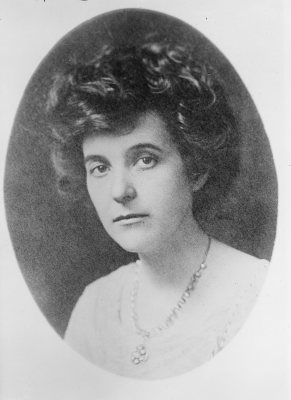
Founding year: the first Rio post office (Blevins & Helbock, CC0).
History grade
What drives Rio’s History grade
On its age, its old homes and the National Register, Rio is more historic than 53% of U.S. towns. Its share of homes from before 1940 holds the grade up; its National Register listings pull it down.
B−
HistoryA character grade: shown, never part of Rio’s overall grade.
Wisconsin towns list more on the Register than most of the country (a typical Wisconsin town has 3.0 per 10,000 residents, the U.S. 2.4), so Rio’s 0.0 sits below most of its state (28% of Wisconsin towns have fewer) while its 0 listings outnumber those of 23% of U.S. towns.
How sure. Graded on any two of the three inputs instead, the letter would range from C− to B+. The pre-1940 share is a Census survey estimate (±6.6 points). The founding year is the first post office, not a stated founding date.
Founding year: the first post office (other dates in Quick answers). Homes: Census ACS 2020–24. National Register: National Park Service, May 2026 list; each listing counted once (boundary changes and added documentation belong to their listing), and a historic district counts its contributing buildings. How TownRatings grades history →
What stands out about Rio’s past
Read from the archive, the National Register and the record. The page puts what stands out first.
Wikipedia doesn’t have a history of Rio yet. The photos, dates and memories neighbors add here are how it gets written.
Rio (pronounced "rye-oh") is a village in Columbia County, Wisconsin, United States. The population was 1,119 at the 2020 United States Census. It is part of the Madison Metropolitan Statistical Area. The village rests primarily in the town of Otsego. The Village of Rio calls itself "Camper Country USA" due to several campgrounds located near the village. Rio is halfway between Columbus and Portage on Highway 16.
Its first post office opened in 1852. Between the 2010 and 2020 censuses its population grew from 1,059 to 1,119 (+6%).
Intro from Wikipedia. Population: U.S. Census Bureau.
From the old history books
What they wrote about Rio in 1880
Passages that mention Rio, cut from the printed page as they were published.
The history of Columbia county, Wisconsin, containing an account of its settlement ..1880 · page 837Read the page →
Read the text
The village of Rio is situated in the extreme northwestern part of the town of Otsego, and was laid out in 1864, by N. B. Dunlap, who owned the largest part of the land on which the village has been built. In the month of November, 1864, Mr. Dunlap engaged A. Topliff, County Surveyor, to lay out and plat a portion of his land. This survey was completed and acknowledged November 4. Previous to the 8th day of May, 1868, Mr. Dunlap made three small additions to the village plat, and Mosher, Buchanan, Van Aernam and Scott also added to the same.
Text read by machine from the scan; it may contain errors.
The history of Columbia county, Wisconsin, containing an account of its settlement ..1880 · page 838Read the page →
Read the text
The village post office was first established in the northeast corner of Lowville, in the year 1852. It was given the name of Rio. When the new village was located, one-half mile from this office, it was thought best it should take the same name, as the office would undoubtedly be moved there. Delos Bundy at that time was running a small country store, and was Postmaster at Rio. In the spring of 1865, he moved his store and office into the village, and consequently was the first Postmaster. Mr. Bundy held the office for a few years, and was succeeded by Mr.
Text read by machine from the scan; it may contain errors.
Scans and text from the Internet Archive. Books published in 1930 or earlier, which are in the public domain.
By decade
Rio, decade by decade
One decade in the archive so far: the 1910s. Scroll each row; tap a photo for its story.
Nothing in the archives for these yearsWeddings on Main Street, storms, parades, school pictures, the old store. If it’s in your family album, it belongs here.
The Rio post office opened in 1852, the earliest record of the town by name (U.S. post office records).
How does Rio rank for history?
Rio is more historic than 53% of U.S. towns. The History grade combines the town’s founding era, the share of homes built before 1940 and its National Register listings. It’s a character grade, so it isn’t part of the overall grade. How it works.
How old are the homes in Rio?
38% of Rio’s homes were built before 1940 (Census estimate, ±6.6 points), against a typical 12% for a Wisconsin town; the median home was built in 1971.
Founding dates: Wikidata, Wikipedia, the U.S. post office records of Blevins & Helbock (CC0) and the Census. Homes by year built: Census ACS 2020–24. National Register of Historic Places: National Park Service (list of May 22, 2026). Old photos, postcards and papers: Wikimedia Commons, the Library of Congress and other public archives, credited on each item’s page. Maps: U.S. Geological Survey historical topographic maps (via Esri) and Sanborn fire-insurance maps (Library of Congress). History text and census tables: Wikipedia (CC BY-SA 4.0). Places that used to be: USGS Geographic Names Information System (2021).
From Wikimedia Commons (6), the US Post Offices dataset (Blevins & Helbock), the USGS Geographic Names Information System and old county and town histories (Internet Archive). Archive images are copied here with their credits and licenses, shown on each photo’s page. Refreshed monthly.


 1917
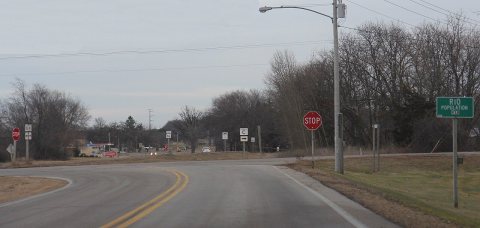 2014
 2014
 2014
 2014
 2004