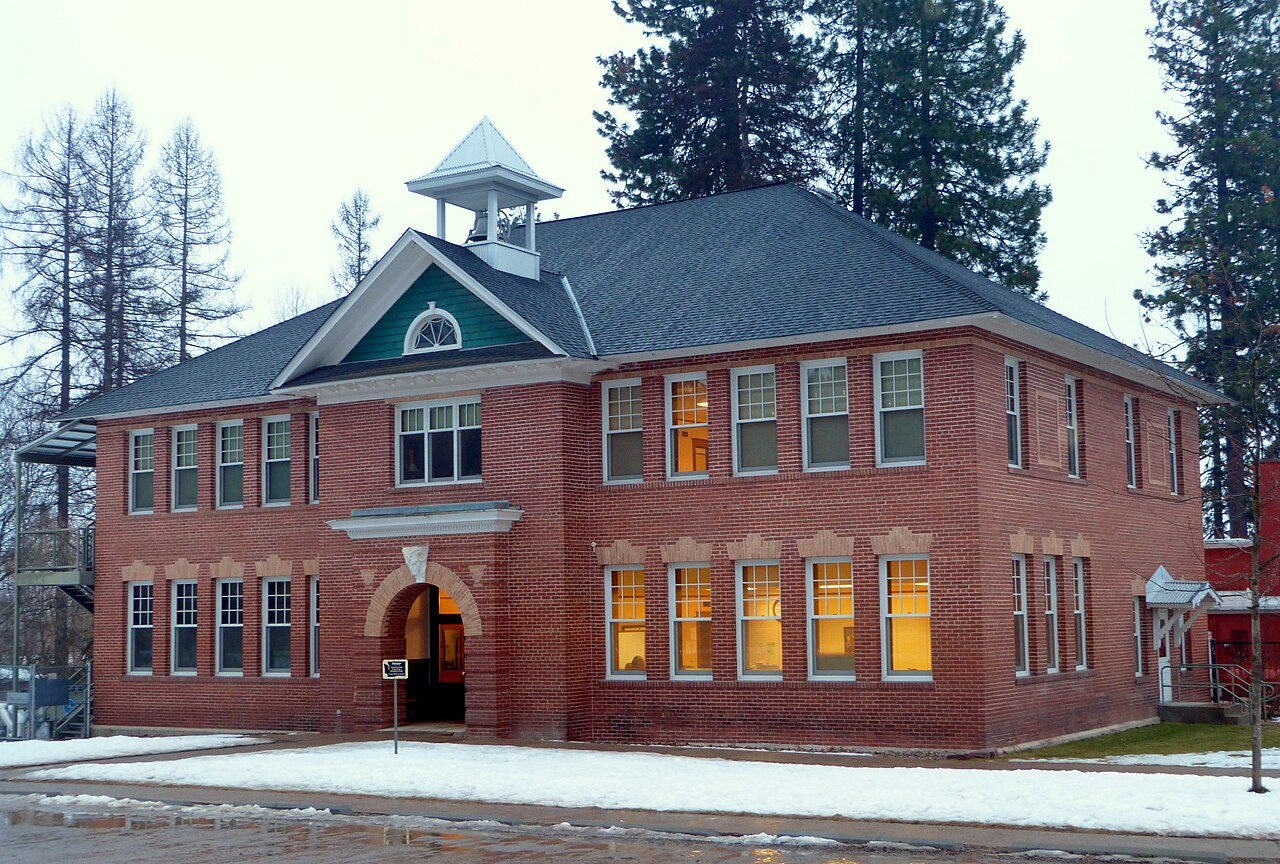
 Clayton School · Photo: Ian Poellet · CC BY-SA 4.0
Where Clayton residents get care
CDC publishes only some of its health estimates for Clayton, not the seven a Health Grade needs; here is what we do have.
Modeled estimates for adults 18+, CDC’s own estimate for Clayton. How CDC estimates town health
What stands out about health in Clayton
COPD, arthritis and asthma run high in Clayton
1 in 15 adults have COPD (6.7%), vs 5.1% across Washington. 3 in 10 adults have arthritis (29.9%), vs 24.4% across Washington. Asthma is also above the state: 12.9%, vs 10.7% across Washington. In all, Clayton runs above Washington on four of 11 chronic conditions. Conditions ↓
Clayton is behind on routine checkups
It trails Washington on three of five routine checkups and screenings: dentist visits (62.3% vs 67%), colon screening (61.6% vs 66.2%) and mammograms (67% vs 74.2%). Checkups ↓
Smoking is more common in Clayton
1 in 8 adults smoke cigarettes (13.3%), vs 10.1% across Washington. Habits ↓
Written from the CDC, Medicare and HRSA data on this page. CDC PLACES 2025 release: modeled estimates for adults, not counts; “higher” and “lower” mean the Washington figure falls outside Clayton’s likely range.
Out of every 100 Clayton adults…
Clayton runs above WA on 5 of 12 conditions. Tap one to see it as people.
Keeping up with care
Share of Clayton adults getting routine care. The full ring is 100%; the dark tick marks Washington.
Everyday habits, side by side with Washington
Share of adults, with the Washington figure marked.
Walk with neighbors
The easiest exercise habit to keep is one with company.
Care in and near Clayton
No hospital or community health center in Clayton itself. These are the nearest.
Hospitals: Medicare overall star ratings, 1–5. Community health centers charge on a sliding scale by income. Distances are straight-line from the center of Clayton; ≈ marks a hospital located by its town, not its street. Shortage areas: HRSA Health Professional Shortage Areas (a “population” designation covers specific residents, such as those with low incomes).
How Clayton adults are doing
About the same as Washington on each measure.
A hello is a start.
Groups are the easiest way in: a walking group, a book club, your street.
If you or someone you know is struggling, call or text 988, the Suicide & Crisis Lifeline. It’s free, confidential and open 24/7.
Making ends meet
Needs that shape health as much as any doctor visit: food, housing, utilities and a way to get around.
12.3% of Clayton adults receive SNAP (food stamps), compared with 11% across Washington.
Clayton and the towns around it
How health changes across the town line.
Health next door
| Town | Health | Obesity | Diabetes | Smoking | Figures from |
|---|
Same-state neighbors only, ordered by length of shared border.
Living with a disability
Shown without a better/worse judgment.
of Clayton adults live with a disability (Washington 27.1%). Thinking or memory is the most common.
Questions about health in Clayton
Why doesn’t Clayton have a Health Grade?
Every Health Grade is built from seven of CDC’s PLACES estimates, and CDC doesn’t publish all seven for Clayton.
What hospital is closest to Clayton?
Providence St. Joseph Hospital in Chewelah, 20.4 miles in a straight line from Clayton’s center point, is the nearest general hospital with an emergency room. It has no Medicare star rating.
Where can I get low-cost care near Clayton?
4 community health center sites are within 10 miles; the nearest is North County Clinic in Deer Park, 5.2 miles away. They charge on a sliding scale by income.
Neighbors talk health
Doctors taking patients, urgent care, staying active in Clayton.
Health estimates: CDC PLACES: Local Data for Better Health, 2025 release. The Washington figure combines its counties, weighted by adult population. Hospitals and star ratings: Medicare Care Compare (CMS). Health centers and shortage areas: HRSA. Ages: U.S. Census Bureau, American Community Survey. Town boundaries: U.S. Census Bureau. This page isn’t medical advice. In an emergency, call 911.