Windsor dates to 1764, and 45% of its homes were built before 1940
Among the most historic 1% of U.S. towns · #3 of 71 in Vermont. What drives it
11 places in town are on the National Register, among them the Robbins and Lawrence Armory and Machine Shop, a National Historic Landmark, and three historic districts with 295 buildings between them. Below: 12 old photos and papers, maps from 1884 on, and the census since 1790.
Founding year: Wikipedia. First post office: 1784.The full story ↓
History grade
What drives Windsor’s History grade
On its age, its old homes and the National Register, Windsor is among the most historic 1% of U.S. towns, #3 of 71 in Vermont. All 3 inputs put Windsor near the top nationally; its share of homes from before 1940 ranks highest.
A+
HistoryA character grade: shown, never part of Windsor’s overall grade.
Vermont towns list more on the Register than most of the country (a typical Vermont town has 147 per 10,000 residents, the U.S. 2.4), so Windsor’s 855 sits above most of its state (96% of Vermont towns have fewer) while its 304 historic buildings outnumber those of 95% of U.S. towns.
NoteThe founding year comes from Wikipedia alone; no second source gives 1764.
How sure. Graded on any two of the three inputs instead, the letter would still be A+. The pre-1940 share is a Census survey estimate (±8.9 points).
Founding year: Wikipedia (other dates in Quick answers). Homes: Census ACS 2020–24. National Register: National Park Service, May 2026 list; each listing counted once (boundary changes and added documentation belong to their listing), and a historic district counts its contributing buildings. How TownRatings grades history →
What stands out about Windsor’s past
Read from the archive, the National Register and the record. The page puts what stands out first.
The country’s official list of buildings and places worth saving. One is a National Historic Landmark, the highest tier. Boundary changes and added documentation are counted with their listing.
One of the New Hampshire grants, Windsor was chartered as a town on July 6, 1761, by colonial governor Benning Wentworth. It was first settled in August 1764 by Captain Steele Smith and his family from Farmington, Connecticut. In 1777, the signers of the Constitution of the Vermont Republic met at Old Constitution House, a tavern at the time, to declare independence from the Great Britain (the Vermont Republic would not become a state until 1791). In 1820, it was the state's largest town, a thriving center for trade and agriculture. In 1835, the first dam was built across Mill Brook to provide water power. Factories made guns, machinery, tinware, furniture and harnesses. The community is named for Windsor, Connecticut.
" Section 4. All property now owned and possessed by the town of Windsor, shall be owned and enjoyed by the said towns of Windsor and West Windsor, in proportion to the grand lists of the persons residing within the territorial limits of said towns of Windsor and West Windsor, respectively, for the year 1848; and the debts now due from the town of Windsor shall be paid by the said towns of Windsor and West Windsor, hereby incorporated, in the same proportion.
Text read by machine from the scan; it may contain errors.
History of Windsor county, Vermont1891 · page 104Read the page →
Read the text
The town of West Windsor is the junior of the sub-divisions of the county, its separation from the township of Windsor having been effected first in 1 8 14, but restored during the next year. Again, in 1848, the town of Windsor was divided, and West Windsor set off". The act of the Legislature that effected the last division was passed October 26, 1848.
Text read by machine from the scan; it may contain errors.
called and known by the name of Windsor.” Here, then, is a definite statement that there was a New York patent for Windsor. Not only were the Windsor signers of the deed of October 9 of the belief that such a patent existed, but the ten New York men whose names were mentioned in the certificate of award or allotment of July 14, actually signed under seal another deed conveying to Nathan Stone under date of July 23, 1766, all their interest in the township of Windsor granted
Text read by machine from the scan; it may contain errors.
place at “the house of Ensn Steel Smith/’ which, we assume, was the building long known as the Evarts farmhouse — the first frame dwelling erected in Windsor — and which, until de¬ stroyed by fire in recent years, stood on the knoll to the west of the main highway, about one-fourth of a mile north of the present village of Windsor. Those who remember March meetings in frigid town halls can easily appreciate the alacrity with which the Windsor freemen of 1778 adjourned from the
Text read by machine from the scan; it may contain errors.
Scans and text from the Internet Archive. Books published in 1930 or earlier, which are in the public domain.
Timeline
Windsor, 1764 to 1966
Woven from the archive, old maps, post office records, the National Register and the people born here.
Nothing in the archives for these yearsWeddings on Main Street, storms, parades, school pictures, the old store. If it’s in your family album, it belongs here.
Every edition of the U.S. Geological Survey’s map of Windsor. Tap a year, or press play to watch the town change.
1926Claremont sheet · 1:62,500
U.S. Geological Survey historical topographic maps (public domain), via Esri’s collection of the scans. The red ring marks the center of Windsor.
Every building
Windsor, building by building, 1884–1917
Fire insurance maps drew every building, what it was made of and what it was used for, so insurers could price the risk of fire. Pick a year, then a sheet.
In 1764, according to Wikipedia’s history of the town. Windsor’s post office opened in 1784, and the first U.S. census counted 1,542 people here in 1790.
How does Windsor rank for history?
Windsor is among the most historic 1% of U.S. towns, #3 of 71 in Vermont. The History grade combines the town’s founding era, the share of homes built before 1940 and its National Register listings. It’s a character grade, so it isn’t part of the overall grade. How it works.
What is on the National Register in Windsor?
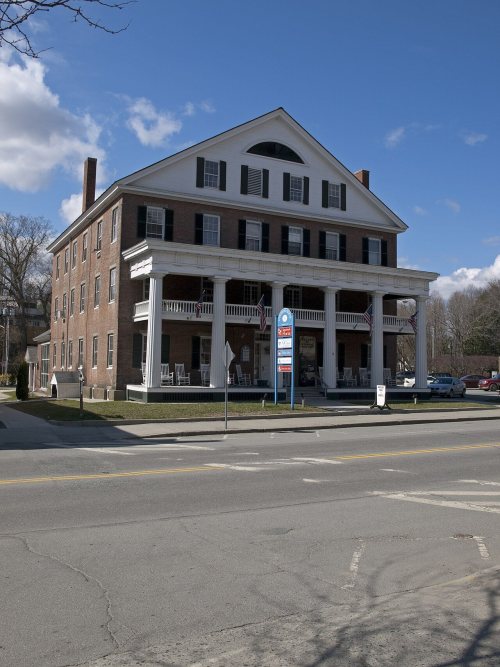
11 listings: 8 buildings, among them the Robbins and Lawrence Armory and Machine Shop (a National Historic Landmark since 1966), and 3 historic districts, the Windsor Village Historic District, the Ascutney State Park and the Ascutney Mill Dam Historic District, with 295 contributing buildings. 304 historic buildings in all.
How old are the homes in Windsor?
45% of Windsor’s homes were built before 1940 (Census estimate, ±8.9 points), against a typical 22% for a Vermont town; the median home was built in 1945.
Founding dates: Wikidata, Wikipedia, the U.S. post office records of Blevins & Helbock (CC0) and the Census. Homes by year built: Census ACS 2020–24. National Register of Historic Places: National Park Service (list of May 22, 2026). Old photos, postcards and papers: Wikimedia Commons, the Library of Congress and other public archives, credited on each item’s page. Maps: U.S. Geological Survey historical topographic maps (via Esri) and Sanborn fire-insurance maps (Library of Congress). History text and census tables: Wikipedia (CC BY-SA 4.0). Places that used to be: USGS Geographic Names Information System (2021).
From Wikimedia Commons (19), the Library of Congress (7), Wikidata (4), the National Register of Historic Places (11), Wikipedia, Wikidata and Wikipedia for famous people, U.S. Geological Survey historical maps, U.S. Census counts (via Wikipedia), the US Post Offices dataset (Blevins & Helbock), the USGS Geographic Names Information System, Sanborn fire insurance maps (Library of Congress) and old county and town histories (Internet Archive). Archive images are copied here with their credits and licenses, shown on each photo’s page. Refreshed monthly.


 ★ Landmark






 1910
 c. 1910
 1914
 1914
 1920
 1941
 1941
 1941
 2025
 2025
 2025
 2023
 2023
 2023
 2023
 2019
 2018
 2015
 2012
 2010
 2010
 2006


