Orange dates to 1834, and 12 of its places are on the National Register
More historic than 75% of U.S. towns · #46 of 253 in Virginia. What drives it
Most of Orange was built recently: 7% of its homes predate 1940 and the median home dates from 1978. 12 places in town are on the National Register, among them two historic districts with 66 buildings between them. Below: 5 old photos and papers, maps from 1905 on, and the census since 1870.
Founding year: Wikidata. First post office: 1795.The full story ↓
History grade
What drives Orange’s History grade
On its age, its old homes and the National Register, Orange is more historic than 75% of U.S. towns, #46 of 253 in Virginia. Its National Register listings hold the grade up; its share of homes from before 1940 pulls it down.
A−
HistoryA character grade: shown, never part of Orange’s overall grade.
Virginia towns list more on the Register than most of the country (a typical Virginia town has 3.6 per 10,000 residents, the U.S. 2.4), so Orange’s 170 sits above most of its state (76% of Virginia towns have fewer) while its 86 historic buildings outnumber those of 88% of U.S. towns.
NoteThe founding year comes from Wikidata alone; no second source gives 1834.
How sure. Graded on any two of the three inputs instead, the letter would range from B to A. The pre-1940 share is a Census survey estimate (±4.1 points).
Founding year: Wikidata (other dates in Quick answers). Homes: Census ACS 2020–24. National Register: National Park Service, May 2026 list; each listing counted once (boundary changes and added documentation belong to their listing), and a historic district counts its contributing buildings. How TownRatings grades history →
What stands out about Orange’s past
Read from the archive, the National Register and the record. The page puts what stands out first.
National Park Service, National Register of Historic Places. Photos from Wikimedia Commons, credited on each place’s page.
Every building
Orange, building by building, 1905–1925
Fire insurance maps drew every building, what it was made of and what it was used for, so insurers could price the risk of fire. Pick a year, then a sheet.
This area of the Piedmont was occupied by Siouan-speaking peoples at the time of European encounter. Tribes located in coastal areas generally spoke Algonquian languages.
Passages that mention Orange, cut from the printed page as they were published.
A History of Orange County, Virginia, from its formation in 1734 (o.s.) to the end of reconstruction in 18701907 · page 23Read the page →
Read the text
The freeholders were required to meet at Germanna on that day and there " elect and choose twelve of the most able and discreet persons of their parish to be vestrymen." When Orange was established, just four years later, the dividing line between these parishes was made the boundary line between Orange and Spotsylvania, so it becomes necessary to determine what that line was. It is manifest that Orange never
Text read by machine from the scan; it may contain errors.
A History of Orange County, Virginia, from its formation in 1734 (o.s.) to the end of reconstruction in 18701907 · page 74Read the page →
Read the text
to camp; to James Coleman, for supplies impressed by- William Thomas, commanding officer of guard at Brock's Bridge; to William Morton, for wagon impressed for Orange militia from August 17 to October 31, 1781, and for a wagon impressed at Guilford courthouse, North Carolina, October, 1781, by order of General Stevens ; to Zachary Herndon, for wagon with Orange militia 27 days, October and November, 1781, and to same in
Text read by machine from the scan; it may contain errors.
Donald Robertson and his wife, Rachel Rogers, of King and Queen County, Virginia, their ancestry and posterity1900Read the page →
Read the text
Orange. The house (see engravmg), the oldest in Orange coiintj', is j-et in an excellent state of preservation. It is built of wood, one and a half stories high, with dormer windows in the roof and having two large brick chimneys, in which are huge oldfashioned fire-places. A portico with four columns adorns its front. Ever}- nail used was wrought by a blacksmith. Inside, it is quite pretentious, the walls
Text read by machine from the scan; it may contain errors.
Scans and text from the Internet Archive. Books published in 1930 or earlier, which are in the public domain.
Timeline
Orange, 1795 to 1991
Woven from the archive, old maps, post office records, the National Register and the people born here.
In 1834, according to Wikidata. Orange’s post office opened in 1795, and the census of 1870 counted 731 people here.
How does Orange rank for history?
Orange is more historic than 75% of U.S. towns, #46 of 253 in Virginia. The History grade combines the town’s founding era, the share of homes built before 1940 and its National Register listings. It’s a character grade, so it isn’t part of the overall grade. How it works.
What is on the National Register in Orange?
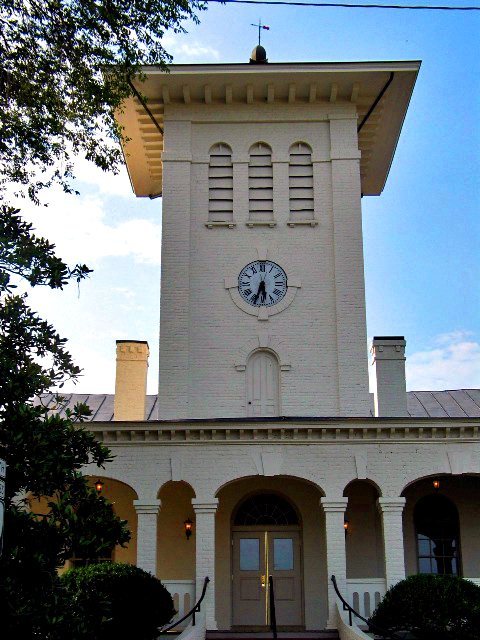
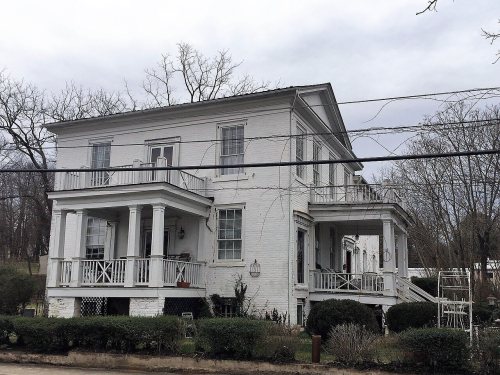
12 listings: 10 buildings, among them the Mayhurst (listed 1969, the first), and 2 historic districts, the Orange Commercial Historic District and the Old Manse, with 66 contributing buildings. 86 historic buildings in all.
How old are the homes in Orange?
7% of Orange’s homes were built before 1940 (Census estimate, ±4.1 points), against a typical 1.9% for a Virginia town; the median home was built in 1978.
Founding dates: Wikidata, Wikipedia, the U.S. post office records of Blevins & Helbock (CC0) and the Census. Homes by year built: Census ACS 2020–24. National Register of Historic Places: National Park Service (list of May 22, 2026). Old photos, postcards and papers: Wikimedia Commons, the Library of Congress and other public archives, credited on each item’s page. Maps: U.S. Geological Survey historical topographic maps (via Esri) and Sanborn fire-insurance maps (Library of Congress). History text and census tables: Wikipedia (CC BY-SA 4.0). Places that used to be: USGS Geographic Names Information System (2021).
From Wikimedia Commons (21), the Library of Congress (3), the National Register of Historic Places (12), Wikipedia, Wikidata and Wikipedia for famous people, U.S. Geological Survey historical maps, U.S. Census counts (via Wikipedia), the US Post Offices dataset (Blevins & Helbock), the USGS Geographic Names Information System, Sanborn fire insurance maps (Library of Congress) and old county and town histories (Internet Archive). Archive images are copied here with their credits and licenses, shown on each photo’s page. Refreshed monthly.




 1980
 1980
 1980
 2020
 2017
 2016
 2016
 2016
 2016
 2016
 2013
 2012
 2011
 2010
 2010
 2010
 2010
 2010
 2009
 2008
 2007
 2007


