Guest, Sign inJoin

Post to Glen Allen

We’ll email a one-tap link to publish your post. No password, and nothing is public until you click it.
Already a member? Sign in
C+History
History · Glen Allen

5 of Glen Allen’s places are on the National Register

More historic than 41% of U.S. towns · #108 of 253 in Virginia. What drives it

Most of Glen Allen was built recently: 3% of its homes predate 1940 and the median home dates from 1993. Below: 2 old photos and papers, maps from 1936 on, and the census since 1980.

5on the National Register
3%homes built before 1940
2old photos & papers
3famous people
From Glen Allen’s archive · credits on each photo
Quick answers

About Glen Allen’s history

How historic is Glen Allen?

C+

More historic than 41% of U.S. towns, on its age, its old homes and the National Register.

What drives the grade ↓
History grade

What drives Glen Allen’s History grade

On its age, its old homes and the National Register, Glen Allen is more historic than 41% of U.S. towns, #108 of 253 in Virginia. Its National Register listings hold the grade up; its share of homes from before 1940 pulls it down.

C+
HistoryA character grade: shown, never part of Glen Allen’s overall grade.
All U.S. towns we grade (21,289)Ahead of 41%
NewerOlder
Virginia towns of 2,500+ (253)Ahead of 58%

Virginia towns list more on the Register than most of the country (a typical Virginia town has 3.6 per 10,000 residents, the U.S. 2.4), so Glen Allen’s 6.8 sits near the middle of its state (50% of Virginia towns have fewer) while its 12 historic buildings outnumber those of 77% of U.S. towns.

How sure. Graded on two of the three inputs, so a change in either one moves the letter more than it would with three. The pre-1940 share (±1.7 points) is firm at this size.

Founding year: our sources. Homes: Census ACS 2020–24. National Register: National Park Service, May 2026 list; each listing counted once (boundary changes and added documentation belong to their listing), and a historic district counts its contributing buildings. How TownRatings grades history →

What stands out about Glen Allen’s past

Read from the archive, the National Register and the record. The page puts what stands out first.

★ What stands out · Help out

Start Glen Allen’s collection

The first neighbors to add old photos shape how Glen Allen’s history is told.

Decades since 1900 with photos
00s10s20s30s40s50s60s70s80s90s
0 of 10 decades. The empty ones are waiting for someone’s album.
Places that used to be

Lost post offices, old corners and places now gone

Another post office, Solomons, opened and closed inside today’s town.

Hamlets and corners on the map
Bretton WoodsGreenwoodHolly Glen EstatesHuntington HeightsHuntonLaurel LakesLaurel WestLongdaleMountain LaurelQuail WalkSolomons StoreStony Run Estates
Gone or out of use
Laurel Industrial Schoolschool

US Post Offices dataset (Blevins & Helbock, CC0). Places and cemeteries from the USGS Geographic Names Information System (2021).

On the National Register

5 historic places in Glen Allen

The country’s official list of buildings and places worth saving. One is a National Historic Landmark, the highest tier.

places listed
5
National Historic Landmark
1
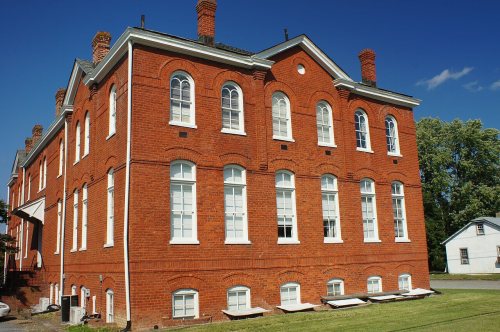
Virginia Randolph Cottage
historic buildings protected
12
each building in a district counts
first listed
1974
Meadow Farm

National Park Service, National Register of Historic Places. Photos from Wikimedia Commons, credited on each place’s page.

The story

How Glen Allen came to be

From Wikipedia’s history of Glen Allen.

Read it all →

Called "Mountain Road Crossing" when rail service began in 1836, the settlement which came to be known as Glen Allen took its name from the homestead of a local landowner, Mrs. Benjamin Allen. Its most noted resident was Captain John Cussons, a native Englishman, Confederate scout, author, and entrepreneur. Cussons made his residence here after the Civil War and founded a successful printing company. Later, he built a fashionable resort hotel adjacent to the railroad tracks, which was known as Forest Lodge.

Glen Allen used to be mostly rural farmland, but it is now a growing suburb of Richmond.

Text from Wikipedia, licensed CC BY-SA 4.0.

Timeline

Glen Allen, 1878 to 2000

Woven from the archive, old maps, post office records, the National Register and the people born here.

  1. 19th century
  2. 1878Post officeThe Solomons post office opens
  3. 20th century
  4. 1902Post officeThe Solomons post office closes
  5. 1936On the mapFirst mapped by the U.S. Geological Survey
  6. 1937BuiltVirginia Randolph Cottage is built
  7. 1974LandmarkVirginia Randolph Cottage named a National Historic Landmark
  8. 1990Born hereBrian Ownby is born here
  9. 1995Born hereAndrew Knizner is born here
  10. 21st century
  11. 2000Born hereZac Jones is born here
By decade

Glen Allen, decade by decade

On the map

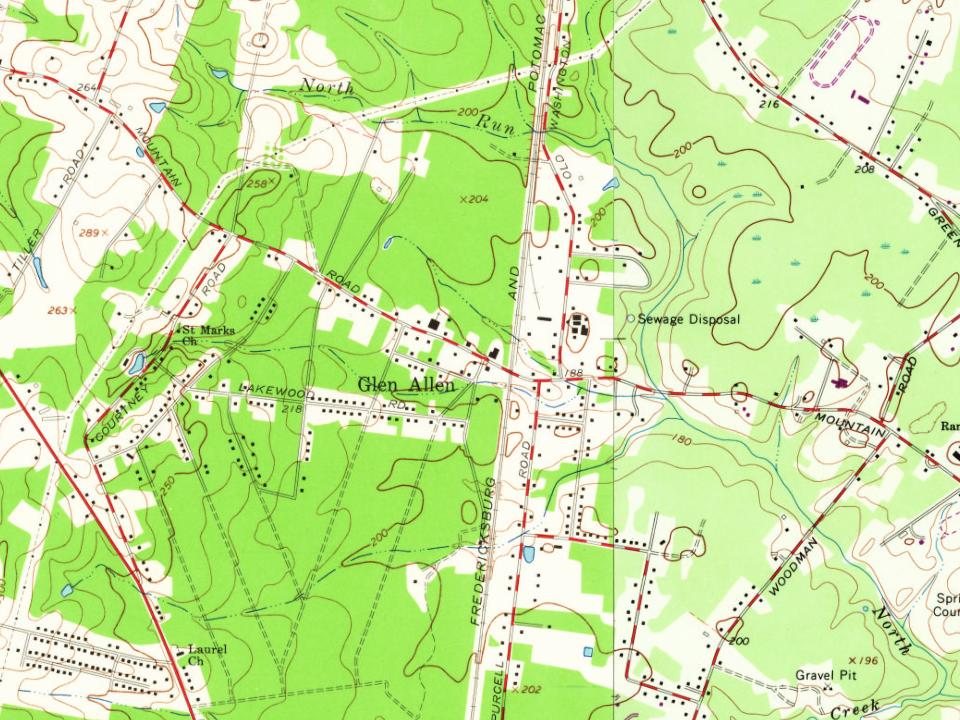
Glen Allen on the map, 1936 to 1994

Every edition of the U.S. Geological Survey’s map of Glen Allen. Tap a year, or press play to watch the town change.

Glen Allen on the 1936 USGS mapGlen Allen on the 1941 USGS mapGlen Allen on the 1963 USGS mapGlen Allen on the 1974 USGS mapGlen Allen on the 1981 USGS mapGlen Allen on the 1994 USGS map1936Glen Allen sheet · 1:24,000

U.S. Geological Survey historical topographic maps (public domain), via Esri’s collection of the scans. The red ring marks the center of Glen Allen.

Then & now

Stand where they stood

No then-and-now pairs yet. Take a photo from the same spot as an old one and they appear here side by side.

Quarters Cabin, Gayton Road vicinity
Retake this viewQuarters Cabin, Gayton Road vicinity

Find the spot, match the angle, and add your photo. It becomes the first then-and-now pair on Glen Allen’s page.

Retake this view · +15
People over time

Glen Allen, census by census

02,0004,0006,0008,00010,00012,00014,00016,00018,00019802000202016,187

Grew from 6,202 people in 1980 to 16,187 in 2020.

5 censuses, 1980–2020.

U.S. Census Bureau decennial counts, from the census table on Glen Allen’s Wikipedia page.

Famous people

3 famous people were born in Glen Allen

Writers, athletes, leaders and more, ranked by how widely they’re known.

See all →
Stories next door

History across the town line

Each neighbor’s History grade, on the same three inputs.

Questions about Glen Allen’s history

How does Glen Allen rank for history?

Glen Allen is more historic than 41% of U.S. towns, #108 of 253 in Virginia. The History grade combines the town’s founding era, the share of homes built before 1940 and its National Register listings. It’s a character grade, so it isn’t part of the overall grade. How it works.

What is on the National Register in Glen Allen?

5 listings: 3 buildings, among them the Virginia Randolph Cottage (a National Historic Landmark since 1974) and the Meadow Farm (listed 1974, the first), 1 historic district, the Laurel Industrial School Historic District, with 5 contributing buildings, and 1 object. 12 historic buildings in all.

How old are the homes in Glen Allen?

3% of Glen Allen’s homes were built before 1940 (Census estimate, ±1.7 points), against a typical 1.9% for a Virginia town; the median home was built in 1993.

Memory lane

What the archives can’t tell you, neighbors can.

Town Square →
Start a conversation
Sources

Where this page comes from

Founding dates: Wikidata, Wikipedia, the U.S. post office records of Blevins & Helbock (CC0) and the Census. Homes by year built: Census ACS 2020–24. National Register of Historic Places: National Park Service (list of May 22, 2026). Old photos, postcards and papers: Wikimedia Commons, the Library of Congress and other public archives, credited on each item’s page. Maps: U.S. Geological Survey historical topographic maps (via Esri) and Sanborn fire-insurance maps (Library of Congress). History text and census tables: Wikipedia (CC BY-SA 4.0). Places that used to be: USGS Geographic Names Information System (2021).

From Wikimedia Commons (6), the Library of Congress (2), the National Register of Historic Places (5), Wikipedia, Wikidata and Wikipedia for famous people, U.S. Geological Survey historical maps, U.S. Census counts (via Wikipedia), the US Post Offices dataset (Blevins & Helbock) and the USGS Geographic Names Information System. Archive images are copied here with their credits and licenses, shown on each photo’s page. Refreshed monthly.