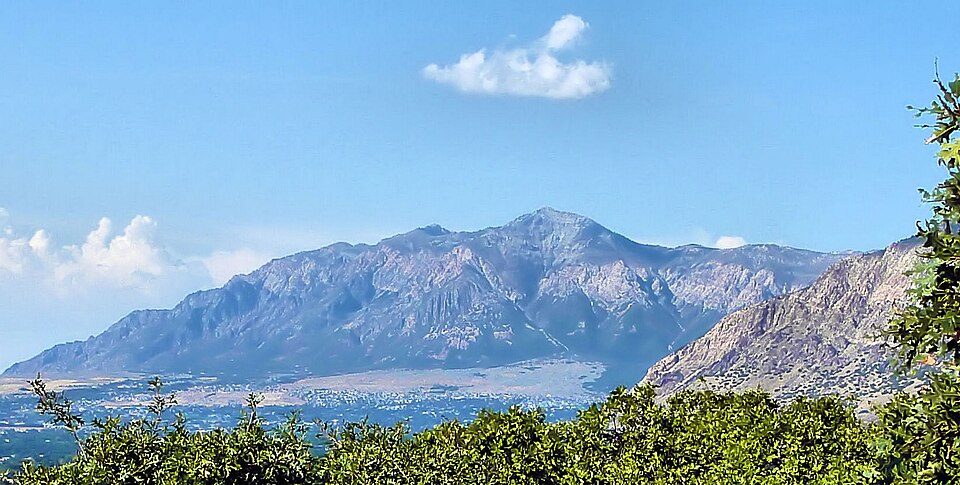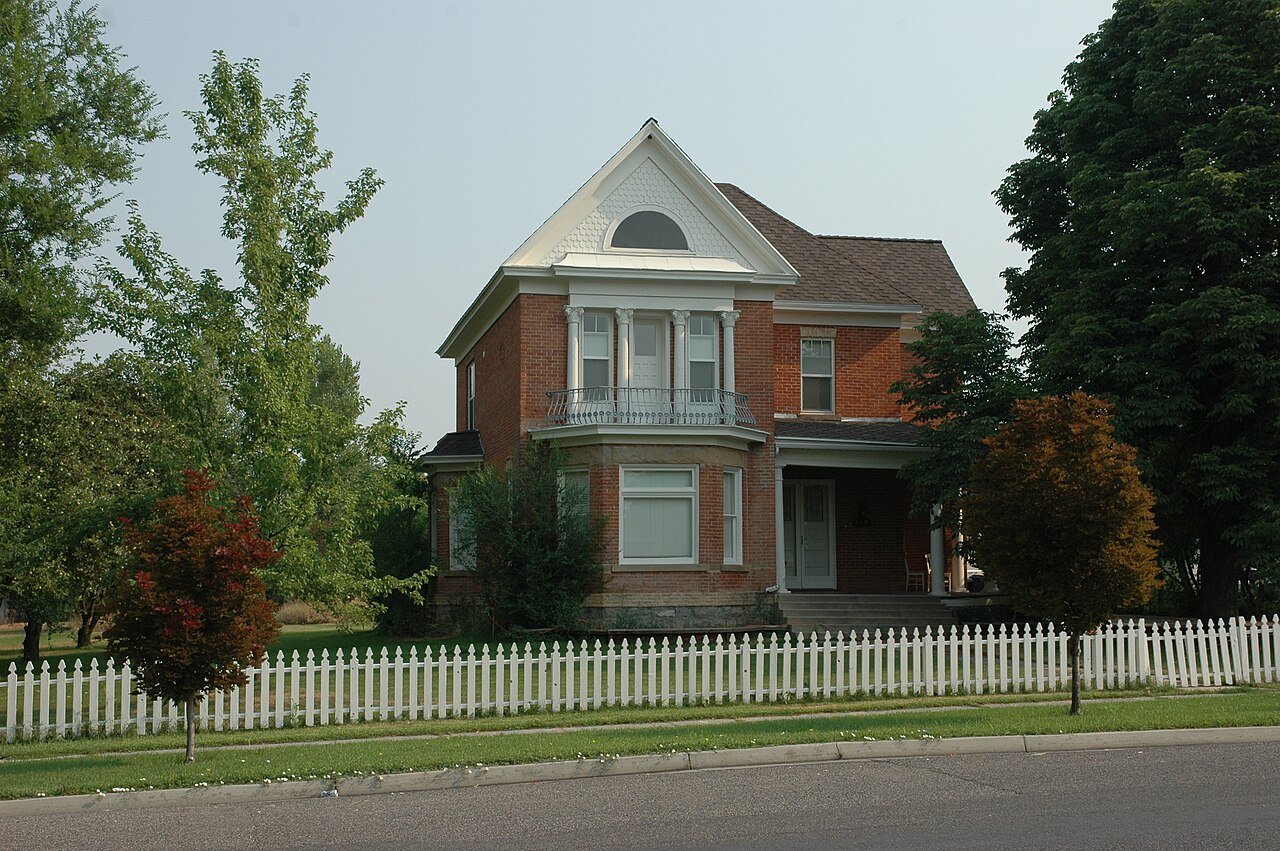
166 years in pictures
Census counts: 343 in 1870, 5,234 in 2020. The archive holds 2 old photos and papers going back to 1903 and 3 maps from 1964 on.
1 place on the National Register of Historic Places.
- 1860Hyde Park is settled
Each edition grades its towns against each other only.

A town of 5,786, settled in 1860.
Hyde Park is one of the best-graded places in America: an A+, 5th among Utah's 118 graded towns. It is healthier than 95% of U.S. towns, its schools outperform 90% of the state's, and the median household earns $113K. Its lowest mark, a B−, is in cost of living. Hyde Park’s trail density is 3.2 miles per square mile, above both Utah’s towns (1.1) and U.S. towns (0.4). On hazard risk, just 15 of Utah’s 173 towns do better. Hyde Park's civic life (library use, community groups, volunteering) trails 96% of U.S. towns.
Where Hyde Park beats most towns.
3,833 counted in 2010 and 5,234 in 2020; an estimated 5,786 in 2025.
Growth hasn’t slowed: 10.4% since 2020, after 36.6% in the decade before.
U.S. Census 2010 & 2020 counts · Census Bureau estimate, July 1, 2025
Each subject compared with towns across the country (schools within Utah), ordered by how far Hyde Park is from typical.
How TownRatings grades towns →
Census counts: 343 in 1870, 5,234 in 2020. The archive holds 2 old photos and papers going back to 1903 and 3 maps from 1964 on.
1 place on the National Register of Historic Places.
Who provides power, water and the rest in Hyde Park, and how to reach them.
EPA SDWIS (Oct 9, 2026) · HIFLD + EIA-861 2025 · Census 2020 ZCTAs · NCES 2024–25 · registration: vote.gov, updated Mar 13, 2026.
Ordered by what stands out in Hyde Park.
Hyde Park has schools in the top 5% of Utah and has commutes shorter than most of Utah, but it has homes that cost more against local pay than most of Utah.
| Biggest places to walk | Trails | Acres |
|---|---|---|
| 1. 600 South Park | 0.4 mi | 9 |
| 2. Lion's Park | 0.1 mi | 14 |
| 3. Lee Park | 0.1 mi | 12 |
Trails & parks © OpenStreetMap contributors · Conserved land: USGS PAD-US
Its A ranks #1 of the 119 Utah towns we grade for schools.
Its public schools are run by the Cache District. Its one school is below.
| School | Level | Students | Letter |
|---|---|---|---|
| Cedar Ridge SchoolLargest public elementary schoolGrades K–6 | Grades K–6 | 719 | A+ |
NCES · EDFacts · graded within UT on state tests and graduation
29% of adults sleep under 7 hours in Hyde Park, where Utah’s towns sit at 34% and U.S. towns at 36%. 14% of adults get no exercise outside work in Hyde Park. Hyde Park beats the Utah average on 11 of 32 CDC measures and trails it on 1.
| Hyde Park | Utah towns | U.S. towns | |
|---|---|---|---|
| Sleep under 7 hours (CDC PLACES) | 29% | 34% | 36% |
| Get no exercise (CDC PLACES) | 14% | 17% | 25% |
| Binge drink (CDC PLACES) | 11% | 11% | 16% |
| Obesity (CDC PLACES) | 28% | 31% | 35% |
| What stands out | Hyde Park | UT |
|---|---|---|
| Fewer older adults who have lost all their teeth | 6.5% | 9.8% |
| Fewer uninsured adults | 7% | 10.5% |
| More adults who have had cancer | 8.4% | 7.2% |
CDC PLACES 2025 · modeled estimates for adults · CMS · HRSA
The average commute for its 2,632 working residents takes 16 minutes, against 22.1 across Utah. Jobs based here grew from 810 in 2013 to 1,496.
Most working residents leave Hyde Park for work: only 3% work in town. The average trip to work in Hyde Park is 16 minutes. Since 2013, Hyde Park has added 686 jobs, to 1,496 in 2023.
| Hyde Park | Utah towns | U.S. towns | |
|---|---|---|---|
| Average trip to work | 16 minutes | 22 minutes | 25 minutes |
| Below the poverty line | 1.9% | 6.4% | 9.6% |
| Median household income | $113,000 | $101,000 | $80,000 |
| Working residents who work in town | 3.2% | 8.5% | 8% |
Census LEHD 2023 · ACS
Expected storm and flood damage is lower than in 78% of U.S. communities.
FEMA National Risk Index · OpenFEMA
Hyde Park has cold, snowy winters and warm summers, with very little rain. Hyde Park’s July high is 89°F.
NOAA U.S. Climate Normals, 1991–2020
At 7.2 years of the Logan metro’s $81K median household income, the typical home (about $585K) costs more against local pay than in 84% of Utah towns; that ratio is one input to its B− for cost of living.
The typical Hyde Park home is worth about $585,000, up 4.4% in a year, 10% above the Utah typical home. 91% of Hyde Park households own their home.
| Hyde Park | Utah towns | U.S. towns | |
|---|---|---|---|
| Households that own their home | 91% | 79% | 73% |
| Median rent | $1,273 a month | $1,542 a month | $1,185 a month |
Census ACS, 2020–24 · Zillow Home Value Index · Redfin Data Center
Museums, parks, gardens and other places to visit around Hyde Park. Close and well known come first.
28 mi LakeBear Lake
31 mi MountainBen Lomond Mountain
34 mi National Historical ParkGolden Spike National Historical Park54K visitors a year30 mi Ski areaPowder Mountain Ski Resort155 runs · 2,755 ft vertical18 mi Ski areaBeaver Mountain54 runs · 1,607 ft vertical9 mi Ski areaCherry Peak Ski Area37 runs · 1,210 ft verticalBear Lake: kla4067, CC BY 2.0 · Ben Lomond Mountain: Joe Tordiff, CC BY-SA 2.0 · Golden Spike National Historical Park: Unknown, Public domain
1 within 15 miles of the center of Hyde Park
About 6 of every 100 Hyde Park residents are enrolled in college, against 8 across Utah.
3.2% of the town is conserved land, across 4 parks and preserves.
City in Utah, United States
Hyde Park is a city in north-central Cache County, Utah, United States. The population was 5,234 at the 2020 census. It is included in the Logan, Utah-Idaho Metropolitan Statistical Area.
From Wikipedia, licensed CC BY-SA 4.0 · facts via Wikidata (CC0)
One town shares a border with Hyde Park.
| Town | UT rank | Overall | Cost | Safety | Schools | Health |
|---|---|---|---|---|---|---|
| Hyde Park | #5 | A+ | B− | — | A | A+ |
| North Logan | #34 | A | C− | — | A | A |
Hyde Park and North Logan report no FBI crime data of their own. Compare Hyde Park with a neighbor →
Short answers, built from the data on this page.
Yes, by almost any measure. It grades A+ for health and A for schools.
That is 7.2 years of the area's median household income ($81,126 across the Logan, UT-ID metro area). Cost of living, which also weighs rents, property taxes and how many households pay 30% or more of their income for housing, grades B−.