
Fruit Heights Utah City Hall, 2008
Fruit Heights’s story
87 years in pictures
Census counts: 124 in 1950, 6,101 in 2020. The archive holds 1 old photo or paper going back to 2008 and 5 maps from 1955 on.
- 1939Fruit Heights is settled
Each edition grades its towns against each other only.

Fruit Heights is one of the best-graded places in America: an A, 12th of 118 graded towns in Utah. The median household earns $141K and it is healthier than 95% of U.S. towns. Its lowest mark, a C, is in cost of living. Fruit Heights’ trail density is 3.3 miles per square mile, above both Utah’s towns (1.1) and U.S. towns (0.4). Fruit Heights has 1 place on the National Register. Among 119 Utah towns, just 3 have a higher share of households owning their home than Fruit Heights.
Where Fruit Heights beats most towns.
4,987 counted in 2010 and 6,101 in 2020; an estimated 5,952 in 2025.
Since 2020 the trend has turned: down 2.3%, after 22.3% growth in the decade before.
U.S. Census 2010 & 2020 counts · Census Bureau estimate, July 1, 2025
Each subject compared with towns across the country (schools within Utah), ordered by how far Fruit Heights is from typical.
How TownRatings grades towns →
Census counts: 124 in 1950, 6,101 in 2020. The archive holds 1 old photo or paper going back to 2008 and 5 maps from 1955 on.
Museums, parks, gardens and other places to visit around Fruit Heights. Close and well known come first.
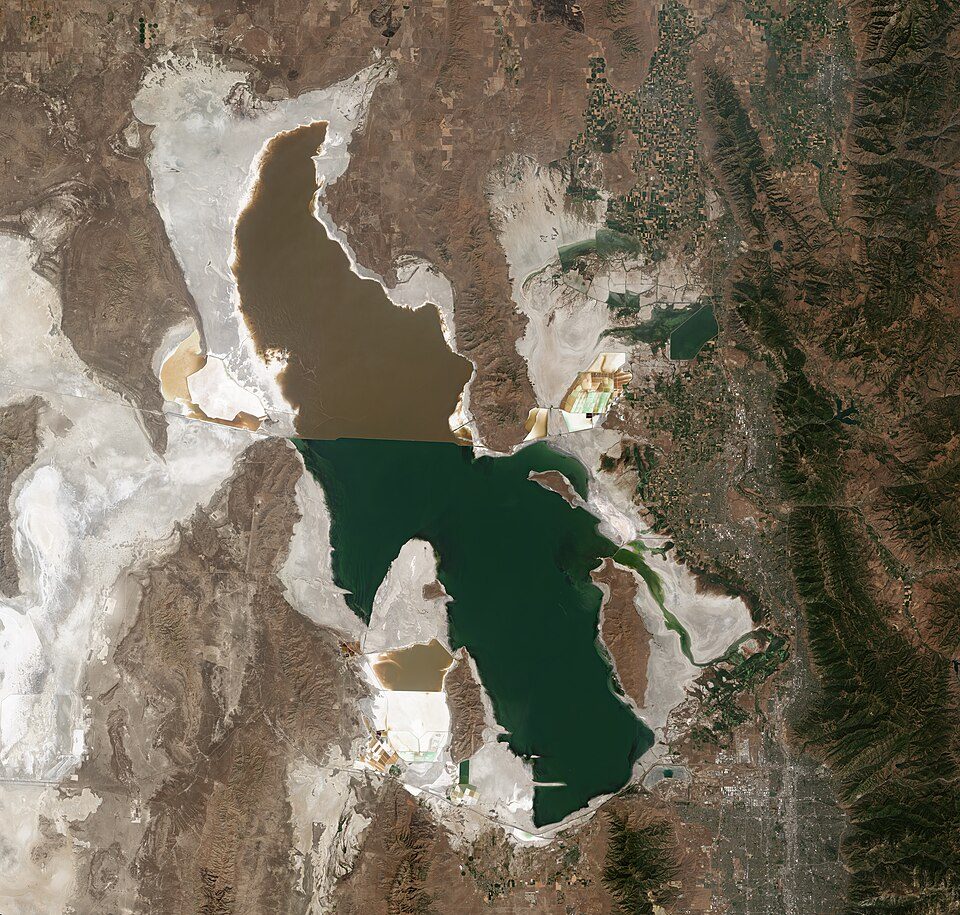 Big draw37 mi LakeGreat Salt Lake
 Big draw18 mi Stadium & arenaDelta Center
 3 mi Theme parkLagoon Amusement Park
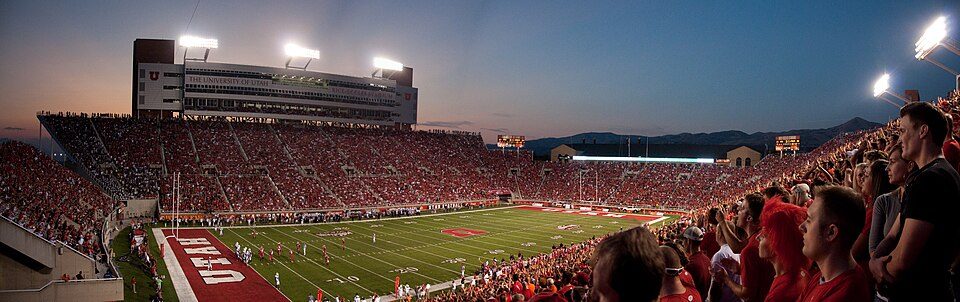 19 mi Stadium & arenaRice–Eccles Stadium
 18 mi GardenTemple Square2 mi Park & preserveKay's Cross
Great Salt Lake: Copernicus Sentinel-2, ESA, CC BY-SA 3.0 igo · Delta Center: Lomrjyo, CC BY-SA 4.0 · Lagoon Amusement Park: Davehi1, Public domain · Rice–Eccles Stadium: Brenton Walker, CC BY 2.0 · Temple Square: Carol M. Highsmith, Public domain
Who provides power, water and the rest in Fruit Heights, and how to reach them.
EPA SDWIS (Oct 9, 2026) · HIFLD + EIA-861 2025 · Census 2020 ZCTAs · NCES 2024–25 · registration: vote.gov, updated Mar 13, 2026.
Ordered by what stands out in Fruit Heights.
Fruit Heights has less food insecurity than most of Utah and sends most of its workers to Salt Lake City and beyond, but it has homes that cost more against local pay than most of Utah.
7.6 miles of trail in 2 parks and preserves. Uinta-Wasatch-Cache National Forest, at 110 acres with 2.5 miles of trail, is the biggest park or preserve.
| Biggest places to walk | Trails | Acres |
|---|---|---|
| 1. Uinta-Wasatch-Cache National Forest | 2.5 mi | 110 |
| 2. Nicholls Park | 0.1 mi | 12 |
Trails & parks © OpenStreetMap contributors · Conserved land: USGS PAD-US
Its widest gap with Utah is food insecurity: 6.4% of its 4,199 adults worry about having enough food, against 12.4% statewide.
10% of Fruit Heights adults binge drink, below both the Utah town median (11%) and the median of U.S. towns (16%). 6% of adults smoke cigarettes in Fruit Heights. Fruit Heights beats the Utah average on 19 of 32 CDC measures and trails it on 2.
| Fruit Heights | Utah towns | U.S. towns | |
|---|---|---|---|
| Binge drink (CDC PLACES) | 10% | 11% | 16% |
| Smoke cigarettes (CDC PLACES) | 6% | 8% | 14% |
| Get no exercise (CDC PLACES) | 15% | 17% | 25% |
| Frequent physical distress (CDC PLACES) | 10% | 12% | 14% |
| What stands out | Fruit Heights | UT |
|---|---|---|
| Fewer adults facing food insecurity | 6.4% | 12.4% |
| Fewer older adults who have lost all their teeth | 5.2% | 9.8% |
| More adults who have had cancer | 9.5% | 7.2% |
CDC PLACES 2025 · modeled estimates for adults · CMS · HRSA
At 7.5 years of the Ogden metro’s $101K median household income, the typical home (about $759K) costs more against local pay than in 90% of Utah towns; that ratio is one input to its C for cost of living.
The typical Fruit Heights home is worth about $759,000, up 3.8% in a year, 42% above the Utah typical home. Fruit Heights’ median rent is $1,932 a month.
Census ACS, 2020–24 · Zillow Home Value Index · Redfin Data Center
Fruit Heights has 641 jobs for its 2,648 working residents: even if every job went to a resident, most would still commute out. Jobs based here grew from 335 in 2013 to 641.
Most working residents leave Fruit Heights for work: only 2% work in town. Jobs based in Fruit Heights grew to 641 in 2023, 306 more than in 2013. 3.9% of Fruit Heights residents live below the poverty line.
| Fruit Heights | Utah towns | U.S. towns | |
|---|---|---|---|
| Median household income | $141,000 | $101,000 | $80,000 |
| Below the poverty line | 3.9% | 6.4% | 9.6% |
| Working residents who work in town | 1.8% | 8.5% | 8% |
| Average trip to work | 25 minutes | 22 minutes | 25 minutes |
Census LEHD 2023 · ACS
Expected storm and flood damage is lower than in 76% of U.S. communities.
FEMA National Risk Index · OpenFEMA
Fruit Heights has chilly, snowy winters and warm summers. The July high in Fruit Heights is 90°F.
NOAA U.S. Climate Normals, 1991–2020
2 within 15 miles of the center of Fruit Heights
About 5 of every 100 Fruit Heights residents are enrolled in college, against 8 across Utah.
Where Fruit Heights’s working residents go each day. Line width shows the share.
Census LEHD 2023
City in Utah, United States
Fruit Heights is a city in eastern Davis County, Utah, United States. It is part of the Ogden–Clearfield, Utah Metropolitan Statistical Area. It lies along the Wasatch Front adjacent to the larger cities of Farmington and Kaysville. Its population was 6,101 at the 2020 census, a significant increase of 4,987 at the 2010 census.
From Wikipedia, licensed CC BY-SA 4.0 · facts via Wikidata (CC0)
2 towns share a border with Fruit Heights.
| Town | UT rank | Overall | Cost | Safety | Schools | Health |
|---|---|---|---|---|---|---|
| Fruit Heights | #12 | A | C | — | B+ | A+ |
| Kaysville | #4 | A+ | C+ | A− | B+ | A |
| Farmington | #21 | A | C | B+ | B+ | A |
Fruit Heights reports no FBI crime data of its own. Compare Fruit Heights with a neighbor →
Short answers, built from the data on this page.
Yes, by almost any measure. Fruit Heights grades A overall, better than 94% of U.S. towns and #12 of 118 in Utah. It grades A+ for health and B+ for schools.
That is 7.5 years of the area's median household income ($101,203 across the Ogden, UT metro area). Cost of living, which also weighs rents, property taxes and how many households pay 30% or more of their income for housing, grades C.


