
 II*
Church · listed 1964Church of St AndrewPhoto: Andrew Smith · CC BY-SA 2.0
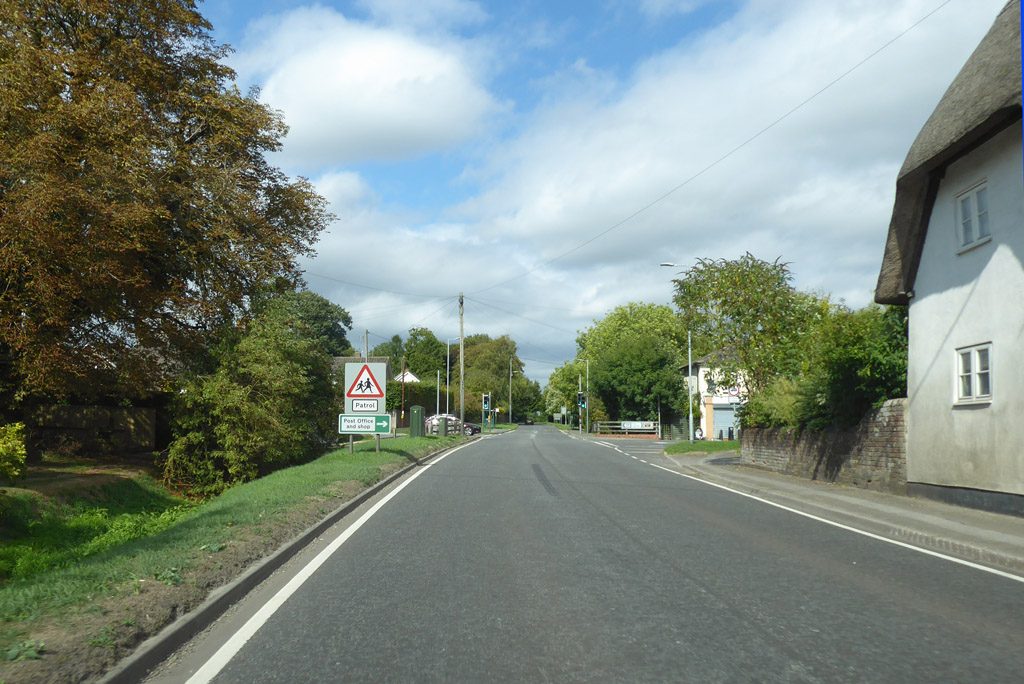 Photo: Robin Webster · CC BY-SA 2.0
–Not graded
History of Collingbourne Ducis · Historic England
43 listed buildings, 2 of them Grade II*
Historic England counts them inside Collingbourne Ducis’s built-up area, 474 for every 10,000 residents. 41 of Collingbourne Ducis’s listed buildings are Grade II. 28% of its homes were built before 1919.
Listed buildings
43
474 per 10,000 residents
Grade I
0
exceptional interest
Grade II*
2
more than special interest
Scheduled monuments
0
nationally important sites
Homes built before 1919
28%
typical UK town 15%
In pictures
Landmarks of Collingbourne Ducis
Tap a photo to step through them full screen.
Photos from Wikimedia Commons and Geograph, copied to our own server, each credited to its photographer with its licence; names open the building’s page or its official list entry.
The map
Where Collingbourne Ducis’s history is
Every Grade I and II* building, monument and historic park.
Grade II*
Hover a dot for its name; tap one with a photo to open it.
43 listed buildings by grade
0 Grade I2 Grade II*41 Grade II
Historic England lists buildings in three grades: Grade I for buildings of exceptional interest (about 2.5% of all listed buildings), Grade II* for particularly important buildings of more than special interest (about 5.8%), and Grade II for buildings of special interest (about 91.7%). Listing protects the whole building, inside and out.
Every entry on the National Heritage List for England whose point lies inside the ONS 2022 built-up-area boundary. One list entry can cover a terrace or a group of buildings.
Grade II*
The 2 Grade II* listed buildings in Collingbourne Ducis
Particularly important buildings of more than special interest. 1 is photographed. Each opens its own page, with the official list entry.
House · listed 1952Sunton House
What’s protected
Most of Collingbourne Ducis’s listed buildings are homes
Every listed building sorted by what its list name says it is.
Houses, terraces & villas34
Churches, chapels & priories5
Inns, shops & warehouses2
Memorials, crosses & tombs1
Public & civic buildings1
34 entries (79%) are houses, terraces and villas. 5 are churches, chapels and priories.
Buildings are sorted by words in each entry’s name (church, gate, inn, memorial…): the list’s open data has no building type. An entry named only by its address counts as a house.
Grade II
41 Grade II listed buildings
Most listed buildings are in this grade, which covers buildings of special interest. Open any building to read its official list entry.
All 41 Grade II listed buildings, A to Z
April CottageBarley Stack CottageBarn South of Littlebridge HouseBlack and Hill Monuments in Churchyard, Approximately 5 to 8 Metres South of Tower, Church of St AndrewBlue Lion InnBourne CottageBourneside Peppercorn CottageBumpkins and Dormy CottageCawdreys FarmhouseCobblers CottageCollingbourne Ducis War MemorialCourt FarmhouseFarthingsGranary (25M South of Sunton House)Granary (68 M South of Sunton House)Holly CottageHope CottageLinden CottageLinnea CottageLittle RidgewayMackrell Monument in Churchyard, Approximately 32 Metres South of Tower, Church of St AndrewMaton Monument in Churchyard, Approximately 4 Metres West of Tower, Church of St AndrewMilestone Approximately 30 Metres South of Church Street JunctionNos 88 (Foxglove Cottage), 89 and 90 SuntonOld Limes FarmhousePats and Glen CottagesPennybourne CottagePoplar RowRectory CottageSally Lunn'sSunton CottageThe Last Straw Public House104 Sunton10512248, High Street54, High Street55, High Street86 and 8791 and 92 Sunton95 Sunton
Conservation areas
1 conservation area covers 50% of Collingbourne Ducis
Areas the council protects as a whole: demolition and changes to how buildings look need consent, and trees are protected.
Collingbourne Ducis 197425 ha
25 hain conservation areas, of 51 ha inside the built-up area.
39 of the 43 listed buildings stand in one.
Historic England’s conservation areas layer, supplied by councils (incomplete in places, so a page fact, never graded). Hectares are the part of each area inside the built-up area.
How the list grew
More than half of Collingbourne Ducis’s listed buildings were added in one year, 1988
The year each building now on the list was first listed.
1988 · 35
19501960197019801990200020102020
The first 1 entry was listed in 1952. 35 came in 1988, in the national resurvey of the 1970s and 80s. Only 1 has been added in the last 15 years.
Homes by age
28% of Collingbourne Ducis’s homes were built before 1919
Every home by when it was built, from council tax records, against England & Wales (the dark tick).
28%
Before 1900
0%
1900–18
2.8%
1919–29
4.4%
1930s
10%
1945–54
4.4%
1955–64
7.2%
1965–72
14%
1973–82
8.5%
1983–92
8.5%
1993–99
7.2%
2000–08
4.4%
2009–15
0%
2016–25
Collingbourne DucisEngland & Wales
28% of homes are Victorian or older, against 16% across England and Wales. The busiest period since was 1973–82, which added 14% of today’s homes.
Valuation Office Agency, council tax stock of properties by build period, 31 March 2025, for the neighbourhoods (LSOAs) that make up the town, split by where their residents live. Homes with no recorded build period (5 here) are left out; 1939–44 is not a period in the data.
Neighbours
Listed buildings in the places around Collingbourne Ducis
| Town | People | Listed | Grade I | History |
|---|---|---|---|---|
| Collingbourne Ducis | 908 | 43 | 0 | — |
| Ludgershall | 5,400 | 15 | 1 | C+ |
| Perham Down | 1,397 | 0 | 0 | D− |
| Tidworth | 10,693 | 20 | 1 | C |
| Burbage | 1,322 | 35 | 0 | A |
| Shipton Bellinger | 1,442 | 13 | 0 | C+ |
| Pewsey | 3,792 | 52 | 1 | A− |
| Netheravon | 1,068 | 7 | 0 | B− |
In brief
Collingbourne Ducis in brief
Old houses are part of Collingbourne Ducis’s character: 28% of its homes were built before 1919, against 15% in the typical UK town. All told, the list holds 43 listed buildings. A conservation area has protected part of it since 1974.
Most entries on the list, 79%, are houses, terraces and villas. The big year was 1988, when 35 of the 43 went on the list. The rest is about typical: Charles Ponting (1850) was born here before 1900.
Questions about Collingbourne Ducis’s history
How many listed buildings are there in Collingbourne Ducis?
Historic England lists 43 buildings inside Collingbourne Ducis’s built-up area: 0 Grade I, 2 Grade II* and 41 Grade II.
How many conservation areas are there in Collingbourne Ducis?
1, covering about 25 hectares of the town. The largest is Collingbourne Ducis.
When were Collingbourne Ducis’s buildings listed?
The first in 1952; the most, 35, in 1988.
How old are the homes in Collingbourne Ducis?
28% of homes were built before 1919 and 35% before 1940, from the Valuation Office Agency’s council tax records (March 2025).
Collingbourne Ducis has no History Grade.
© Historic England 2026. Contains Ordnance Survey data © Crown copyright and database right 2026. The National Heritage List for England is the official, up-to-date register of all nationally protected historic buildings and sites in England; check an entry on Historic England’s website before relying on it.
Sources: Historic England, National Heritage List for England (listed buildings, scheduled monuments, registered parks and gardens, battlefields, World Heritage Sites), October 2026, inside the ONS 2022 built-up-area boundary · Valuation Office Agency, Council Tax: stock of properties by build period (31 March 2025) · TownRatings grades: our own summary of the data, ranked against UK towns only · Historic England conservation areas (supplied by local planning authorities; October 2026). All under the Open Government Licence v3.0.
Contains public sector information licensed under the Open Government Licence v3.0. Contains HM Land Registry data © Crown copyright and database right 2026. Contains OS data © Crown copyright and database right 2026 (ONS boundaries). Northern Ireland: Source: NISRA; contains Land & Property Services data and Ordnance Survey of Northern Ireland information, © Crown copyright, licensed under the Open Government Licence v3.0. Scotland: contains National Records of Scotland data, Registers of Scotland data and SEPA data, © Crown copyright / © SEPA 2025, licensed under the Open Government Licence v3.0.