 I
Public · listed 1949Castle GoringPhoto: Peetred · CC BY-SA 3.0
 Church of St Mary · Photo: The Voice of Hassocks · Public domain
B+History Grade
History of Worthing · Historic England
218 listed buildings, 3 of them Grade I
On the Historic England list, all of them stand inside Worthing’s built-up area, 20 for every 10,000 residents. 203 of Worthing’s listed buildings are Grade II. We have photos of 16 of its listed buildings and 4 old views of the town. 18% of its homes were built before 1919. Worthing grades B+ for history: #11 of 40 in West Sussex.
Listed buildings
218
20 per 10,000 residents
Grade I
3
exceptional interest
Grade II*
12
more than special interest
Scheduled monuments
0
nationally important sites
Homes built before 1919
18%
typical UK town 15%
In pictures
Worthing in 21 photos and old views
Nearly every Grade I and II* building, photographed, and the town before 1950. Tap a photo to step through them full screen.
 Castle GoringGrade I listed
 Beach HouseGrade II* listed
 The Railway HotelGrade II listed
 Humphrys AlmshousesGrade II listed
 Worthing Town Hall Including Assembly Hall and Worthing RoomGrade II listed+16See all photos
Photos from Wikimedia Commons and Geograph, copied to our own server, each credited to its photographer with its licence; names open the building’s page or its official list entry.
Through time
Worthing from 1890 to 1948
An old map and 4 old photos and postcards, in date order. All public domain, made before 1950.
 c. 1890
 c. 1890
 c. 1890
 1912
 1948
Public domain, from Wikimedia Commons, copied to our own server. Each credit opens the image’s page with its full description and history.
The map
Where Worthing’s history is
Every Grade I and II* building, monument and historic park, over the age of each neighbourhood’s homes.
Grade IGrade II*
Homes built before 1919, by neighbourhoodunder 10%10–25%25–50%50%+
7 of 69neighbourhoods have mostly pre-1919 homes; in the oldest, 69% were built before 1919.
Hover a dot for its name; tap one with a photo to open it.
218 listed buildings by grade
3 Grade I12 Grade II*203 Grade II
Historic England lists buildings in three grades: Grade I for buildings of exceptional interest (about 2.5% of all listed buildings), Grade II* for particularly important buildings of more than special interest (about 5.8%), and Grade II for buildings of special interest (about 91.7%). Listing protects the whole building, inside and out.
Every entry on the National Heritage List for England whose point lies inside the ONS 2022 built-up-area boundary. One list entry can cover a terrace or a group of buildings. Neighbourhood dots: the population-weighted centre of each Census 2021 output area, coloured by its neighbourhood’s (LSOA’s) share of homes built before 1919 (Valuation Office Agency, March 2025).
Grade I
The 3 Grade I listed buildings in Worthing
Buildings of exceptional interest, about 2.5% of all listed buildings. Every one is photographed. Each opens its own page, with the official list entry.
 I
Church · listed 1949St. Mary's Church, BroadwaterOn the list as Church of St MaryPhoto: The Voice of Hassocks · Public domain
 I
Public · listed 1949The Old PalacePhoto: Antiquary · CC BY-SA 4.0
Grade II*
The 12 Grade II* listed buildings in Worthing
Particularly important buildings of more than special interest. 10 are photographed.
 II*
House · listed 1948Beach HousePhoto: PeteBrant · Public domain
 II*
Church · listed 1949Christ ChurchPhoto: The Voice of Hassocks · Public domain
 II*
Church · listed 1949St Andrew's Church, West TarringOn the list as Church of St AndrewPhoto: The Voice of Hassocks · Public domain
 II*
Church · listed 1949St Mary's Church, Goring-by-SeaOn the list as Church of St MaryPhoto: The Voice of Hassocks · Public domain
 II*
Church · listed 1949St Paul's ChurchOn the list as Church of St PaulPhoto: The Voice of Hassocks · CC BY-SA 3.0
 II*
Inns & shops · listed 1949High Salvington WindmillOn the list as High Salvington Windmill (formerly Durrington or Salvington Mill)Photo: Pam brophy · CC BY-SA 2.0
 II*
House · listed 1949Lodges and Gateway to Park CrescentPhoto: Euton · Public domain
 II*
House · listed 2007Desert QuartetOn the list as That Part of the Montague Shopping Centre Which Is the Desert Quartet Sculptures with Supporting Loggia, Alexander TerracePhoto: The Voice of Hassocks · Public domain
 II*
House · listed 1989Dome CinemaOn the list as The Dome CinemaPhoto: Chris Downer · CC BY-SA 2.0
 II*
House · listed 19491-14, Park CrescentPhoto: Euton · Public domain
House · listed 1949Beckets Cottage Parsonage Row
Public · listed 1975Dovecote to South of the Old Palace
Historic streets
High Street has the most listed buildings
Streets by the listed entries with an address on them. One entry can be a whole terrace, so long rows count once.
High Street11 listed
Portland Road8 listed
Broadwater Street East6 listed
Warwick Place6 listed
Warwick Street6 listed
Marine Parade4 listed
Bath Place3 listed
Of the 218 entries, 71 are named by a street address; the rest are named buildings such as churches, halls and bridges.
What’s protected
Most of Worthing’s listed buildings are homes
Every listed building sorted by what its list name says it is.
Houses, terraces & villas137
Public & civic buildings25
Walls, gates & bridges18
Churches, chapels & priories16
Inns, shops & warehouses13
Memorials, crosses & tombs5
Street furniture4
137 entries (63%) are houses, terraces and villas. 16 are churches, chapels and priories, including 1 of the 3 Grade I buildings.
Buildings are sorted by words in each entry’s name (church, gate, inn, memorial…): the list’s open data has no building type. An entry named only by its address counts as a house.
Grade II
203 Grade II listed buildings
Most listed buildings are in this grade, which covers buildings of special interest. Open any building to read its official list entry.
The first 150 of 203 Grade II listed buildings, A to Z
Ace HouseAdult Education Centre (Block Fronting Union Place)Balustraded Terrace to the Rear of the House at CourtlandsBanner Cottage Banner HouseBarn and Outbuilding to South of St Mary's Farm HouseBarn and Outbuildings North and East of Field PlaceBarn to South West of St Mary's Farm HouseBarn to West of Salvington Letts, With Outbuilding As Cross RangeBedford CottageBedford HallBeechwood HallBentworth LodgeBishop's GarthBlacknest HallBoundary Wall Enclosing the Premises of Misters Overrington to the West and to the North (The Latter Return Stretch on the East to Abut the Cottage Range and Also Having a Short Extension to the West, To Abut Durrington Hill)Broadwater Manor HouseBuilding at Rear of Number 35 Warwick StreetBuilding in Library Place at Rear of Numbers 20 and 22 Warwick Street (Storehouse of Misters Colin Moore)Burlington HotelCaledonian PlaceCastle Goring CottagesCastle Goring CottagesCastle Goring CottagesChatsworth Hotel Steyne HotelChippersChrist Church SchoolChurch of St Andrew the ApostleChurch of St GeorgeChurch of St John the DivineChurch of St Mary (Roman Catholic)Church of St SymphorianChurchyard Wall of St Andrew's Church, And Table Tomb to John Parson and C18 Grave Stones Within ItCoach and Horses Public HouseConservative HeadquartersCourtlands HospitalDower HouseEast Mansions Heene Court Mansions Mayfair Hotel West MansionsFerring War MemorialField PlaceFlint CottageFolly to Rear of Number 100Former Buckingham Arms Public HouseFormer Stables of Goring HallFormer Victoria InnFormer Worthing Library, Museum and Art GalleryFront Garden Wall of Salvington Letts, To East, South and West with PiersFront Garden Wall to East Along Street, Of Numbers 1 to 3Garden Archway at Courtlands, South West Formal GardenGarden Wall and Gatepiers of Number 27 from Corner of Number 25 to Outbuilding in Forest RoadGatepiers of Number 54 to the SouthGateway and Chapels of Broadwater Cemetery, Together with Tombs of Richard Jefferies (Near Middle of Cemetery) and Wh Hudson (On South Side)Gazebo at Courtlands to the East of the HouseGoar CottagesGoring HallGreenstede HouseHalf Moon HouseHare and Hounds Public HouseHeslington HouseHoly Trinity ChurchHumphrys AlmshousesIvy Cottage St Mary's CottageJefferies HouseJupps BarnK6 Telephone Kiosk, The SteyneLamp StandardLloyd's BankLoxwoodMalthouse CottageNew AmsterdamNorth Barn (Main Block) Including Wall Across the South, Bounding the RoadNorth Barn (Range of Outbuildings on East Side of Yard)Nos. 10, 12 and Thieves Kitchen Public House, Warwick StreetNumber 19 Including Garden Wall to EastNumber 83 Including Ares RailingsNumber 92, Including Low Wall to Front GardenNumber 96,Including Low Wall to Front GardenNumbers 1-14 Including Sections of Railings Along the FrontNumbers 11, 12, 13 and 14 Montague PlaceOffington Hall Riding SchoolOld BrewhouseOld CastleOld Court HouseOld Mill CottageOur Lady of Sion ConventOutbuilding Along Road Immediately to West of Salvington Letts, Adjacent to BarnOutbuilding to North East of Field PlaceOutbuilding to North West of Salvington LettsProvidence CottageRose CottageRuined Portion of Former St Botolph's Church, East of Present ChurchSalvington Letts (Old Sussex Cottage)Salvington NurseriesSea CourtSection of Wall Bounding Garden of Number 54 to the EastSection of Wall on North Side of Broadwater Churchyard, Running Along Rear of Number 2 Broadwater Street East and Extending to the North West Corner of the ChurchyardSide Walls to Rear Garden of Old Mill CottageSmuggler's FarmSouth Farm CottagesSt Botolph's ChurchSt Mary's FarmhouseSt Paul's War Memorial, WorthingStanhope Lodge Stanhope StoreSundial Situated to the East of Courtlands HouseThatched CottageThe Bull InnThe CottageThe George and Dragon Public HouseThe HolliesThe HolliesThe LidoThe Lodge of Castle GoringThe Manor HouseThe Old CottageThe Old HouseThe Original Worthing Railway StationThe Parish Rooms (St Christopher's Repository),St Mary's Roman Catholic ChurchThe PendulesThe Pier (Including the Pierfoot Pavilion and the Pierhead Pavilion)The Railway HotelThe Thatched CottageThe Worthing TabernacleVestry of St Andrew's ChurchVicarage of St Andrew's ChurchWall Along East Side of Field Row Between Ambrose Place and Shelley RoadWall Enclosing Front Garden of St Mary's Farm House on South, East and North with Return Stretch from North West Corner to North End of House, And Further Section from Rear of House to Sheds to the WestWall of Our Lady of Sion Convent, Extending from South East Corner of Building, Along Crescent RoadWall to Former Orchard North of Goring HallWall to South of West End of the Barn and Outbuilding North and East of Field PlaceWall to South,East and North of St Mary's ChurchyardWalnut Tree CottageWar Memorial at South End of Steyne GardensWorthing Town Hall Including Assembly Hall and Worthing RoomWorthing War Memorial1 and 1A, Prospect Place1, 2 and 3 Market House1-12, Liverpool Terrace1-15, Warwick Road1-3, Selden Lane1-4 Elizabeth Almshouses10, Broadwater Street East10, Montague Place10, Warwick Place10-18, Prospect Place11 and 13, High Street116, Portland Road118, Portland Road12 and 14 High Street including garden wall to south13 and 14, Warwick Place15 and 17, High Street15, Ambrose Place
Conservation areas
26 conservation areas cover 6% of Worthing
Areas the council protects as a whole: demolition and changes to how buildings look need consent, and trees are protected.
Steyne Gardens 200014 ha
Heene 198513 ha
Shakespeare Road 198512 ha
South Street 200011 ha
Marine Parade and Hinterland 200010 ha
Chapel Road 199710 ha
West Tarring 19757 ha
Salvington 19976 ha
Broadwater Green 19975 ha
Broadwater 19755 ha
Farncombe Road 19855 ha
Goring 19855 ha
Winchester Road 19854 ha
Goring Hall 19974 ha
Montague Street 20003 ha
Marine Gardens 20253 ha
Richmond Road 19973 ha
Castle Goring 19973 ha
Ivy Place 20003 ha
Mill Road 20003 ha
Warwick Gardens 19852 ha
Park Crescent 19752 ha
Little High Street 19972 ha
Durrington 19772 ha
Shaftesbury Avenue 19851 ha
139 hain conservation areas, of 2,306 ha inside the built-up area.
The first, West Tarring, Broadwater and Park Crescent, were designated in 1975; the newest, Marine Gardens, in 2025. 158 of the 218 listed buildings stand in one.
Historic England’s conservation areas layer, supplied by councils (incomplete in places, so a page fact, never graded). Hectares are the part of each area inside the built-up area.
How the list grew
More than half of Worthing’s listed buildings were added in one year, 1976
The year each building now on the list was first listed.
1976 · 1341949 · 31
19501960197019801990200020102020
The first 1 entry was listed in 1948. 134 came in 1976, in the national resurvey of the 1970s and 80s. Only 4 have been added in the last 15 years.
History Grade
Worthing grades B+ for history
Protected heritage and the age of the town’s homes, against all UK towns.
Protected heritage, for its size and in all (236 points, 21 per 10,000 residents)More than 64% of UK towns
Homes built before 1919 (18%)More than 56% of UK towns
Two measures, each ranked against every UK town of 1,000 or more, with protected heritage counting twice as much as the age of homes. Protected heritage counts each listed building by its grade (Grade I three points, II* two, II one), each scheduled monument and battlefield two, and each registered park or garden by its grade; it is ranked both per 10,000 residents and as a total, so a village with one fine church doesn’t outrank a historic city. The second measure is the share of homes built before 1919, from the Valuation Office Agency’s council tax records. History is a character grade: it describes the town and isn’t part of the overall grade.
Born here
17 notable people born in Worthing before 1900
Their lives on one timeline, earliest first.
John Selden
James Henty
William Henty
Edward Henty
Stephen Henty
George Hiddlestone
Ernest Edmunds
Egerton Cecil
Horace Mitchell
Florence Chatfield
William Horwood
Hugh Blaker
Mary Blathwayt
Eric Thornton
Robert Riddles
James Anderson Slater
Montague Shadworth Seymour Moore
155016001650170017501800185019001950

John Selden1584–1654 · English jurist and scholar of England's ancient laws and constitution…

Eric Thornton1882–1945 · Belgian association football player (1882-1945)
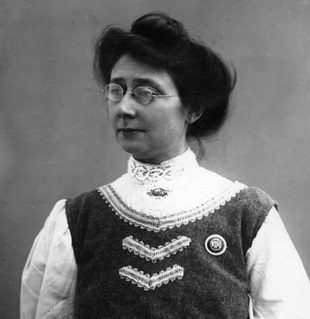
Mary Blathwayt1879–1961 · (1879–1961), suffragette
EC
Egerton Cecil1853–1928 · English cricketer (1853-1928)

William Henty1808–1881 · Cricketer, solicitor and politician in Tasmania, Australia (1808-1881)
HM
Horace Mitchell1858–1951 · Cricketer (1858-1951)

William Horwood1868–1943 · British Army general
RR
Robert Riddles1892–1983 · British engineer (23 May 1892-June 18 1983)
Everyone born in Worthing → Birthplaces from Wikidata; portraits from Wikimedia Commons.
Neighbours
Listed buildings in the places around Worthing
| Town | People | Listed | Grade I | History |
|---|---|---|---|---|
| Worthing | 111,635 | 218 | 3 | B+ |
| Lancing and Sompting | 27,924 | 25 | 2 | C− |
| Findon | 1,840 | 20 | 0 | B |
| Rustington | 33,885 | 127 | 2 | B− |
| Steyning | 5,513 | 117 | 2 | A |
| Shoreham-by-Sea | 23,659 | 54 | 3 | C+ |
| Upper Beeding | 3,100 | 35 | 2 | B |
| Littlehampton | 19,060 | 72 | 0 | A− |
In brief
Worthing in brief
The official list counts 218 listed buildings in Worthing, 3 of them Grade I, including Castle Goring. On High Street alone there are 11 listed buildings. Its older streets lie in 26 conservation areas, the first designated in 1975. Most entries on the list, 63%, are houses, terraces and villas.
John Selden (1584), Eric Thornton (1882) and Mary Blathwayt (1879) are among the 17 people born here before 1900. The big year was 1976, when 134 of the 218 went on the list. Beyond that, it has 3 Grade I buildings, about typical for a town its size (the middle one has 2); per resident it sits near the middle of UK towns; and 18% of its homes were built before 1919, close to the 15% in the typical UK town.
Questions about Worthing’s history
How many listed buildings are there in Worthing?
Historic England lists 218 buildings inside Worthing’s built-up area: 3 Grade I, 12 Grade II* and 203 Grade II.
What are the Grade I listed buildings in Worthing?
3, including Castle Goring, Church of St Mary and The Old Palace.
Which street in Worthing has the most listed buildings?
High Street (11), Portland Road (8) and Broadwater Street East (6) have the most listed entries named by an address. One entry can be a whole terrace.
How many conservation areas are there in Worthing?
26, covering about 139 hectares of the town. The largest are Steyne Gardens and Heene.
When were Worthing’s buildings listed?
The first in 1948; the most, 134, in 1976.
Are there old photos of Worthing?
Yes: 4 public-domain photos and postcards from 1890 to 1912, and an old map from 1948, all on this page.
Who was born in Worthing?
Among people born before 1900: John Selden (1584), Eric Thornton (1882), Mary Blathwayt (1879), Egerton Cecil (1853) and William Henty (1808).
How old are the homes in Worthing?
18% of homes were built before 1919 and 44% before 1940, from the Valuation Office Agency’s council tax records (March 2025).
© Historic England 2026. Contains Ordnance Survey data © Crown copyright and database right 2026. The National Heritage List for England is the official, up-to-date register of all nationally protected historic buildings and sites in England; check an entry on Historic England’s website before relying on it.
Sources: Historic England, National Heritage List for England (listed buildings, scheduled monuments, registered parks and gardens, battlefields, World Heritage Sites), October 2026, inside the ONS 2022 built-up-area boundary · Valuation Office Agency, Council Tax: stock of properties by build period (31 March 2025) · TownRatings grades: our own summary of the data, ranked against UK towns only · Historic England conservation areas (supplied by local planning authorities; October 2026). All under the Open Government Licence v3.0.
Contains public sector information licensed under the Open Government Licence v3.0. Contains HM Land Registry data © Crown copyright and database right 2026. Contains OS data © Crown copyright and database right 2026 (ONS boundaries). Northern Ireland: Source: NISRA; contains Land & Property Services data and Ordnance Survey of Northern Ireland information, © Crown copyright, licensed under the Open Government Licence v3.0. Scotland: contains National Records of Scotland data, Registers of Scotland data and SEPA data, © Crown copyright / © SEPA 2025, licensed under the Open Government Licence v3.0.