 I
House · listed 1950Pitzhanger ManorOn the list as Pitzhanger Manor HousePhoto: Joseph Gandy · Public domain
 Pitzhanger Manor House · Photo: Joseph Gandy · Public domain
B+History Grade
History of Ealing · Historic England
313 listed buildings, 5 of them Grade I
Historic England counts them inside Ealing’s built-up area, 8.5 for every 10,000 residents. It also has 2 scheduled monuments. 28% of its homes were built before 1919. We have photos of 25 of its listed buildings and 1 old view of the town. Ealing grades B+ for history: #15 of 33 in London.
Listed buildings
313
8.5 per 10,000 residents
Grade I
5
exceptional interest
Grade II*
17
more than special interest
Scheduled monuments
2
4 registered parks & gardens
Homes built before 1919
28%
typical UK town 15%
In pictures
Ealing in 31 photos and old views
Nearly every Grade I and II* building, photographed, and the town before 1950. Tap a photo to step through them full screen.
 Church of St MaryGrade I listed
 Canteen Block to Hoover FactoryGrade II* listed
 Red Lion Public HouseGrade II listed
 Ealing Town HallGrade II listed
 Bollo Lane Junction Signal BoxGrade II listed+26See all photos
Photos from Wikimedia Commons and Geograph, copied to our own server, each credited to its photographer with its licence; names open the building’s page or its official list entry.
Through time
Ealing in old photos
1 old photo or postcard, in date order. All public domain, made before 1950.
 1845
Public domain, from Wikimedia Commons, copied to our own server. Each credit opens the image’s page with its full description and history.
The map
Where Ealing’s history is
Every Grade I and II* building, monument and historic park, over the age of each neighbourhood’s homes.
Grade IGrade II*Scheduled monumentPark or garden
Homes built before 1919, by neighbourhoodunder 10%10–25%25–50%50%+
56 of 201neighbourhoods have mostly pre-1919 homes; in the oldest, 100% were built before 1919.
Hover a dot for its name; tap one with a photo to open it.
313 listed buildings by grade
5 Grade I17 Grade II*291 Grade II
Historic England lists buildings in three grades: Grade I for buildings of exceptional interest (about 2.5% of all listed buildings), Grade II* for particularly important buildings of more than special interest (about 5.8%), and Grade II for buildings of special interest (about 91.7%). Listing protects the whole building, inside and out.
Every entry on the National Heritage List for England whose point lies inside the ONS 2022 built-up-area boundary. One list entry can cover a terrace or a group of buildings. Neighbourhood dots: the population-weighted centre of each Census 2021 output area, coloured by its neighbourhood’s (LSOA’s) share of homes built before 1919 (Valuation Office Agency, March 2025).
Grade I
The 5 Grade I listed buildings in Ealing
Buildings of exceptional interest, about 2.5% of all listed buildings. Every one is photographed. Each opens its own page, with the official list entry.
 I
Church · listed 1950St Mary the Virgin, NortholtOn the list as Church of St MaryPhoto: Des Blenkinsopp · CC BY-SA 2.0
 I
Church · listed 1950St Mary's PerivaleOn the list as Church of St Mary the VirginPhoto: John Salmon · CC BY-SA 2.0
 I
Walls & gates · listed 1981Entrance Archway and Gates at Pitzhanger Manor at North East End of ParkPhoto: P.g.champion · CC BY 2.0 uk
 I
Church · listed 1950Parish Church of the Holy Cross (old Church), GreenfordOn the list as Parish Church of the Holy Cross (Old Church)Photo: John Salmon · CC BY-SA 2.0
Grade II*
The 17 Grade II* listed buildings in Ealing
Particularly important buildings of more than special interest. Every one is photographed.
 II*
House · listed 1981Hoover BuildingOn the list as Canteen Block to Hoover FactoryPhoto: Ewan Munro from London, UK · CC BY-SA 2.0
 II*
Walls & gates · listed 1981Walpole Park bridgeOn the list as Bridge at Northern End of Walpole ParkPhoto: Doyle of London · CC BY-SA 4.0
 II*
Church · listed 1981St Mary's Church, South EalingOn the list as Church of St MaryPhoto: John Salmon · CC BY-SA 2.0
 II*
Church · listed 1950St. Mary's Church, HanwellOn the list as Church of St MaryPhoto: P.g.champion · CC BY 2.0 uk
 II*
Church · listed 1949Church of St MaryPhoto: Chris Martin · CC BY-SA 2.0
 II*
Church · listed 1981Church of St PeterPhoto: John Salmon · CC BY-SA 2.0
 II*
Church · listed 1996Church of St Thomas the ApostlePhoto: P.g.champion · CC BY-SA 2.0 uk
 II*
Public · listed 1976Former Norwood Free SchoolPhoto: J Taylor · CC BY-SA 2.0
 II*
Public · listed 1951Goldsmiths' Almshouses and Railings Fronting RoadPhoto: Jhsteel · CC BY-SA 3.0
 II*
Church · listed 1981Holy Cross New Church, GreenfordOn the list as Holy Cross New ChurchPhoto: John Salmon · CC BY-SA 2.0
 II*
House · listed 1980Palace CinemaOn the list as Liberty CinemaPhoto: Danny Robinson · CC BY-SA 2.0
House · listed 1980Main Front Block to Hoover FactoryPhoto: Ewan Munro from London, UK · CC BY-SA 2.0
Show the other 5
 II*
Church · listed 1950Parish Church of Christ the SaviourPhoto: John Salmon · CC BY-SA 2.0
 II*
House · listed 1949Southall Manor HousePhoto: P.g.champion · CC BY-SA 2.0 uk
 II*
House · listed 1951The ElmsPhoto: David Hawgood · CC BY-SA 2.0
 II*
House · listed 197014, South Parade W4Photo: Jhsteel · CC BY-SA 3.0
 II*
House · listed 1974266 and 268 Northfield Avenue W 13Photo: Jhsteel · CC BY-SA 3.0
Historic streets
Woodstock Road W4 has the most listed buildings
Streets by the listed entries with an address on them. One entry can be a whole terrace, so long rows count once.
Woodstock Road W421 listed
The Avenue W420 listed
Marlborough Crescent19 listed
Queen Anne's Grove18 listed
Blenheim Road14 listed
Queen Anne's Gardens12 listed
Bedford Road W48 listed
Ealing Village7 listed
South Parade W47 listed · 1 II*

The Orchard7 listed
Newton Grove6 listed
Of the 313 entries, 165 are named by a street address; the rest are named buildings such as churches, halls and bridges.
What’s protected
Most of Ealing’s listed buildings are homes
Every listed building sorted by what its list name says it is.
Houses, terraces & villas212
Churches, chapels & priories28
Public & civic buildings26
Walls, gates & bridges19
Inns, shops & warehouses11
Street furniture11
Memorials, crosses & tombs6
212 entries (68%) are houses, terraces and villas. 28 are churches, chapels and priories, including 3 of the 5 Grade I buildings.
Buildings are sorted by words in each entry’s name (church, gate, inn, memorial…): the list’s open data has no building type. An entry named only by its address counts as a house.
Grade II
291 Grade II listed buildings
Most listed buildings are in this grade, which covers buildings of special interest. Open any building to read its official list entry.
The first 150 of 291 Grade II listed buildings, A to Z
Abbey Church of St BenedictActon Hill Methodist ChurchActon Public LibraryActon Town HallActon Town London Regional Transport Underground Station Acton Town London Regional Transport Underground Station, Including Shopping ParadeBedford House and 4 Gate PiersBedford Park War MemorialBench at Northern End of Walpole ParkBetham HouseBollo Lane Junction Signal BoxBrentham ClubhouseCemetery LodgeChapel to Former St Helena's HomeChapel to St Bernards HospitalChimney at Acton Swimming BathsChiswick Park Underground Station, Including Two Platforms with Canopies and Shelters and Shops to Either Side of Ticket HallChurch of All SaintsChurch of St BarnabasChurch of St BarnabasChurch of St GeorgeChurch of St JohnChurch of St MaryChurch of St MaryChurch of St MellitusChurch of St StephenChurch of St. MatthewClergy House, St Saviour'sClubroomColleton Tomb, St Mary the Virgin ChurchyardCrosswaysEaling Common London Regional Transport Underground Station, Including Vestibule Shops and PlatformsEaling Park TavernEaling Town HallEaling War MemorialEntrance Archway and two Lodges, (one each side of entrance) to St Bernard's HospitalFeatherstone Boys School War MemorialFormer Ealing Broadway Methodist Church and Memorial HallFormer IBM distribution centreFriars Lawn the GrangeFront Range (Blocks 1 and 2) Ex-Headquarters, Glaxo BuildingGala Bingo ClubGarden Wall to North of Twyford AbbeyGate Piers, Railings and Gates to City of Westminster CemeteryGates and 2 Gate Piers at Exit to Hoover FactoryGates and 3 Gate Piers at Entry Gateway to Hoover FactoryGates and Railings to St MarysGates, Gate Piers and Railings to Rear of Numbers 13 and 15George and Dragon Public House and Number 185Glasse Monument Approximately 2 Metres South South East of Church of St MaryGreenford War MemorialGrove HouseHanwell Bridge (Over the River Brent)Hanwell Community CentreIce House Approximately 100 Feet to South of North Entrance Within Woodland Public ParkKings ParadeLamp Post Approximately 6 Metres to South West of Numbers 1-24 (Consecutive)Lamp Post Outside Numbers 1-24 (Consecutive), At Centre of BlockLamp Post Outside Numbers 25-48 (Consecutive), At Centre of BlockLamp Post Outside Numbers 49-72 (Consecutive) at Right EndLamp Post Outside Numbers 97-128 (Consecutive) at Left EndLamp Post to South of Numbers 25-48 (Consecutive) and 49-72 (Consecutive), At Gap Between BlocksLamp Post to South of Numbers 73-96 (Consecutive) at Left EndLamp Post to South of Numbers 97-128 (Consecutive), At Centre of BlockLamp Stamdard at Junction of Mount Park Road and Park HillLamp Standard at Junction of Woodville Road and Aston RoadLock Keepers Cottage at Lock 92 of the Grand Union CanalLock Keepers Cottage at Lock 93 of the Grand Union CanalLock Keepers Cottage at Lock 95 of the Grand Union CanalLock Keepers Cottage at Lock 97 of the Grand Union CanalLodge at Pitzhanger Manor at North East End of ParkLondon Buddhist Vihara (Former C a V Social Club)Main Up Side Building and Downside Island Platform at Hanwell StationMelbourne HouseMilepost (North Side of Ealing Commom Approximately 60 Metres South East of Junction with the Common)Milepost (Outside Number 173)Morgan House, Wrexham Lodge and Willow HouseNational Westminster BankNorth Boundary Wall to Walpole Park Fronting Mattock Lane from the Entrance Archway at Pitzhanger Manor to the Public ConveniencesNorth Ealing Station, Including FootbridgeNorth Entrance Gateway of Gunnersbury ParkNorth Lodge of Gunnersbury ParkNorthfields London Regional Transport Station Including Forecourt Walls and PlatformsNorwood HallNumber 16 and Adjoining StableObelisk in Acton Park (Opposite Goldsmiths' Almshouse)Park Royal London Regional Transport Station and Adjoining Shops and Flats Station ChambersPerivale Underground StationPillar Box in Bedford Road at Junction with the OrchardPine Cottage and Thorpe CottagePlace House at St Anne's Convent SchoolPremises of D L Lewis Ltd, Chemist.Rectory CottageRed Lion Public HouseRobins Memorial Approximately 12 Metres South of Church of St MaryRochester House (Main Block) at Lourdes Mount Convent High SchoolSouth LodgeSouthall War MemorialSpring CottageSt Bernard's HospitalSt Martin's War Memorial, West ActonSt MarysSt Saviour's Church and InstituteStable Block at Brent Lodge ParkStages 2 and 3A and 3B and 5 at Ealing StudiosSudbury Hill London Regional Transport Underground Station, And Generating StationSwimming Pool with Tiled Surround and Plant RoomThe Duke of Sussex Public HouseThe Forester Public HouseThe Greenwood Public HouseThe Grosvenor Public HouseThe HermitageThe Kent HotelThe Plough Public HouseThe VicarageThe Water TowerThorncoteTwo Chapels at South Ealing CemeteryTwo Gate Piers and Railings Between Them at Hoover Factory, On Corner of Western Avenue and Rydal CrescentTwyford AbbeyWalls to Ealing CemeteryWalls, Gates, Sluices and Bridge at Lock (90)Way Monument Approximately 7 Metres South of South Chapel of Church of St MaryWest Acton Underground StationWest Lodge at Grosvenor CourtWest Lodge to St Bernards HospitalWestfield HouseWhite Hart Public HouseWhite House at Ealing Studios1 and 3, Blenheim Road1, 1A and 1B, The Avenue W41, Church Lane W51, Newton Grove1, Queen Anne's Gardens1, Queen Anne's Grove1, The Orchard1, Woodstock Road W41-24, Ealing Village10 and 12, Marlborough Crescent10 and 12, Queen Anne's Gardens10 and 12, The Orchard10, Bedford Road W410, Blenheim Road10, South Parade W411 and 13, The Avenue W411 and 13, Woodstock Road W411, Blenheim Road11, Marlborough Crescent11, South Parade W412 and 13, South Parade W412 and 14, Newton Grove
Conservation areas
35 conservation areas cover 14% of Ealing
Areas the council protects as a whole: demolition and changes to how buildings look need consent, and trees are protected.
Cuckoo Estate 199550 ha
Ealing Common 198248 ha
Hanger Hill, Haymills Estate 199647 ha
Ealing Green 196947 ha
Creffield 199336 ha
Mount Park 199133 ha
Norwood Green 196931 ha
Ealing Town Centre 199427 ha
Brentham Garden Estate 196925 ha
Acton Park 198223 ha
Hanger Hill Garden Estate 196922 ha
Montpelier Park 198221 ha
St Mark's Church and Canal 198221 ha
Bedford Park 196919 ha
Canalside 199318 ha
Haven Green 198217 ha
Ealing Cricket Ground16 ha
Hanwell Cemeteries 198916 ha
Acton Town Centre 198214 ha
Hanwell Village Green 197414 ha
Northolt Village Green 196913 ha
Mill Hill Park 199312 ha
Churchfields 196911 ha
No data available for publication by HE10 ha
Grange and White Ledges 19959 ha
642 hain conservation areas, of 4,697 ha inside the built-up area.
The first, Ealing Green, Norwood Green and Brentham Garden Estate, were designated in 1969; the newest, Hanger Hill, Haymills Estate, in 1996. 235 of the 313 listed buildings stand in one.
Historic England’s conservation areas layer, supplied by councils (incomplete in places, so a page fact, never graded). Hectares are the part of each area inside the built-up area.
How the list grew
136 of Ealing’s 313 listed buildings were added in 1970
The year each building now on the list was first listed.
1970 · 1361981 · 52
19501960197019801990200020102020
The first 4 entries were listed in 1949. 136 came in 1970, in the national resurvey of the 1970s and 80s. Only 15 have been added in the last 15 years.
Monuments & landscapes
Monuments, parks and gardens
Designations that overlap the town by a tenth of their area or half a hectare.
2 scheduled monuments
Nationally important archaeological sites and monuments, protected by law; work on them needs consent from the Secretary of State, advised by Historic England.


4 registered parks and gardens


Osterley ParkGrade II*


Walpole ParkGrade II
History Grade
Ealing grades B+ for history
Protected heritage and the age of the town’s homes, against all UK towns.
Protected heritage, for its size and in all (349 points, 10 per 10,000 residents)More than 58% of UK towns
Homes built before 1919 (28%)More than 81% of UK towns
Two measures, each ranked against every UK town of 1,000 or more, with protected heritage counting twice as much as the age of homes. Protected heritage counts each listed building by its grade (Grade I three points, II* two, II one), each scheduled monument and battlefield two, and each registered park or garden by its grade; it is ranked both per 10,000 residents and as a total, so a village with one fine church doesn’t outrank a historic city. The second measure is the share of homes built before 1919, from the Valuation Office Agency’s council tax records. History is a character grade: it describes the town and isn’t part of the overall grade.
Homes by age
28% of Ealing’s homes were built before 1919
Every home by when it was built, from council tax records, against England & Wales (the dark tick).
13%
Before 1900
16%
1900–18
7.2%
1919–29
23%
1930s
3.6%
1945–54
3.9%
1955–64
4.4%
1965–72
5.3%
1973–82
3.8%
1983–92
2.2%
1993–99
4%
2000–08
3.5%
2009–15
11%
2016–25
EalingEngland & Wales
13% of homes are Victorian or older, against 16% across England and Wales. The busiest period since was the 1930s, which added 23% of today’s homes.
Valuation Office Agency, council tax stock of properties by build period, 31 March 2025, for the neighbourhoods (LSOAs) that make up the town, split by where their residents live. Homes with no recorded build period (170 here) are left out; 1939–44 is not a period in the data.
Born here
53 notable people born in Ealing before 1900
The 20 best known on one timeline, earliest first.
Nathaniel Pearce
John Elliot Drinkwater Bethune
William Fothergill Cooke
Edward Augustus Bond
Thomas Henry Huxley
Sarah Lindley Crease
Gerald Graham
James Roche, 3rd Baron Fermoy
George Gibbons Hearne
Frank Hearne
Ethel Pedley
Blanche Bingley
Alec Hearne
George Hillyard
Ernest Halliwell
Charlotte Cooper
Charles Hamilton
Dorothea Douglass
Bruce Fraser, 1st Baron Fraser of North Cape
Nevil Shute
175017751800182518501875190019251950

Thomas Henry Huxley1825–1895 · British biologist and comparative anatomist (1825–1895)
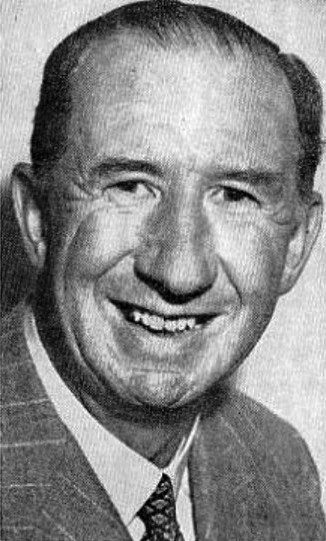
Nevil Shute1899–1960 · British writer and engineer (1899–1960)

Charlotte Cooper1870–1966 · English tennis player

Dorothea Douglass1878–1960 · English tennis and badminton player (1878–1960)

Blanche Bingley1863–1946 · English tennis player (1863–1946)

Bruce Fraser, 1st Baron Fraser of North Cape1888–1981 · Royal Navy admiral of the fleet (1888-1981)

George Hillyard1864–1943 · British tennis player (1864-1943)

William Fothergill Cooke1806–1879 · English inventor (1806-1879)
Everyone born in Ealing → Birthplaces from Wikidata; portraits from Wikimedia Commons.
Neighbours
Listed buildings in the places around Ealing
| Town | People | Listed | Grade I | History |
|---|---|---|---|---|
| Ealing | 367,271 | 313 | 5 | B+ |
| Brent | 340,611 | 98 | 1 | B |
| Hounslow | 286,591 | 465 | 26 | B |
| Hillingdon | 307,089 | 396 | 7 | C+ |
| Harrow | 260,534 | 270 | 4 | B− |
| Richmond upon Thames | 192,888 | 702 | 23 | A |
| Hammersmith and Fulham | 182,187 | 257 | 1 | A− |
| Kensington and Chelsea | 143,348 | 1,148 | 17 | A+ |
In brief
Ealing in brief
Old houses are part of Ealing’s character: 28% of its homes were built before 1919, against 15% in the typical UK town. In all there are 313 listed buildings, 5 of them Grade I, including Pitzhanger Manor. Its older streets lie in 35 conservation areas, the first designated in 1969.
Of the whole list, 68% are houses, terraces and villas. Of the 53 people born here before 1900, the best known include Thomas Henry Huxley (1825), Nevil Shute (1899) and Charlotte Cooper (1870). Otherwise the figures are ordinary: per resident it sits near the middle of UK towns; and it also has 2 scheduled monuments.
Questions about Ealing’s history
How many listed buildings are there in Ealing?
Historic England lists 313 buildings inside Ealing’s built-up area: 5 Grade I, 17 Grade II* and 291 Grade II.
What are the Grade I listed buildings in Ealing?
5, including Church of St Mary, Church of St Mary the Virgin, Entrance Archway and Gates at Pitzhanger Manor at North East End of Park, Parish Church of the Holy Cross (Old Church) and Pitzhanger Manor House.
Which street in Ealing has the most listed buildings?
Woodstock Road W4 (21), The Avenue W4 (20) and Marlborough Crescent (19) have the most listed entries named by an address. One entry can be a whole terrace.
Are there scheduled monuments in Ealing?
Yes, 2 scheduled monuments, including Hanwell flight of locks and brick boundary wall of St Bernard's Hospital and Northolt Manor, moated site.
How many conservation areas are there in Ealing?
35, covering about 642 hectares of the town. The largest are Cuckoo Estate and Ealing Common.
When were Ealing’s buildings listed?
The first in 1949; the most, 136, in 1970.
Are there old photos of Ealing?
Yes: 1 public-domain photo or postcard from 1845 to 1845, all on this page.
Who was born in Ealing?
Among people born before 1900: Thomas Henry Huxley (1825), Nevil Shute (1899), Charlotte Cooper (1870), Dorothea Douglass (1878) and Blanche Bingley (1863).
How old are the homes in Ealing?
28% of homes were built before 1919 and 58% before 1940, from the Valuation Office Agency’s council tax records (March 2025).
© Historic England 2026. Contains Ordnance Survey data © Crown copyright and database right 2026. The National Heritage List for England is the official, up-to-date register of all nationally protected historic buildings and sites in England; check an entry on Historic England’s website before relying on it.
Sources: Historic England, National Heritage List for England (listed buildings, scheduled monuments, registered parks and gardens, battlefields, World Heritage Sites), October 2026, inside the ONS 2022 built-up-area boundary · Valuation Office Agency, Council Tax: stock of properties by build period (31 March 2025) · TownRatings grades: our own summary of the data, ranked against UK towns only · Historic England conservation areas (supplied by local planning authorities; October 2026). All under the Open Government Licence v3.0.
Contains public sector information licensed under the Open Government Licence v3.0. Contains HM Land Registry data © Crown copyright and database right 2026. Contains OS data © Crown copyright and database right 2026 (ONS boundaries). Northern Ireland: Source: NISRA; contains Land & Property Services data and Ordnance Survey of Northern Ireland information, © Crown copyright, licensed under the Open Government Licence v3.0. Scotland: contains National Records of Scotland data, Registers of Scotland data and SEPA data, © Crown copyright / © SEPA 2025, licensed under the Open Government Licence v3.0.