 II*
Church · listed 1999Church Of Our Lady Of Peace And Attached PresbyteryOn the list as Catholic Church of Our Lady of Peace including attached presbyteryPhoto: Lewis Hulbert · CC BY-SA 3.0
 Catholic Church of Our Lady of Peace including attached presbytery · Photo: Lewis Hulbert · CC BY-SA 3.0
A−History Grade
History of Newbridge · Cadw
23 listed buildings, 8 of them Grade II*
On the Cadw list, all of them stand inside Newbridge’s built-up area, 30 for every 10,000 residents. Grade II covers 15 of Newbridge’s listed buildings. 42% of its homes were built before 1919. We have photos of 6 of its listed buildings and 1 old view of the town. Newbridge grades A− for history: #6 of 38 in Gwent.
Listed buildings
23
30 per 10,000 residents
Grade I
0
exceptional interest
Grade II*
8
more than special interest
Scheduled monuments
0
nationally important sites
Homes built before 1919
42%
typical UK town 15%
In pictures
Newbridge in 7 photos and old views
Tap a photo to step through them full screen.
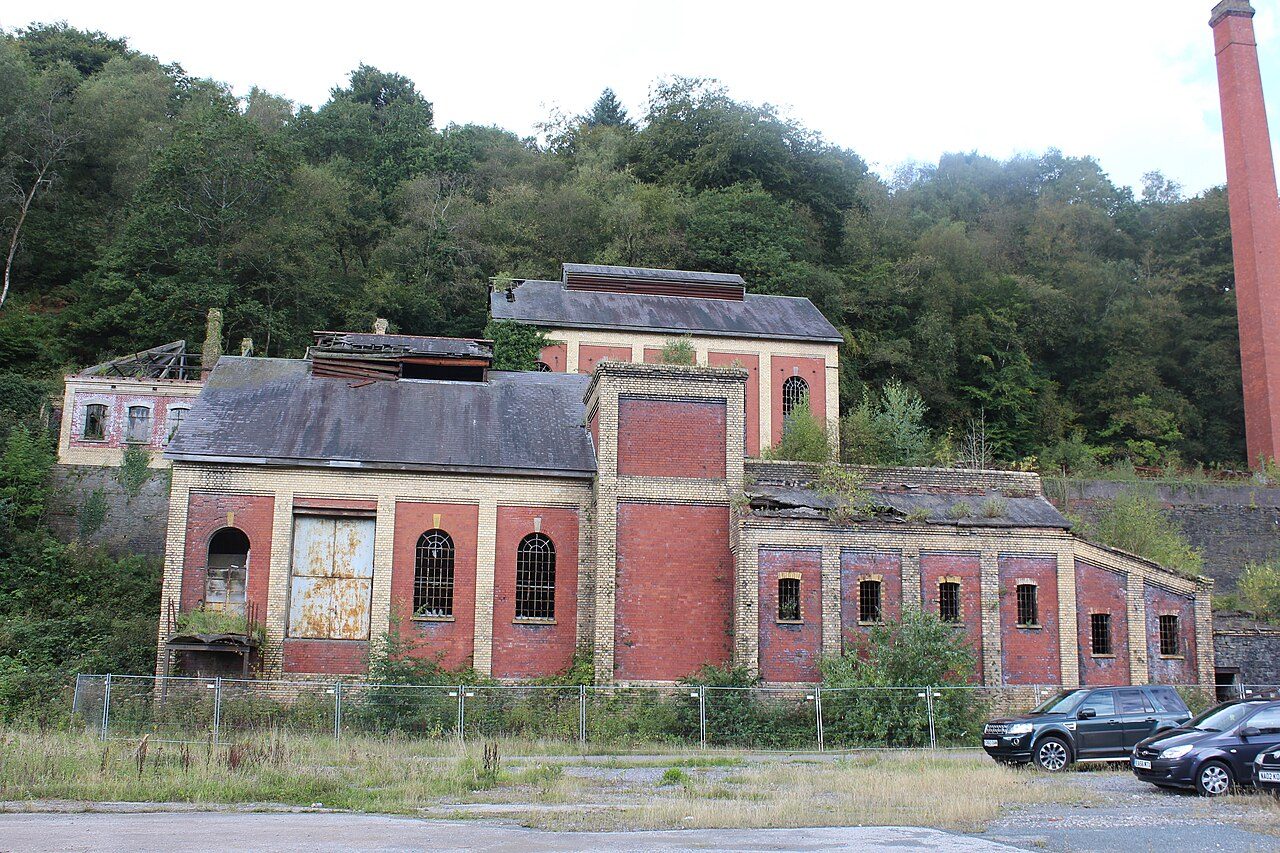 Former Navigation Colliery Fan House and Fan DriftGrade II* listed
 Crumlin Old Bridge over River EbbwGrade II listed
 Beulah Baptist Church and attached wing and gatewayGrade II listed
 Church of St PaulGrade II listed
 Former Navigation Colliery ChimneyGrade II* listed+2See all photos
Photos from Wikimedia Commons and Geograph, copied to our own server, each credited to its photographer with its licence; names open the building’s page or its official list entry.
Through time
Newbridge in old photos
1 old photo or postcard, in date order. All public domain, made before 1950.
 c. 1835
Public domain, from Wikimedia Commons, copied to our own server. Each credit opens the image’s page with its full description and history.
The map
Where Newbridge’s history is
Every Grade I and II* building, monument and historic park, over the age of each neighbourhood’s homes.
Grade II*
Homes built before 1919, by neighbourhoodunder 10%10–25%25–50%50%+
3 of 6neighbourhoods have mostly pre-1919 homes; in the oldest, 67% were built before 1919.
Hover a dot for its name; tap one with a photo to open it.
23 listed buildings by grade
0 Grade I8 Grade II*15 Grade II
Cadw lists buildings of special architectural or historic interest in three grades: Grade I for buildings of exceptional interest, Grade II* for particularly important buildings of more than special interest, and Grade II for buildings of special interest. Listing protects the whole building, inside and out.
Every entry on Cadw’s register of listed buildings whose point lies inside the ONS 2022 built-up-area boundary. One list entry can cover a terrace or a group of buildings. Neighbourhood dots: the population-weighted centre of each Census 2021 output area, coloured by its neighbourhood’s (LSOA’s) share of homes built before 1919 (Valuation Office Agency, March 2025).
Grade II*
The 8 Grade II* listed buildings in Newbridge
Particularly important buildings of more than special interest. 3 are photographed. Each opens its own page, with the official list entry.
 II*
Inns & shops · listed 1982Former Navigation Colliery Fan House and Fan DriftPhoto: M J Roscoe · CC BY-SA 2.0
 II*
Inns & shops · listed 1982Former Navigation Colliery ChimneyPhoto: M J Roscoe · CC BY-SA 2.0
Walls & gates · listed 1999Workingman's Institute and Memorial HallOn the list as Celynen Collieries Workmen's Memorial Hall, including forecourt wall and gates
House · listed 1982CwmdowsOn the list as Cwmdows Farmhouse
Inns & shops · listed 1982Former Navigation Colliery North Winding Engine House
Inns & shops · listed 1982Former Navigation Colliery Power House and Pump House
Inns & shops · listed 1982Former Navigation Colliery South Winding Engine House
What’s protected
The largest group of Newbridge’s listed buildings is inns, shops and warehouses
Every listed building sorted by what its list name says it is.
Inns, shops & warehouses11
Houses, terraces & villas5
Churches, chapels & priories3
Walls, gates & bridges3
Street furniture1
5 entries (22%) are houses, terraces and villas. 3 are churches, chapels and priories.
Buildings are sorted by Cadw’s broad class for each building, else by words in its name; an entry named only by its address counts as a house.
Grade II
15 Grade II listed buildings
Most listed buildings are in this grade, which covers buildings of special interest. Open any building to read its official list entry.
All 15 Grade II listed buildings, A to Z
Beulah Baptist Church and attached wing and gatewayCelynen Collieries Workmen's InstituteChurch of St PaulCrumlin Old Bridge over River EbbwCrumlin Viaduct E Abutment Ebbw ValleyFormer Navigation Colliery BathsFormer Navigation Colliery Electrical OutbuildingFormer Navigation Colliery Heapstead and Main Revetment WallFormer Navigation Colliery Lamp RoomFormer Navigation Colliery Middle Revetment WallFormer Navigation Colliery Powder Store and adjoining N Rear Revetment WallFormer Navigation Colliery Workshops and StoresPentwyn-isafPreswylfaViaduct Cottage
Conservation areas
1 conservation area covers 0.3% of Newbridge
Areas the council protects as a whole: demolition and changes to how buildings look need consent, and trees are protected.
Newbridge 20081 ha
1 hain conservation areas, of 225 ha inside the built-up area.
3 of the 23 listed buildings stand in one.
Cadw’s conservation areas via DataMapWales. Hectares are the part of each area inside the built-up area.
How the list grew
9 of Newbridge’s 23 listed buildings were added in 1982
The year each building now on the list was first listed.
1982 · 91999 · 8
19501960197019801990200020102020
The first 2 entries were listed in 1963. 9 came in 1982. Only 0 have been added in the last 15 years.
History Grade
Newbridge grades A− for history
Protected heritage and the age of the town’s homes, against all UK towns.
Protected heritage, for its size and in all (31 points, 41 per 10,000 residents)More than 56% of UK towns
Homes built before 1919 (42%)More than 95% of UK towns
Two measures, each ranked against every UK town of 1,000 or more, with protected heritage counting twice as much as the age of homes. Protected heritage counts each listed building by its grade (Grade I three points, II* two, II one), each scheduled monument and battlefield two, and each registered park or garden by its grade; it is ranked both per 10,000 residents and as a total, so a village with one fine church doesn’t outrank a historic city. The second measure is the share of homes built before 1919, from the Valuation Office Agency’s council tax records. History is a character grade: it describes the town and isn’t part of the overall grade.
Homes by age
42% of Newbridge’s homes were built before 1919
Every home by when it was built, from council tax records, against England & Wales (the dark tick).
27%
Before 1900
15%
1900–18
11%
1919–29
3.1%
1930s
14%
1945–54
3.5%
1955–64
11%
1965–72
2.7%
1973–82
3.9%
1983–92
2.1%
1993–99
4.9%
2000–08
1.5%
2009–15
1%
2016–25
NewbridgeEngland & Wales
27% of homes are Victorian or older, against 16% across England and Wales. The busiest period since was 1900–18, which added 15% of today’s homes.
Valuation Office Agency, council tax stock of properties by build period, 31 March 2025, for the neighbourhoods (LSOAs) that make up the town, split by where their residents live. Homes with no recorded build period (0 here) are left out; 1939–44 is not a period in the data.
Neighbours
Listed buildings in the places around Newbridge
| Town | People | Listed | Grade I | History |
|---|---|---|---|---|
| Newbridge | 7,582 | 23 | 0 | A− |
| Swffryd | 1,721 | 0 | 0 | C |
| Oakdale | 6,126 | 8 | 0 | C− |
| Abercarn | 5,123 | 8 | 0 | B |
| Trinant | 1,504 | 0 | 0 | D |
| Pontllanfraith | 9,363 | 11 | 0 | C |
| Llanhilleth | 2,450 | 1 | 0 | C |
| Blackwood | 12,621 | 6 | 0 | C |
In brief
Newbridge in brief
More of Newbridge’s homes are old than in most places: 42% were built before 1919, against 15% in the typical UK town. In all there are 23 listed buildings, including Church Of Our Lady Of Peace And Attached Presbytery. A conservation area has protected part of it since 2008. The rest is about typical: like most towns its size, it has no Grade I building; per resident it sits near the middle of UK towns; and Jack Jenkins (1880) was born here before 1900.
Questions about Newbridge’s history
How many listed buildings are there in Newbridge?
Cadw lists 23 buildings inside Newbridge’s built-up area: 0 Grade I, 8 Grade II* and 15 Grade II.
How many conservation areas are there in Newbridge?
1, covering about 1 hectares of the town. The largest is Newbridge.
When were Newbridge’s buildings listed?
The first in 1963; the most, 9, in 1982.
Are there old photos of Newbridge?
Yes: 1 public-domain photo or postcard from 1835 to 1835, all on this page.
How old are the homes in Newbridge?
42% of homes were built before 1919 and 56% before 1940, from the Valuation Office Agency’s council tax records (March 2025).
Listed buildings, scheduled monuments and historic parks and gardens: Cadw, © Crown copyright, via DataMapWales.
Sources: Cadw listed buildings, scheduled monuments and registered historic parks and gardens via DataMapWales, October 2026, inside the ONS 2022 built-up-area boundary · Valuation Office Agency, Council Tax: stock of properties by build period (31 March 2025) · TownRatings grades: our own summary of the data, ranked against UK towns only · Cadw conservation areas via DataMapWales (October 2026). All under the Open Government Licence v3.0.
Contains public sector information licensed under the Open Government Licence v3.0. Contains HM Land Registry data © Crown copyright and database right 2026. Contains OS data © Crown copyright and database right 2026 (ONS boundaries). Northern Ireland: Source: NISRA; contains Land & Property Services data and Ordnance Survey of Northern Ireland information, © Crown copyright, licensed under the Open Government Licence v3.0. Scotland: contains National Records of Scotland data, Registers of Scotland data and SEPA data, © Crown copyright / © SEPA 2025, licensed under the Open Government Licence v3.0.