
Sunset at Wall, South Dakota, 1936
Wall’s story
119 years in pictures
Census counts: 167 in 1910, 699 in 2020. The archive holds 6 old photos and papers going back to 1936 and 2 maps from 1960 on.
- 1907Wall is settled
Each edition grades its towns against each other only.

A town of 668, settled in 1907.
Wall has fewer than 1,000 residents, too few for fair grades; the figures below are still real.
In a town this size, neighbors are the best guide. Ask them anything.
Census counts: 167 in 1910, 699 in 2020. The archive holds 6 old photos and papers going back to 1936 and 2 maps from 1960 on.
Museums, parks, gardens and other places to visit around Wall. Close and well known come first.
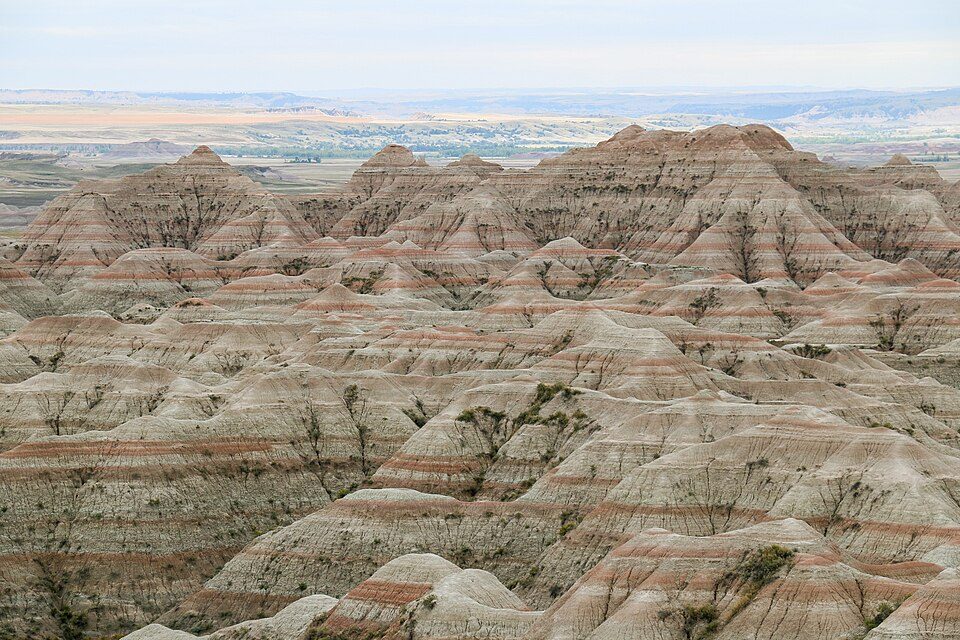 Big draw6 mi National ParkBadlands National Park1.1M visitors a year
 16 mi National Historic SiteMinuteman Missile National Historic Site102K visitors a year
Badlands National Park: Martin Kraft, CC BY-SA 3.0 · Minuteman Missile National Historic Site: Spencer, CC BY-SA 3.0
Who provides power, water and the rest in Wall, and how to reach them.
EPA SDWIS (Oct 9, 2026) · HIFLD + EIA-861 2025 · Census 2020 ZCTAs · NCES 2024–25 · registration: vote.gov, updated Aug 3, 2026.
Ordered by what stands out in Wall.
In Wall, the typical journey to work is 17 minutes. For most workers, Wall is a place to come home to: only 12% work in town. Its typical household income stands at $59,000, against $72,000 in South Dakota’s towns and $80,000 across U.S. towns. The top destinations are Rapid City (47%), Box Elder (10%) and New Underwood (4%).
| Wall | South Dakota towns | U.S. towns | |
|---|---|---|---|
| Working residents who work in town | 12% | 29% | 8% |
| Average trip to work | 17 minutes | 17 minutes | 25 minutes |
| Median household income | $59,000 | $72,000 | $80,000 |
Census LEHD 2023 · ACS
The public schools here belong to the Wall School District 51-5. Below: Two of its 3 schools, each with why it was picked. 3 public schools serve Wall, with 273 students in all.
| School | Level | Students | Letter |
|---|---|---|---|
| Wall Elementary - 02Largest public elementary schoolGrades K–5 | Grades K–5 | 107 | C+ |
| Wall High School - 01Largest public high schoolGrades 9–12 | Grades 9–12 | 100 | B− |
NCES · EDFacts
52% of Wall’s expected losses from natural hazards come from inland flooding, followed by wildfires at 15%. Expected damage from storms and floods is higher here than in nearly three quarters of U.S. communities.
FEMA National Risk Index · OpenFEMA
The town’s July high stands at 87°F, above both South Dakota’s towns (85°F) and U.S. towns (85°F).
NOAA U.S. Climate Normals, 1991–2020
In Wall, a quarter of adults 25 and older hold a bachelor’s degree or more. Children under 18 are 18% of residents (24% statewide); people 65 and older are 24% of residents (18% statewide). For Wall, the median age is 46.2 years. This South Dakota town is shrinking: down 3.7% since 2020, to 668 residents (2025 estimate).
| Wall | South Dakota towns | U.S. towns | |
|---|---|---|---|
| Median age | 46.2 years | 39.5 years | 40.5 years |
| Under 18 | 18% | 22% | 22% |
| Bachelor’s degree or more, 25+ | 25% | 33% | 29% |
47% women, 53% men
That’s an even split within the survey’s margin of ±10 points. Across South Dakota, 49.2% of residents are women.
| Wall | SD | U.S. | |
|---|---|---|---|
| Under 10 | 7.2% | 13.1% | 11.6% |
| 10 to 17 | 10.9% | 11.2% | 10.3% |
| 18 to 24 | 5.8% | 9.3% | 9.1% |
| 25 to 34 | 10.3% | 12.6% | 13.7% |
| 35 to 44 | 15% | 12.6% | 13.2% |
| 45 to 54 | 12.4% | 10.7% | 12.2% |
| 55 to 64 | 14.3% | 12.6% | 12.7% |
| 65 to 74 | 17.7% | 11% | 10.2% |
| 75 and older | 6.4% | 7% | 7% |
| No diploma | 1.1% | 6.8% | 10.4% |
| High school | 44.2% | 29% | 26% |
| Some college | 16.7% | 19.9% | 19.1% |
| Associate’s | 12.7% | 12.3% | 8.8% |
| Bachelor’s | 21.4% | 21.9% | 21.6% |
| Graduate | 4% | 10% | 14.1% |
Census population estimates, 2025 · U.S. Census Bureau · ACS 2020-2024 5-year estimates · in a town of 700, single groups can be off by several points
Among 36 South Dakota towns, just 2 have a higher share of adults who have high blood pressure than Wall. This South Dakota town beats the South Dakota average on 2 of 26 CDC measures and trails it on 2. 15% of Wall adults report frequent mental distress.
| Wall | South Dakota towns | U.S. towns | |
|---|---|---|---|
| Diabetes (CDC PLACES) | 13% | 10% | 12% |
| High blood pressure (CDC PLACES) | 37% | 31% | 35% |
| Sleep under 7 hours (CDC PLACES) | 31% | 30% | 36% |
| Frequent mental distress (CDC PLACES) | 15% | 15% | 17% |
| What stands out | Wall | SD |
|---|---|---|
| More adults treating high blood pressure | 79% | 75.9% |
| More adults getting cholesterol checked | 87% | 84.8% |
| More adults with arthritis | 29.2% | 25.8% |
CDC PLACES 2025 · modeled estimates for adults · CMS · HRSA
Only 3 of the 33 South Dakota towns we compare have a lower share of conserved land than Wall. 0.3 miles of trail wind through 2 parks and preserves. For Wall, the density of trails is 0.1 miles per square mile.
| Wall | South Dakota towns | U.S. towns | |
|---|---|---|---|
| Miles of trail per square mile | 0.1 miles per square mile | 0.6 | 0.4 |
| Conserved land | 0.3% | 3.3% | 4.3% |
| Biggest places to walk | Trails | Acres |
|---|---|---|
| 1. Wall City Park | — | 4 |
| 2. Buffalo Gap National Grassland | — | 1 |
Trails & parks © OpenStreetMap contributors · Conserved land: USGS PAD-US
The share of households in Wall who live in a home they own: 82%. In the year to September 2026, typical home values climbed 2.9%.
Census ACS, 2020–24 · Zillow Home Value Index · Redfin Data Center
None within 15 miles of Wall; the nearest are
About 2 of every 100 Wall residents are enrolled in college, against 5 across South Dakota.
Where Wall’s working residents go each day. Line width shows the share.
Census LEHD 2023
City in South Dakota, United States
Wall is a city in Pennington County, South Dakota, United States. Its Lakota name is Makȟóšiča Aglágla Otȟuŋwahe, meaning "Town alongside the Badlands". Wall's population was 699 at the 2020 census.
From Wikipedia, licensed CC BY-SA 4.0 · facts via Wikidata (CC0)
Short answers, built from the data on this page.
Wall has fewer than 1,000 residents, too few for fair grades; the figures below are still real.

