Williamsport dates to 1769, and 52% of its homes were built before 1940
Among the most historic 1% of U.S. towns · #19 of 1,035 in Pennsylvania. What drives it
8 places in town are on the National Register, among them a historic district with 263 buildings. Below: 12 old photos and papers, maps from 1912 on, and the census since 1810.
Founding year: Wikidata. First post office: 1799.The full story ↓
History grade
What drives Williamsport’s History grade
On its age, its old homes and the National Register, Williamsport is among the most historic 1% of U.S. towns, #19 of 1,035 in Pennsylvania. All 3 inputs put Williamsport near the top nationally; its share of homes from before 1940 ranks highest.
A+
HistoryA character grade: shown, never part of Williamsport’s overall grade.
Pennsylvania towns list about as much on the Register as the country (a typical Pennsylvania town has 2.1 per 10,000 residents, the U.S. 2.4), so Williamsport’s 102 sits above most of its state (89% of Pennsylvania towns have fewer) while its 281 historic buildings outnumber those of 95% of U.S. towns.
NoteThe founding year comes from Wikidata alone; no second source gives 1769.
How sure. Graded on any two of the three inputs instead, the letter would still be A+. The pre-1940 share is a Census survey estimate (±3.1 points).
Founding year: Wikidata (other dates in Quick answers). Homes: Census ACS 2020–24. National Register: National Park Service, May 2026 list; each listing counted once (boundary changes and added documentation belong to their listing), and a historic district counts its contributing buildings. How TownRatings grades history →
What stands out about Williamsport’s past
Read from the archive, the National Register and the record. The page puts what stands out first.
In 1763, the Battle of Muncy Hills took place during the French and Indian War. It was a clash between the Native Americans and colonists seeking homestead sites in Native American territory. In 1768, at the Treaty of Fort Stanwix, the British purchased the land that became Lycoming County from the Iroquois Nation who controlled the lands.
Peaked at 45,729 in 1930; 27,754 people lived here in 2020.
21 censuses, 1810–2020.
U.S. Census Bureau decennial counts, from the census table on Williamsport’s Wikipedia page.
From the old history books
What they wrote about Williamsport, 1892–1929
Passages that mention Williamsport, cut from the printed page as they were published.
History of Lycoming County, Pennsylvania1929 · page 132Read the page →
Read the text
During the first ten years of the life of the Sunbury and Erie Railroad, the passenger station in Williamsport was between Pine and Laurel streets, on the south side of the tracks; in fact, this was a union station, being used jointly by the Sunbury and Erie Railroad, the Elmira and Williamsport Railroad, and the Catawissa Railroad. The offices of the Sunbury and Erie were in the brick house north of the present Market Street station, which still is standing.
Text read by machine from the scan; it may contain errors.
Genealogical and personal history of Lycoming County, Pennsylvania.1906 · page 331Read the page →
Read the text
In September, 1853, he sold his property and removed his family to Williamsport. Elere he had taken the position of first assistant under Robert Earies, then chief engineer in the construction of the Sunbury & Erie Railroad, having immediate charge of the division from Williamsport eastward. His name may yet be seen cut in the masonry of the south abutment of the Williamsport Railroad bridge. In 1852 it became absolutely necessary for the Sunbury & Erie Railroad Company (chartered in 1837), to commence work between Sunbury and Williamsport
Text read by machine from the scan; it may contain errors.
History of Lycoming County, Pennsylvania1929 · page 166Read the page →
Read the text
liamsport and possesses many advantages not only as a business, but as a residential, section. At the time of the great flood of 1889, when all the bridges on the river were washed away, South Williamsport became the gateway to Williamsport into which to bring supplies. The Montgomery bridge was the key to the whole Pennsylvania Railroad system at that time and when it was rebuilt trains could be run over the Linden branch through South Williamsport and indeed all the way into
Text read by machine from the scan; it may contain errors.
History of Lycoming County, Pennsylvania1892 · page 863Read the page →
Read the text
Danville, where he received his education in the public schools of that place, after which he took up the study of civil engineering. He assisted Colonel Potts in engineering the construction of the Coal Run railroad, and also did engineering work on the Catawissa railroad. He came to Williamsport in 1854, where he was clerk for the superintendent of the Catawissa railroad for several years. In 1858 he moved to Iowa, remained there until 1861, and then returned to AVilliamsport, Pennsylvania. In 1860 he married Miss Jennie, daughter of J. J. Ayres, and in 1862 became a f)artner with Mr. Ayres in the book, stationery, and insui'ance busi-
Text read by machine from the scan; it may contain errors.
Scans and text from the Internet Archive. Books published in 1930 or earlier, which are in the public domain.
Timeline
Williamsport, 1769 to 1982
Woven from the archive, old maps, post office records, the National Register and the people born here.
Nothing in the archives for these yearsWeddings on Main Street, storms, parades, school pictures, the old store. If it’s in your family album, it belongs here.
In 1769, according to Wikidata. Williamsport’s post office opened in 1799, and the census of 1810 counted 344 people here.
How does Williamsport rank for history?
Williamsport is among the most historic 1% of U.S. towns, #19 of 1,035 in Pennsylvania. The History grade combines the town’s founding era, the share of homes built before 1940 and its National Register listings. It’s a character grade, so it isn’t part of the overall grade. How it works.
What is on the National Register in Williamsport?
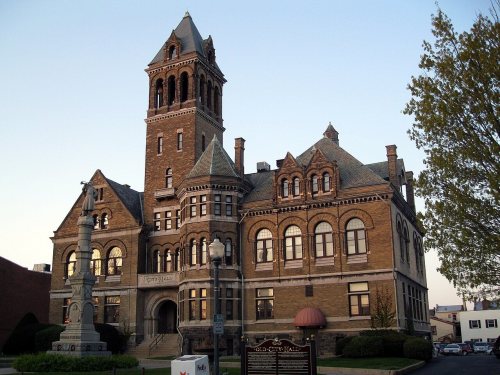
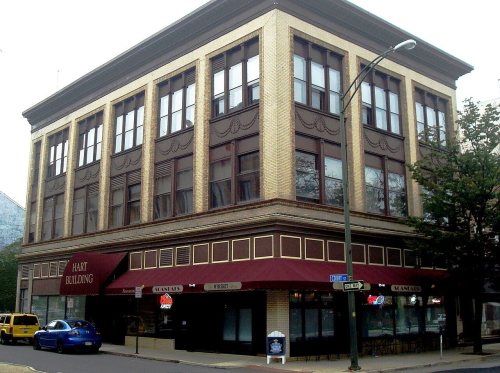
8 listings: 6 buildings, among them the U.S. Post Office (listed 1972, the first), 1 historic district, the Millionaire's Row Historic District, with 263 contributing buildings, and 1 structure. 281 historic buildings in all.
How old are the homes in Williamsport?
52% of Williamsport’s homes were built before 1940 (Census estimate, ±3.1 points), against a typical 18% for a Pennsylvania town; the median home was built in 1938.
Founding dates: Wikidata, Wikipedia, the U.S. post office records of Blevins & Helbock (CC0) and the Census. Homes by year built: Census ACS 2020–24. National Register of Historic Places: National Park Service (list of May 22, 2026). Old photos, postcards and papers: Wikimedia Commons, the Library of Congress and other public archives, credited on each item’s page. Maps: U.S. Geological Survey historical topographic maps (via Esri) and Sanborn fire-insurance maps (Library of Congress). History text and census tables: Wikipedia (CC BY-SA 4.0). Places that used to be: USGS Geographic Names Information System (2021).
From Wikimedia Commons (6), the Library of Congress (6), the National Register of Historic Places (8), Wikipedia, Wikidata and Wikipedia for famous people, U.S. Geological Survey historical maps, U.S. Census counts (via Wikipedia), the US Post Offices dataset (Blevins & Helbock), the USGS Geographic Names Information System, Sanborn fire insurance maps (Library of Congress) and old county and town histories (Internet Archive). Archive images are copied here with their credits and licenses, shown on each photo’s page. Refreshed monthly.







 c. 1863
 1880
 1880
 1905
 1905
 1905
 1905


