Warren dates to 1795, and 60% of its homes were built before 1940
Among the most historic 1% of U.S. towns · #51 of 1,035 in Pennsylvania. What drives it
8 places in town are on the National Register, among them a historic district with 587 buildings. Below: 11 old photos and papers, maps from 1887 on, and the census since 1840.
On its age, its old homes and the National Register, Warren is among the most historic 1% of U.S. towns, #51 of 1,035 in Pennsylvania. All 3 inputs are above most U.S. towns; its share of homes from before 1940 ranks highest and its age lowest.
A+
HistoryA character grade: shown, never part of Warren’s overall grade.
Pennsylvania towns list about as much on the Register as the country (a typical Pennsylvania town has 2.1 per 10,000 residents, the U.S. 2.4), so Warren’s 643 sits above most of its state (95% of Pennsylvania towns have fewer) while its 594 historic buildings outnumber those of 98% of U.S. towns.
How sure. Graded on any two of the three inputs instead, the letter would still be A+. The pre-1940 share is a Census survey estimate (±5.3 points). Two sources give 1795.
Founding year: Wikidata (other dates in Quick answers). Homes: Census ACS 2020–24. National Register: National Park Service, May 2026 list; each listing counted once (boundary changes and added documentation belong to their listing), and a historic district counts its contributing buildings. How TownRatings grades history →
What stands out about Warren’s past
Read from the archive, the National Register and the record. The page puts what stands out first.
National Park Service, National Register of Historic Places. Photos from Wikimedia Commons, credited on each place’s page.
Every building
Warren, building by building, 1887–1922
Fire insurance maps drew every building, what it was made of and what it was used for, so insurers could price the risk of fire. Pick a year, then a sheet.
Warren was initially inhabited by Native Americans of the Seneca nation. French explorers had longstanding claims to the area which they acted to secure in an unambiguous fashion with a military-Amerindian expedition in 1749 that buried a succession of plaques claiming the territory as France's in response to the formation of the colonial Ohio Company—and the first of these was buried in Warren but ultimately control was transferred to the British after the French and Indian War.
After the Revolutionary War, General William Irvine and Andrew Ellicott were sent to the area to lay out a town in 1795. It was named after Major General Joseph Warren.
Warren borough and its out-lots were reserved from the Holland purchase. April 10. 1799, the Governor was authorized to direct the Survevor- General to make a survey ot the reserved tract, adjoining the town of Warren, which had not been laid out into town-lots, and that 500 acres of the same be laid oft for the use ot such schools and academies as might thereafter be established by law
Text read by machine from the scan; it may contain errors.
Major McDowell spoke substantially as follows : Ladies and Gentlemen, and Citizens of Warren County : I am pleased to meet you to-day on this, the Centennial year of the laying out of your beautiful town of Warren. My friend has introduced me as the grandson of the gentleman who surveyed the out-lots, of the town of Warren in i 795. While I am proud of the noble deeds of my ancestors, you will
Text read by machine from the scan; it may contain errors.
Scans and text from the Internet Archive. Books published in 1930 or earlier, which are in the public domain.
Timeline
Warren, 1795 to 1942
Woven from the archive, old maps, post office records, the National Register and the people born here.
Nothing in the archives for these yearsWeddings on Main Street, storms, parades, school pictures, the old store. If it’s in your family album, it belongs here.
In 1795, according to Wikidata. Warren’s post office opened in 1819, and the census of 1840 counted 737 people here.
How does Warren rank for history?
Warren is among the most historic 1% of U.S. towns, #51 of 1,035 in Pennsylvania. The History grade combines the town’s founding era, the share of homes built before 1940 and its National Register listings. It’s a character grade, so it isn’t part of the overall grade. How it works.
What is on the National Register in Warren?
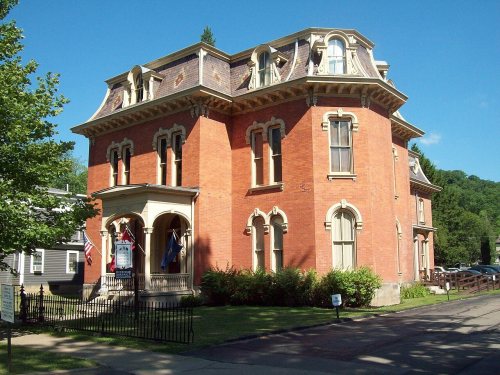
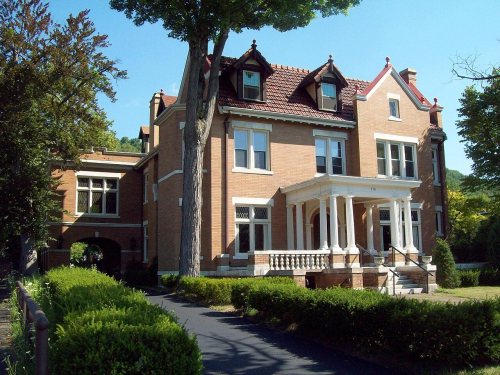
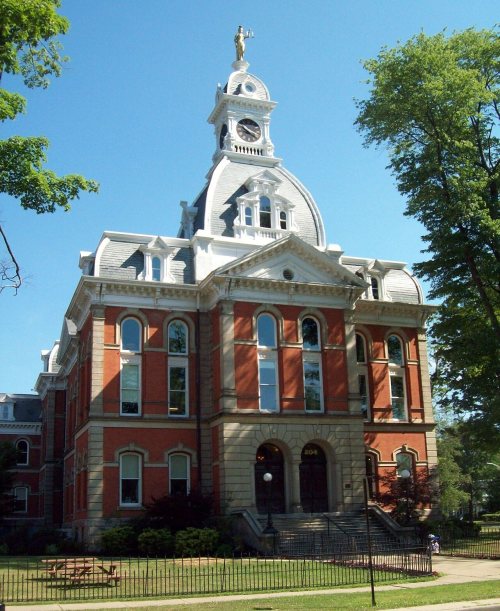
8 listings: 7 buildings, among them the Wetmore House (listed 1975, the first), and 1 historic district, the Warren Historic District, with 587 contributing buildings. 594 historic buildings in all.
How old are the homes in Warren?
60% of Warren’s homes were built before 1940 (Census estimate, ±5.3 points), against a typical 18% for a Pennsylvania town; the median home was built in 1938.
Founding dates: Wikidata, Wikipedia, the U.S. post office records of Blevins & Helbock (CC0) and the Census. Homes by year built: Census ACS 2020–24. National Register of Historic Places: National Park Service (list of May 22, 2026). Old photos, postcards and papers: Wikimedia Commons, the Library of Congress and other public archives, credited on each item’s page. Maps: U.S. Geological Survey historical topographic maps (via Esri) and Sanborn fire-insurance maps (Library of Congress). History text and census tables: Wikipedia (CC BY-SA 4.0). Places that used to be: USGS Geographic Names Information System (2021).
From Wikimedia Commons (6), the Library of Congress (5), Wikidata (1), the National Register of Historic Places (8), Wikipedia, Wikidata and Wikipedia for famous people, U.S. Geological Survey historical maps, U.S. Census counts (via Wikipedia), the US Post Offices dataset (Blevins & Helbock), the USGS Geographic Names Information System, Sanborn fire insurance maps (Library of Congress) and old county and town histories (Internet Archive). Archive images are copied here with their credits and licenses, shown on each photo’s page. Refreshed monthly.





 1880
 1888
 1888
 1888
 1904
 1904
 1904
 1904


