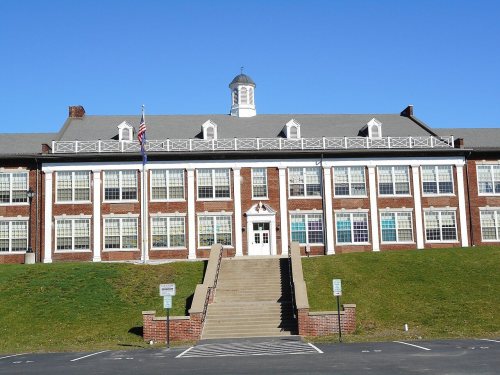
Its Register listings are the Van Dyne Civic Building and the Troy Public High School. Below: 1 old photo or paper, maps from 1885 on, and the census since 1850.
The Troy post office opened in 1817, the earliest record of the town by name. Wikidata gives 1845. Another post office, Saint Johns (1863), opened inside today’s town and later closed.
First census: 480 in 18502020 census: 1,249209 years
How historic is Troy?
A
More historic than 91% of U.S. towns, on its age, its old homes and the National Register.
Founding year: the first Troy post office (Blevins & Helbock, CC0). Wikidata: 1845.The full story ↓
History grade
What drives Troy’s History grade
On its age, its old homes and the National Register, Troy is more historic than 91% of U.S. towns. All 3 inputs are above most U.S. towns; its share of homes from before 1940 ranks highest and its National Register listings lowest.
A
HistoryA character grade: shown, never part of Troy’s overall grade.
Pennsylvania towns list about as much on the Register as the country (a typical Pennsylvania town has 2.1 per 10,000 residents, the U.S. 2.4), so Troy’s 14.2 sits above most of its state (80% of Pennsylvania towns have fewer) while its 2 listings outnumber those of 60% of U.S. towns.
How sure. Graded on any two of the three inputs instead, the letter would range from A− to A. The pre-1940 share is a Census survey estimate (±7.8 points). The founding year is the first post office, not a stated founding date; Wikidata’s 1845 falls in the same era, so the grade doesn’t depend on which one is used.
Founding year: the first post office (other dates in Quick answers). Homes: Census ACS 2020–24. National Register: National Park Service, May 2026 list; each listing counted once (boundary changes and added documentation belong to their listing), and a historic district counts its contributing buildings. How TownRatings grades history →
What stands out about Troy’s past
Read from the archive, the National Register and the record. The page puts what stands out first.
Fire insurance maps drew every building, what it was made of and what it was used for, so insurers could price the risk of fire. Pick a year, then a sheet.
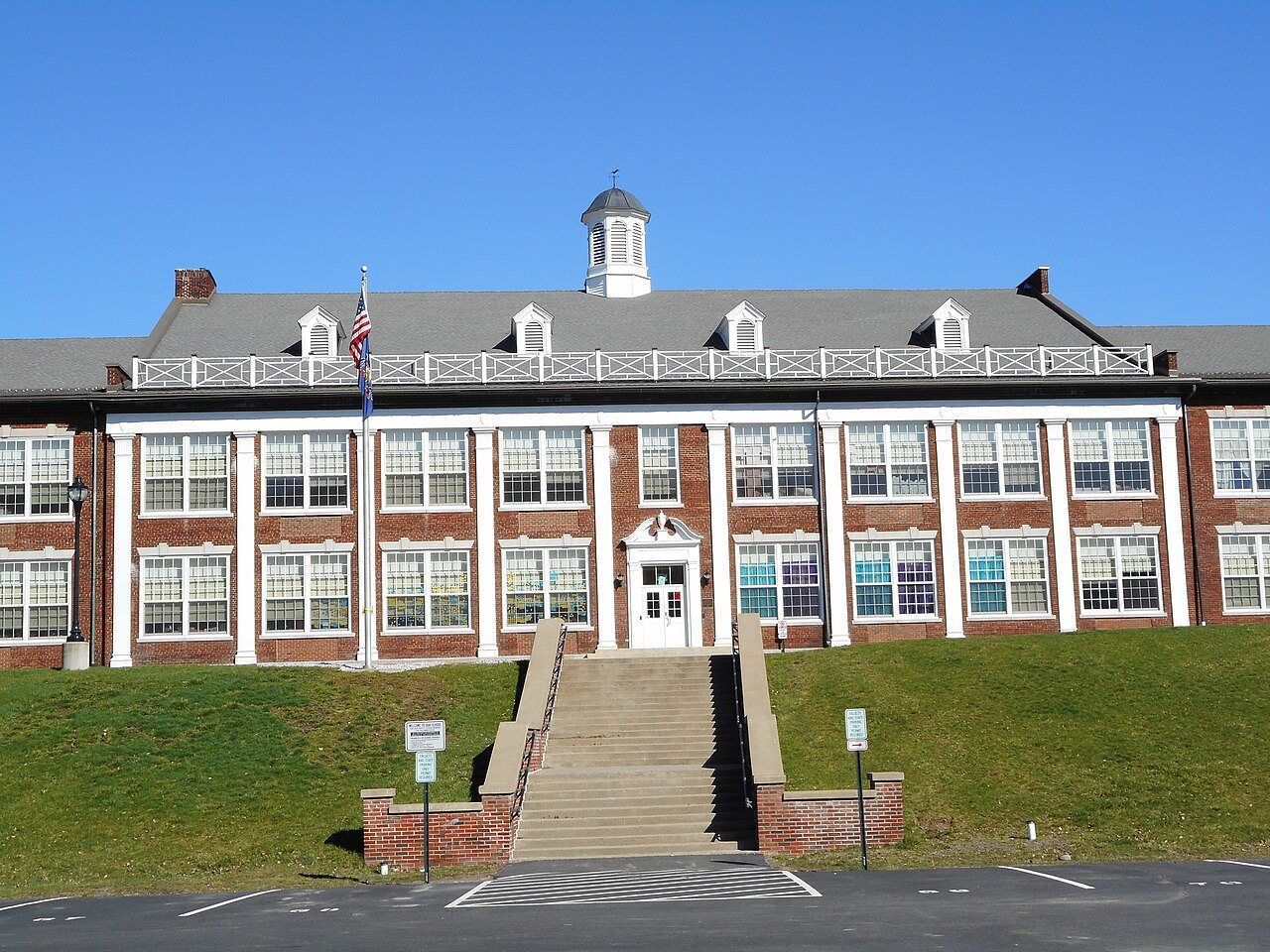
The borough of Troy was incorporated in 1845 from Troy Township, which encircles the borough. Originally part of Luzerne County, the borough's future location (called Lansingburgh) became part of Ontario (now Bradford) County when it was created in 1810. The Troy Public High School and Van Dyne Civic Building are listed on the National Register of Historic Places.
Passages that mention Troy, cut from the printed page as they were published.
History of Bradford County, Pennsylvania1878 · page 375Read the page →
Read the text
owned by Major Ezra Long, upon the site of which the mill now owned by H. F. Long now stands ; from thence it followed the line of the road to the site of the present villao-e of Troy, and its corner was found west of the Presbyterian church ; thence north, including that part of the present township of Troy lying along the road leading to Columbia cross-roads. But the inhabitants living east of the hills which now divide the two townships disliked com-
Text read by machine from the scan; it may contain errors.
History of Bradford County, Pennsylvania, with biographical selections1891 · page 493Read the page →
Read the text
occurred in the southwest corner, where the line followed in a westerly direction and passed through Ezra Long's little gristmill, where afterward was built H. F. Long's mill; then followed the line of the road to the village of Troy where it cornered just west of the Presbyterian church ; thence north, including that part of Troy township, along the road leading to Columbia Cross Roads. The surrounding hills, however, and growth of Troy necessitated transferring a portion of Springfield to Troy township, which leaves it in its present shape,
Text read by machine from the scan; it may contain errors.
History of Bradford County, Pennsylvania1878 · page 131Read the page →
Read the text
1809. The west end of Burlington, in which was the house of worship, being erected into Troy township in 1821, the name of the church was changed to correspond. Its second, framed meeting-house, in the south part of the village of Troy, was dedicated June 2, 1836, and was remodeled in 1867 at a cost of S2500. In 1874 a parsonage was provided, which Elder Sheardown occupied a short time before his death. Armenia church was formed from Troy,
Text read by machine from the scan; it may contain errors.
History and Geography of Bradford County Pennsylvania1926 · page 411Read the page →
Read the text
Troy Township Troy is so called in compliment to Troy, N. Y., by suggestion of Churchill Barnes, who was greatly pleased with that place. Troy was originally a part of the Connecticut township of Augusta in territory claimed by both the Susquehanna Company and the Proprietaries of Pennsylvania. Nearly all the pioneers had purchased and settled on Connecticut claims, and consequently were required to pay for-their land the
Text read by machine from the scan; it may contain errors.
Scans and text from the Internet Archive. Books published in 1930 or earlier, which are in the public domain.
Timeline
Troy, 1817 to 1931
Woven from the archive, old maps, post office records, the National Register and the people born here.
Nothing in the archives for these yearsWeddings on Main Street, storms, parades, school pictures, the old store. If it’s in your family album, it belongs here.
Troy’s post office has been open since 1817. Another post office, Saint Johns, opened and closed inside today’s town.
Troy
1817–today
Saint Johns
1863–1870
18101920today
1cemetery inside Troy
Saint Johns
US Post Offices dataset (Blevins & Helbock, CC0). Places and cemeteries from the USGS Geographic Names Information System (2021).
Questions about Troy’s history
What year was Troy founded?
The Troy post office opened in 1817, the earliest record of the town by name (U.S. post office records). Wikidata gives 1845.
How does Troy rank for history?
Troy is more historic than 91% of U.S. towns. The History grade combines the town’s founding era, the share of homes built before 1940 and its National Register listings. It’s a character grade, so it isn’t part of the overall grade. How it works.
What is on the National Register in Troy?
Two places: the Van Dyne Civic Building (listed 1974) and the Troy Public High School (2002).
How old are the homes in Troy?
34% of Troy’s homes were built before 1940 (Census estimate, ±7.8 points), against a typical 18% for a Pennsylvania town; the median home was built in 1953.
Founding dates: Wikidata, Wikipedia, the U.S. post office records of Blevins & Helbock (CC0) and the Census. Homes by year built: Census ACS 2020–24. National Register of Historic Places: National Park Service (list of May 22, 2026). Old photos, postcards and papers: Wikimedia Commons, the Library of Congress and other public archives, credited on each item’s page. Maps: U.S. Geological Survey historical topographic maps (via Esri) and Sanborn fire-insurance maps (Library of Congress). History text and census tables: Wikipedia (CC BY-SA 4.0). Places that used to be: USGS Geographic Names Information System (2021).
From Wikimedia Commons (24), Wikidata (1), the National Register of Historic Places (2), Wikipedia, Wikidata and Wikipedia for famous people, U.S. Geological Survey historical maps, U.S. Census counts (via Wikipedia), the US Post Offices dataset (Blevins & Helbock), the USGS Geographic Names Information System, Sanborn fire insurance maps (Library of Congress) and old county and town histories (Internet Archive). Archive images are copied here with their credits and licenses, shown on each photo’s page. Refreshed monthly.



 2017
 2017
 2012
 2010
 2010
 2010
 2010
 2010
 2010
 2010
 2010
 2010
 2010
 2010
 2010
 2010
 2010
 2010
 2010
 2010
 2010
 2008
 2007