The first resident of the area that became Fredonia was Levi Arnold. Arnold build a grist mill there between 1837 and 1838 and was, over time, joined by several other businesses and residences. William Simmons built the first store in the small village. Based upon the success of his business and the further gains that could be made after the construction of a proposed railroad, Simmons purchased the land that became the borough of Fredonia and had it surveyed and divided into lots. The land came was purchased from two “Donation tracts,” which were tracts of land given to Revolutionary War soldiers in an attempt to encourage them to continue to serve. The name “Fredonia” came from Simmon’s “free” donation of the land for the town square and as a nod to the “Donation” tracts from which the land was purchased. The first post office was established in 1870 and Fredonia was officially incor…
Passages that mention Fredonia, cut from the printed page as they were published.
History of Mercer County, Pennsylvania1888 · page 524Read the page →
Read the text
The little stream known as Morrison’s Run furnished the motor-power, and coarse granite blocks served as mill-stones. In 1838 the fine grist-mill now standing near Fredonia was erected by Levi Arnold. In 1845 George Slater built a saw-mill on the land afterward owned by Isaac Slater. Other mills followed in due time, notably McDowell’ s saw mill, built in 1854, on the banks of Otter Creek, by George McDowell; Clark’s steam mill, built in the fall of 1869, by Thomas and Joseph Clark, and the Mosteller steam mill, erected nearly the same time. There have been other minor mills, and also temporary
Text read by machine from the scan; it may contain errors.
History of Mercer County, Pennsylvania1888 · page 513Read the page →
Read the text
Fredonia was incorporated as a borough in August, 1876, and then commenced its official life. The census of 1880 gave it a population of 323, which it is claimed, has increased to about 500 during the past eight years. Located in the center of a fine farming district, there is no reason why the borough should not remain one of the flourishing little towns of the county.
Text read by machine from the scan; it may contain errors.
Scans and text from the Internet Archive. Books published in 1930 or earlier, which are in the public domain.
Timeline
Fredonia, 1870 to 1970
Woven from the archive, old maps, post office records, the National Register and the people born here.
Nothing in the archives for these yearsWeddings on Main Street, storms, parades, school pictures, the old store. If it’s in your family album, it belongs here.
Fire insurance maps drew every building, what it was made of and what it was used for, so insurers could price the risk of fire. Pick a year, then a sheet.
Founding dates: Wikidata, Wikipedia, the U.S. post office records of Blevins & Helbock (CC0) and the Census. Homes by year built: Census ACS 2020–24. National Register of Historic Places: National Park Service (list of May 22, 2026). Old photos, postcards and papers: Wikimedia Commons, the Library of Congress and other public archives, credited on each item’s page. Maps: U.S. Geological Survey historical topographic maps (via Esri) and Sanborn fire-insurance maps (Library of Congress). History text and census tables: Wikipedia (CC BY-SA 4.0). Places that used to be: USGS Geographic Names Information System (2021). How TownRatings grades history →
From Wikimedia Commons (6), the Library of Congress (3), Wikipedia, Wikidata and Wikipedia for famous people, U.S. Geological Survey historical maps, U.S. Census counts (via Wikipedia), the US Post Offices dataset (Blevins & Helbock), the USGS Geographic Names Information System, Sanborn fire insurance maps (Library of Congress) and old county and town histories (Internet Archive). Archive images are copied here with their credits and licenses, shown on each photo’s page. Refreshed monthly.


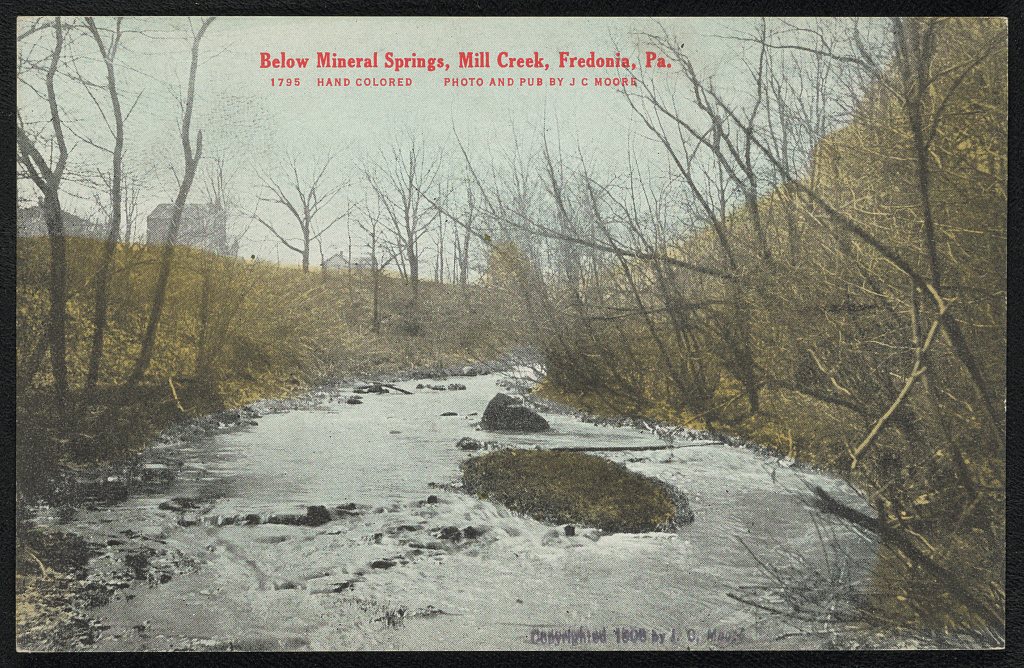


 1908
 1908
 2024
 2024
 2024
 2024
 2019
