Brookville dates to 1796, and 38% of its homes were built before 1940
More historic than 98% of U.S. towns · #77 of 1,035 in Pennsylvania. What drives it
5 places in town are on the National Register, among them a historic district with 263 buildings. Below: 9 old photos and papers, maps from 1887 on, and the census since 1850.
Founding year: Wikidata. First post office: 1830.The full story ↓
History grade
What drives Brookville’s History grade
On its age, its old homes and the National Register, Brookville is more historic than 98% of U.S. towns, #77 of 1,035 in Pennsylvania. All 3 inputs are above most U.S. towns; its National Register listings ranks highest and its age lowest.
A+
HistoryA character grade: shown, never part of Brookville’s overall grade.
Pennsylvania towns list about as much on the Register as the country (a typical Pennsylvania town has 2.1 per 10,000 residents, the U.S. 2.4), so Brookville’s 687 sits above most of its state (95% of Pennsylvania towns have fewer) while its 271 historic buildings outnumber those of 95% of U.S. towns.
NoteThe founding year comes from Wikidata alone; no second source gives 1796.
How sure. Graded on any two of the three inputs instead, the letter would range from A to A+. The pre-1940 share is a Census survey estimate (±7.0 points).
Founding year: Wikidata (other dates in Quick answers). Homes: Census ACS 2020–24. National Register: National Park Service, May 2026 list; each listing counted once (boundary changes and added documentation belong to their listing), and a historic district counts its contributing buildings. How TownRatings grades history →
What stands out about Brookville’s past
Read from the archive, the National Register and the record. The page puts what stands out first.
National Park Service, National Register of Historic Places. Photos from Wikimedia Commons, credited on each place’s page.
Every building
Brookville, building by building, 1887–1921
Fire insurance maps drew every building, what it was made of and what it was used for, so insurers could price the risk of fire. Pick a year, then a sheet.
The area was initially settled in the late 1790s upon the arrival of brothers Joseph and Andrew Barnett, as well as their brother-in-law Samuel Scott, who together established the first settlement at the confluence of the Sandy Lick and Mill Creeks in the area now known as Port Barnett. The first non-Native American settler of the land within the eventual town limits was Moses Knapp, who built a log house at the confluence of North Fork Creek and Sandy Lick Creek (which form Redbank Creek) in 1801.
The 105th Pennsylvania Infantry Regiment, also known as the Wildcat Regiment, was a volunteer infantry regiment in the Union Army during the American Civil War.
Passages that mention Brookville, cut from the printed page as they were published.
History of Jefferson county, Pennsylvania, with illustrations and biographical sketches of some of its prominent men and pioneers1888 · page 541Read the page →
Read the text
The first church built in Rose was the old "Bethel" log church, erected about 1824 on the farm of Joseph Hughes, and the first school-house was the one erected in the present town of Brookville, in 1S30. Prior to that time the nearest school was the one on the present McConnell farm, in Pine Creek township, of which Mr. Matson is ifientioned as one of the principal patrons.
Text read by machine from the scan; it may contain errors.
History of Jefferson county, Pennsylvania, with illustrations and biographical sketches of some of its prominent men and pioneers1888 · page 299Read the page →
Read the text
the Redbank Church (now Crate P. O.), ever since August, 1871, except from the spring of 1872 till the spring of 1874, when it again was attached to Brookville; at first by Rev. Bernard McGivney, up to October, 1875, when the new frame church of Reynoldsville, until then attended from Brookville, was dedicated, and besides the new Bethlehem Church given into his charge ; he residing for about six months witli Father Wienker in Brookville, and then moving to New Bethlehem in the spring of 1876 where he has remained ever since.
Text read by machine from the scan; it may contain errors.
Scans and text from the Internet Archive. Books published in 1930 or earlier, which are in the public domain.
Timeline
Brookville, 1796 to 1991
Woven from the archive, old maps, post office records, the National Register and the people born here.
Nothing in the archives for these yearsWeddings on Main Street, storms, parades, school pictures, the old store. If it’s in your family album, it belongs here.
In 1796, according to Wikidata. Brookville’s post office opened in 1830, and the census of 1850 counted 763 people here.
How does Brookville rank for history?
Brookville is more historic than 98% of U.S. towns, #77 of 1,035 in Pennsylvania. The History grade combines the town’s founding era, the share of homes built before 1940 and its National Register listings. It’s a character grade, so it isn’t part of the overall grade. How it works.
What is on the National Register in Brookville?
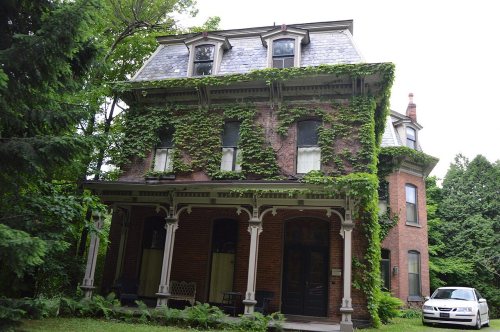
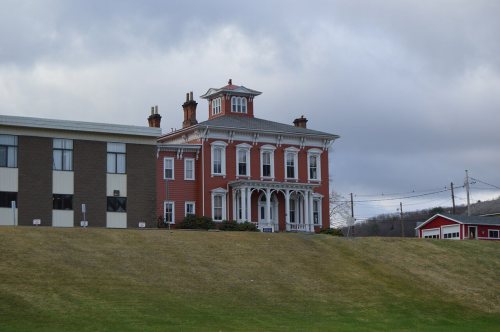
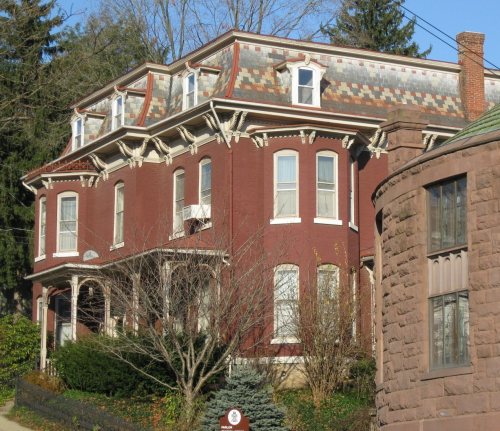
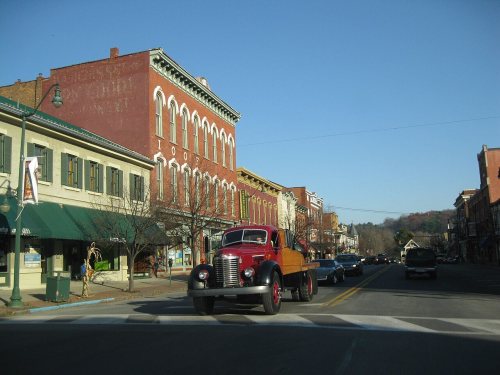
5 listings: 4 buildings, among them the Joseph E. Hall House (listed 1978, the first), and 1 historic district, the Brookville Historic District, with 263 contributing buildings. 271 historic buildings in all.
How old are the homes in Brookville?
38% of Brookville’s homes were built before 1940 (Census estimate, ±7.0 points), against a typical 18% for a Pennsylvania town; the median home was built in 1951.
Founding dates: Wikidata, Wikipedia, the U.S. post office records of Blevins & Helbock (CC0) and the Census. Homes by year built: Census ACS 2020–24. National Register of Historic Places: National Park Service (list of May 22, 2026). Old photos, postcards and papers: Wikimedia Commons, the Library of Congress and other public archives, credited on each item’s page. Maps: U.S. Geological Survey historical topographic maps (via Esri) and Sanborn fire-insurance maps (Library of Congress). History text and census tables: Wikipedia (CC BY-SA 4.0). Places that used to be: USGS Geographic Names Information System (2021).
From Wikimedia Commons (23), the Library of Congress (1), the National Register of Historic Places (5), Wikipedia, Wikidata and Wikipedia for famous people, U.S. Geological Survey historical maps, U.S. Census counts (via Wikipedia), the US Post Offices dataset (Blevins & Helbock), the USGS Geographic Names Information System, Sanborn fire insurance maps (Library of Congress) and old county and town histories (Internet Archive). Archive images are copied here with their credits and licenses, shown on each photo’s page. Refreshed monthly.




 1914
 1949
 1949
 1949
 2012
 2012
 2012
 2010
 2009
 2009
 2009
 2009
 2009
 2009
 2009
 2009
 2009
 2004
 2004


