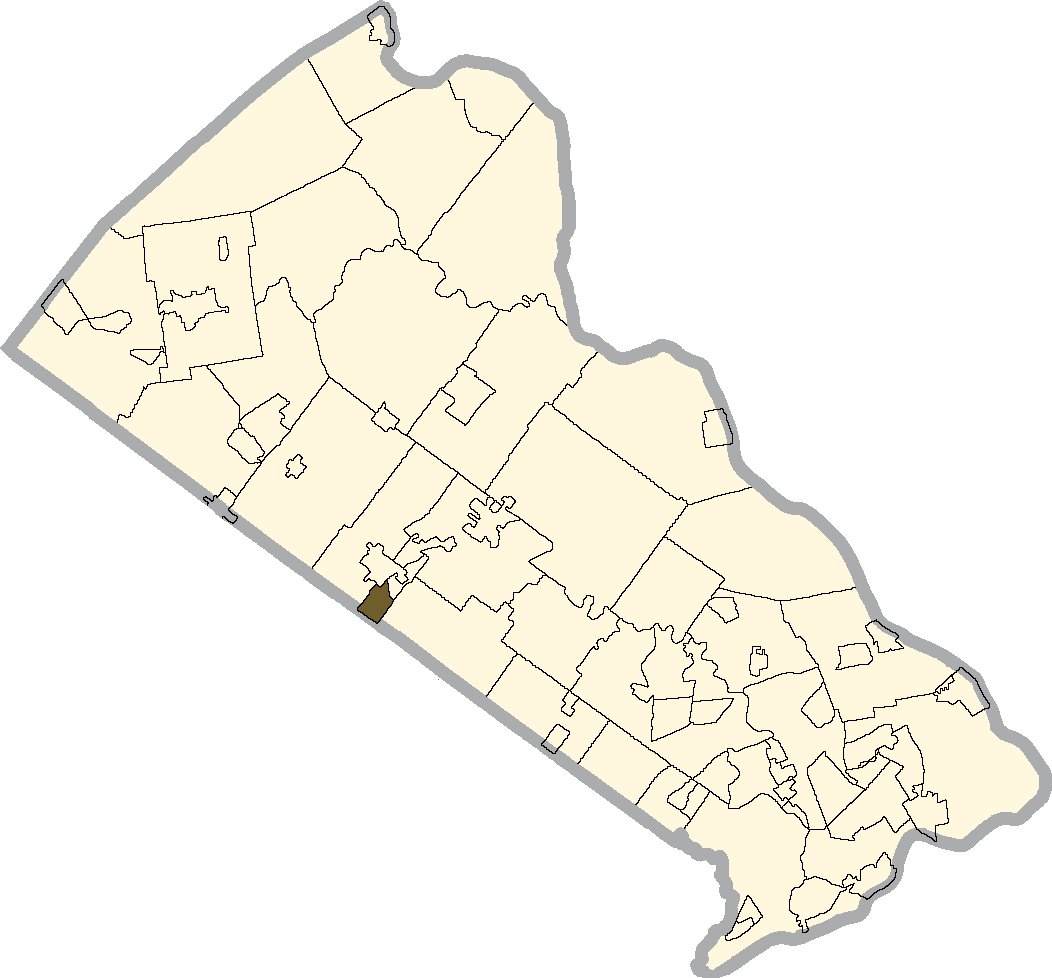
 Photo: CyberXRef · CC BY-SA 3.0
Brittany Farms-The Highlands gets more rain and snow than 78% of U.S. towns: 49 inches of precipitation a year
In July the day’s top temperature is typically 86°. Warming shows here too: 2.1° more than in 1901–2000, led by December. Tender plants can go out after about April 11; in half of years the first frost comes by November 1.
A year in Brittany Farms-The Highlands at a glance
Each month’s typical high and low, and what it brings.
What stands out about Brittany Farms-The Highlands’ climate
Compared with towns across the U.S., with Brittany Farms-The Highlands’ place in Pennsylvania beside it.
What a year in Brittany Farms-The Highlands feels like
Typical highs and lows by season and by month, from NOAA’s 30-year normals.
About 205 frost-free days a year
In half of years the last 32° night comes by April 11 and the first by November 1. Frost and day counts come from NOAA’s station at Willow Grove Nas, PA, 6 miles from the town’s center, at about the same height.
The 2023 USDA map puts Brittany Farms-The Highlands’ center in zone 7a: the coldest night of a typical winter, averaged over 1991–2020, reaches about 2°. Plant labels use the zone; frost dates tell you when to plant.
Freezing nights by month
Average nights at or below 32°
90° days by month
Average days at 90° or more
About 20 inches of snow a winter
Snow, measured at Neshaminy Falls, PA, falls mostly in January. Precipitation (rain plus melted snow) adds up to 49 inches a year; July is the wettest month and February the driest. Rain or snow falls on about 120 days a year.
Rain + melted snow by month
Inches of water
Snowfall by month
Inches of snow
Heating and cooling a home in Brittany Farms-The Highlands
83% of the work is heating. Months averaging under 55° run from October through April.
Degree days add up how far each day’s average falls below (heating) or rises above (cooling) 65° over a year. NOAA normals at Willow Grove Nas, PA.
Living with Brittany Farms-The Highlands’ climate
What the numbers mean for a garden, a free afternoon and a bad-weather day.
205 frost-free days in zone 7a. The last frost comes by Apr 11 in half of years, so many gardeners wait a week or two past that to set out tomatoes. The first fall frost comes by Nov 1.
Months with highs of 62–84° and lows of 40° or more: April, May, June, September and October. 0.8 miles of trails are waiting.
Parks & trails →Of the yearly building losses FEMA expects in Brittany Farms-The Highlands from natural hazards, river flooding is the largest share (60%); heat waves, cold waves, winter storms and ice storms together are 18%. Normals are averages; the hazards page covers the extremes.
Natural hazards →Brittany Farms-The Highlands and its neighbors
Every town next door is within a degree of Brittany Farms-The Highlands in January and July, closer than the 5 km grid can tell apart. Tap a town to see its climate.
Climates most like Brittany Farms-The Highlands’, farther away
TownRatings’ own comparison of NOAA 1991–2020 normals, not a NOAA product: places of 5,000+ at least 150 miles away, one per state, closest on January low, July high, precipitation and snow.
| Town | Jan. low | July high | Precip. | Snow |
|---|---|---|---|---|
| Brittany Farms-The Highlands, PA | 22° | 86° | 49" | 20" |
| North Vernon, IN | 23° | 86° | 48" | 17" |
| Cynthiana, KY | 24° | 87° | 48" | 16" |
| Clarksburg, WV | 23° | 85° | 47" | 24" |
| Amelia, OH | 23° | 86° | 46" | 23" |
Temperatures and rain come from NOAA’s 5 km grid, so each town gets its own value. Snow and frost-free days come from the nearest weather station, so neighbors often share them.
Warmer than it used to be
The last 30 years in Brittany Farms-The Highlands averaged 2.1° warmer than the 1900s. The biggest change is in December (+3.7°).
A bigger shift than in 92% of U.S. towns.
Change by month
The two periods overlap (1991–2000 is in both), which makes the gap a little smaller than it would be between separate periods.
How Brittany Farms-The Highlands compares
Against 12,954 U.S. towns of 2,500 or more (one per 5 km climate cell), with Brittany Farms-The Highlands’ place among Pennsylvania’s.
Brittany Farms-The Highlands weather by month
Highs, lows and precipitation from NOAA’s grid at Brittany Farms-The Highlands’ center; snow, wet days and snow on the ground from Neshaminy Falls, PA. 1991–2020 normals.
| Month | High | Low | Rain + melt | Snow | Wet days | Snow on ground | 30-yr range |
|---|---|---|---|---|---|---|---|
| January | 39° | 22° | 3.5" | 7.0" | 11 | 6 | 22° – 38° |
| February | 43° | 24° | 2.8" | 5.7" | 10 | 6 | 22° – 40° |
| March | 51° | 31° | 4.0" | 3.5" | 11 | 3 | 35° – 49° |
| April | 63° | 40° | 3.8" | 0.0" | 11 | 0 | 48° – 57° |
| May | 73° | 50° | 4.0" | 0.0" | 11 | 0 | 57° – 67° |
| June | 81° | 60° | 4.3" | 0.0" | 11 | 0 | 67° – 74° |
| July | 86° | 65° | 5.0" | 0.0" | 10 | 0 | 71° – 79° |
| August | 84° | 63° | 4.7" | 0.0" | 9 | 0 | 70° – 77° |
| September | 77° | 56° | 4.6" | 0.0" | 9 | 0 | 64° – 70° |
| October | 66° | 44° | 4.2" | 0.1" | 9 | 0 | 50° – 62° |
| November | 54° | 35° | 3.3" | 0.2" | 9 | 0 | 38° – 49° |
| December | 44° | 27° | 4.4" | 3.4" | 11 | 3 | 29° – 47° |
| Year | 63° | 43° | 48.5" | 19.9" | 120 | 18 |
How much a month can swing
A normal is an average. December swings the most: from 1991 to 2020 its average ranged from 29° to 47°. June is the most reliable, staying within 7°.
Where Brittany Farms-The Highlands’ numbers come from
Normals are 30-year averages, not a forecast. How TownRatings reads climate data →
- Temperatures and precipitation: NOAA’s gridded 1991–2020 normals for the 5 km cell at Brittany Farms-The Highlands’ center.
- Snow: Neshaminy Falls, PA.
- Frost, freezing nights, 90° and 100° days, heating and cooling: Willow Grove Nas, PA, 6 miles from the town’s center, at about the same height; the nearest station that passes our checks for distance, height and agreement with the grid.
- Growing zone: USDA Plant Hardiness Zone Map, 2023. USDA Agricultural Research Service and PRISM Group, Oregon State University, prism.oregonstate.edu/phzm, accessed 8 Oct 2026.
- Then and now: NOAA’s gridded normals for 1901–2000 at the same cell.
- Storms and extremes: FEMA National Risk Index (expected annual losses to buildings).
Common questions about Brittany Farms-The Highlands’ climate
What is the weather like in Brittany Farms-The Highlands?
A typical July afternoon reaches 86°, a January night drops to 22°, and about 20 inches of snow falls in a normal winter. Milder January nights than 51% of U.S. towns; hotter July afternoons than 57% of U.S. towns.
How cold does it get in Brittany Farms-The Highlands in winter?
January nights average 22°. About 92 nights a year reach 32° or below. In the coldest January of the last 30 years the month averaged 22°.
How much snow does Brittany Farms-The Highlands get?
About 20 inches in a normal winter at Neshaminy Falls, PA, most of it in January, with snow on the ground about 18 days a year.
How hot does it get in Brittany Farms-The Highlands?
July, with a typical high of 86° and a low of 65°. About 22 days a year reach 90° (Willow Grove Nas, PA).
When is the first and last frost in Brittany Farms-The Highlands?
In half of years the last spring frost (32°) comes by April 11 and the first fall frost by November 1, about 205 frost-free days, at Willow Grove Nas, PA.
What growing zone is Brittany Farms-The Highlands in?
Zone 7a on the 2023 USDA Plant Hardiness Zone Map: the coldest night of a typical winter reaches about 2°.
What is the best time of year to visit Brittany Farms-The Highlands?
By one simple rule (highs of 62–84° and lows of 40° or more), April, May, June, September and October. The rule is ours, not NOAA’s; the month table has the numbers to judge by.
Is Brittany Farms-The Highlands getting warmer?
Yes: 1991–2020 averaged 2.1° warmer than 1901–2000 on NOAA’s grid. A bigger shift than 92% of U.S. towns.
Neighbors talk weather
Gardens, snow, and the best days of the year in Brittany Farms-The Highlands.
Source: NOAA NCEI U.S. Climate Normals, 1991–2020 and 1901–2000; USDA/PRISM 2023 hardiness zones; FEMA National Risk Index. Today’s forecast: National Weather Service.