Altoona dates to 1849, and 44% of its homes were built before 1940
More historic than 98% of U.S. towns · #71 of 1,035 in Pennsylvania. What drives it
12 places in town are on the National Register, among them four historic districts with 699 buildings between them. Below: 28 old photos and papers, maps from 1888 on, and the census since 1860.
Founding year: Wikidata; Wikipedia’s history section gives the same year. First post office: 1817.The full story ↓
History grade
What drives Altoona’s History grade
On its age, its old homes and the National Register, Altoona is more historic than 98% of U.S. towns, #71 of 1,035 in Pennsylvania. All 3 inputs are above most U.S. towns; its share of homes from before 1940 ranks highest and its age lowest.
A+
HistoryA character grade: shown, never part of Altoona’s overall grade.
Pennsylvania towns list about as much on the Register as the country (a typical Pennsylvania town has 2.1 per 10,000 residents, the U.S. 2.4), so Altoona’s 164 sits above most of its state (91% of Pennsylvania towns have fewer) while its 708 historic buildings outnumber those of 98% of U.S. towns.
How sure. Graded on any two of the three inputs instead, the letter would range from A to A+. The pre-1940 share (±2.3 points) is firm at this size. Two sources give 1849.
Founding year: Wikidata (other dates in Quick answers). Homes: Census ACS 2020–24. National Register: National Park Service, May 2026 list; each listing counted once (boundary changes and added documentation belong to their listing), and a historic district counts its contributing buildings. How TownRatings grades history →
What stands out about Altoona’s past
Read from the archive, the National Register and the record. The page puts what stands out first.
Nothing in the archives for these yearsWeddings on Main Street, storms, parades, school pictures, the old store. If it’s in your family album, it belongs here.
One explanation of the city's name is that the word Altoona is a derivative of the Latin word altus, meaning high.
An alternate theory is given in Pennsylvania Place Names, a compendium published in 1925. It suggests that Colonel Beverly Mayer of Columbia, Pennsylvania, a civil engineer of the Pennsylvania Central Railway, was the person who named Altoona after the city of Altona in the Duchy of Holstein, which became part of the Kingdom of Prussia in 1866 and of Germany in 1871. The German Altona, which is today a district of Hamburg, lies on the right bank of the Elbe and is an important railway and manufacturing center.
Passages that mention Altoona, cut from the printed page as they were published.
A history of Blair county, Pennsylvania. From its earliest settlement, and more particularly from its organization, in 1846 to June 1896 ..1896 · page 66Read the page →
Read the text
East End, Greenwood and Pottsgrove are all east of the Eighth Ward of Altoona and on the south-eastern side of the railroad. They have a combined population of nearly 1,000 and will eventually all grow together and be taken into the city, as the Twentieth Ward perhaps. One George Pottsgrove built a dam on the little mountain stream here many 3-ears ago and operated a small saw and grist mill until his water right was purchased by the Altoona Gas and Water Company and the water piped to
Text read by machine from the scan; it may contain errors.
Twentieth century history of Altoona and Blair County, Pennsylvania1911 · page 307Read the page →
Read the text
Altoona was first laid out in 1849. that year the Pennsylvania railroad purchased the farm of David Robison, extending from Eleventh to Sixteenth streets and from Fourth to Fourteenth avenues, for $10,000, and on it afterwards in 1850, erected the upper or machine shops, and in 1855 the Logan house. The adjoining
Text read by machine from the scan; it may contain errors.
Twentieth century history of Altoona and Blair County, Pennsylvania1911 · page 616Read the page →
Read the text
George W. Patton was manager of the Blair County Furnace property, which was located about three miles east of Altoona, and subsequently managed the Union Furnace, which was erected at the station now known by that name in Huntingdon County during the time when the Pennsylvania Railroad was being constructed through the Juniata Valley. In
Text read by machine from the scan; it may contain errors.
A history of Blair county, Pennsylvania. From its earliest settlement, and more particularly from its organization, in 1846 to June 1896 ..1896 · page 78Read the page →
Read the text
Prior to the founding of Altoona a union church and schoolhouse combined stood on the present corner of Sixteenth street and Union avenue, just outside the early limits of Altoona. It was built during the year 1838 by the school directors of the township in conjunction with the Lutheran, Presbyterian and Methodist -denominations and served the double purpose of church and school-house until the erection of churches and schools in Altoona. It is now used as a
Text read by machine from the scan; it may contain errors.
Scans and text from the Internet Archive. Books published in 1930 or earlier, which are in the public domain.
Timeline
Altoona, 1811 to 1956
Woven from the archive, old maps, post office records, the National Register and the people born here.
Every edition of the U.S. Geological Survey’s map of Altoona. Tap a year, or press play to watch the town change.
1920Altoona sheet · 1:62,500
U.S. Geological Survey historical topographic maps (public domain), via Esri’s collection of the scans. The red ring marks the center of Altoona.
Every building
Altoona, building by building, 1888–1894
Fire insurance maps drew every building, what it was made of and what it was used for, so insurers could price the risk of fire. Pick a year, then a sheet.
In 1849, according to Wikidata and Wikipedia’s history of the town. Altoona’s post office opened in 1817, and the census of 1860 counted 3,591 people here.
How does Altoona rank for history?
Altoona is more historic than 98% of U.S. towns, #71 of 1,035 in Pennsylvania. The History grade combines the town’s founding era, the share of homes built before 1940 and its National Register listings. It’s a character grade, so it isn’t part of the overall grade. How it works.
What is on the National Register in Altoona?
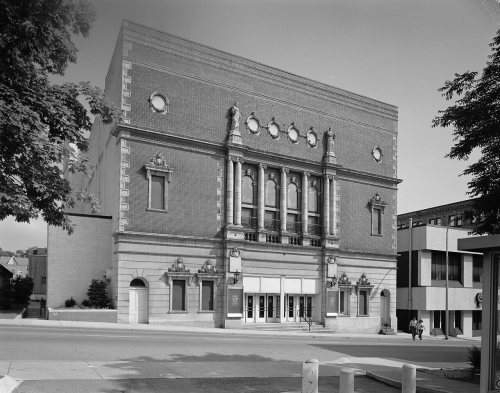
12 listings: 7 buildings, among them the Mishler Theatre (listed 1973, the first), 4 historic districts with 699 contributing buildings, and 1 structure. 708 historic buildings in all.
How old are the homes in Altoona?
44% of Altoona’s homes were built before 1940 (Census estimate, ±2.3 points), against a typical 18% for a Pennsylvania town; the median home was built in 1944.
Founding dates: Wikidata, Wikipedia, the U.S. post office records of Blevins & Helbock (CC0) and the Census. Homes by year built: Census ACS 2020–24. National Register of Historic Places: National Park Service (list of May 22, 2026). Old photos, postcards and papers: Wikimedia Commons, the Library of Congress and other public archives, credited on each item’s page. Maps: U.S. Geological Survey historical topographic maps (via Esri) and Sanborn fire-insurance maps (Library of Congress). History text and census tables: Wikipedia (CC BY-SA 4.0). Places that used to be: USGS Geographic Names Information System (2021).
From Wikimedia Commons (17), the Library of Congress (11), Wikidata (1), the National Register of Historic Places (12), Wikipedia, Wikidata and Wikipedia for famous people, U.S. Geological Survey historical maps, U.S. Census counts (via Wikipedia), the US Post Offices dataset (Blevins & Helbock), the USGS Geographic Names Information System, Sanborn fire insurance maps (Library of Congress) and old county and town histories (Internet Archive). Archive images are copied here with their credits and licenses, shown on each photo’s page. Refreshed monthly.




 1867
 c. 1870
 c. 1870
 c. 1870
 c. 1870
 c. 1870
 c. 1870
 c. 1870
 c. 1870
 c. 1870
 c. 1870
 c. 1870
 c. 1870
 c. 1870
 c. 1870
 c. 1870
 1873
 1874
 1895
 1895
 1904
 1904
 1904
 1904
 1904
 1904
 1904
 1904


