
Ruch, Oregon, 2005
Ruch’s story
129 years in pictures
The archive holds 1 old photo or paper going back to 2005.
- 1897Ruch is settled
Each edition grades its towns against each other only.

A town of 1,151, settled in 1897.
The best of Ruch’s subject grades is a B+ for schools; the weakest is a D− for hazard risk. No town in Oregon scores lower than Ruch on hazard risk. Homes are expensive, about $400K for a typical one and 5.4 times the Medford metro’s $74K median household income. Only 10 of the 143 Oregon towns we compare have a higher average trip to work than Ruch. 35% of the land in Ruch is conserved, above both Oregon’s towns (4.4%) and U.S. towns (4.3%). Ruch has 5 places on the National Register. Ruch has fewer than 2,500 residents, so it gets subject grades but no overall grade.
In a town this size, neighbors are the best guide. Ask them anything.
Each subject compared with towns across the country (schools within Oregon), ordered by how far Ruch is from typical.
How TownRatings grades towns →
The archive holds 1 old photo or paper going back to 2005.
Ruch is unincorporated, so Jackson County and regional agencies provide most services.
EPA SDWIS (Oct 9, 2026) · HIFLD + EIA-861 2025 · Census 2020 ZCTAs · NCES 2024–25 · registration: vote.gov, updated Oct 2, 2026.
Ordered by what stands out in Ruch.
At 99 of 100, Ruch’s FEMA risk score is above both the Oregon town median (64 of 100) and the median of U.S. towns (44 of 100).
FEMA National Risk Index · OpenFEMA
Its public schools are run by Medford SD 549C. Its one school is below.
| School | Level | Students | Letter |
|---|---|---|---|
| Ruch Outdoor Community SchoolLargest public elementary schoolGrades K–8 | Grades K–8 | 197 | B |
NCES · EDFacts · graded within OR on state tests and graduation
1.2 miles of trail in 0 parks and preserves. Ruch’s trail density is 0.2 miles per square mile.
Trails & parks © OpenStreetMap contributors · Conserved land: USGS PAD-US
Most working residents leave Ruch for work: only 4% work in town. 16% of Ruch residents live below the poverty line. Jobs based in Ruch fell to 161 in 2023, 59 fewer than in 2013.
| Ruch | Oregon towns | U.S. towns | |
|---|---|---|---|
| Below the poverty line | 16% | 11% | 9.6% |
| Working residents who work in town | 4% | 9.8% | 8% |
| Work from home | 11% | 14% | 11% |
Census LEHD 2023 · ACS
Adults 35 to 64 are 51% of residents (39% statewide); adults 18 to 34 are 14% of residents (23% statewide). The median age in Ruch is 50.1 years. 35% of adults 25 and older have a bachelor’s degree or more, vs 37% across Oregon.
| Ruch | Oregon towns | U.S. towns | |
|---|---|---|---|
| Median age | 50.1 years | 39.4 years | 40.5 years |
| Aged 65 or older | 14% | 18% | 18% |
Somewhere between 45% and 67% women
The Census survey reached too few of Ruch’s residents to say more: its margin here is ±11.1 points. Across Oregon, 50.1% of residents are women.
| Ruch | OR | U.S. | |
|---|---|---|---|
| Under 10 | 7.9% | 10.3% | 11.6% |
| 10 to 17 | 13.7% | 9.6% | 10.3% |
| 18 to 24 | 6.2% | 8.5% | 9.1% |
| 25 to 34 | 7.6% | 14% | 13.7% |
| 35 to 44 | 12.2% | 14.1% | 13.2% |
| 45 to 54 | 28.8% | 12.3% | 12.2% |
| 55 to 64 | 10.1% | 12.2% | 12.7% |
| 65 to 74 | 9.2% | 11.5% | 10.2% |
| 75 and older | 4.3% | 7.6% | 7% |
| No diploma | 6.3% | 8.2% | 10.4% |
| High school | 18.8% | 22.4% | 26% |
| Some college | 34.8% | 23.5% | 19.1% |
| Associate’s | 4.9% | 9.1% | 8.8% |
| Bachelor’s | 31.2% | 22.7% | 21.6% |
| Graduate | 4.1% | 14.1% | 14.1% |
U.S. Census Bureau · ACS 2020-2024 5-year estimates · in a town of 1,200, single groups can be off by several points
Ruch has mild winters and warm summers. July afternoons reach 89°, January nights drop to 32° and about 4 inches of snow falls in a winter.
NOAA U.S. Climate Normals, 1991–2020
Ruch beats the Oregon average on 3 of 26 CDC measures and trails it on 7. 39% of adults have high blood pressure in Ruch.
| Ruch | Oregon towns | U.S. towns | |
|---|---|---|---|
| High blood pressure (CDC PLACES) | 39% | 33% | 35% |
| Diabetes (CDC PLACES) | 14% | 11% | 12% |
| Binge drink (CDC PLACES) | 14% | 15% | 16% |
| Frequent physical distress (CDC PLACES) | 16% | 15% | 14% |
| What stands out | Ruch | OR |
|---|---|---|
| Fewer older adults who have lost all their teeth | 8.9% | 12.5% |
| More adults getting a yearly checkup | 76.9% | 72.6% |
| More adults with COPD | 8.9% | 6.8% |
CDC PLACES 2025 · modeled estimates for adults · CMS · HRSA
Zillow Home Value Index · Redfin Data Center
Museums, parks, gardens and other places to visit around Ruch. Close and well known come first.
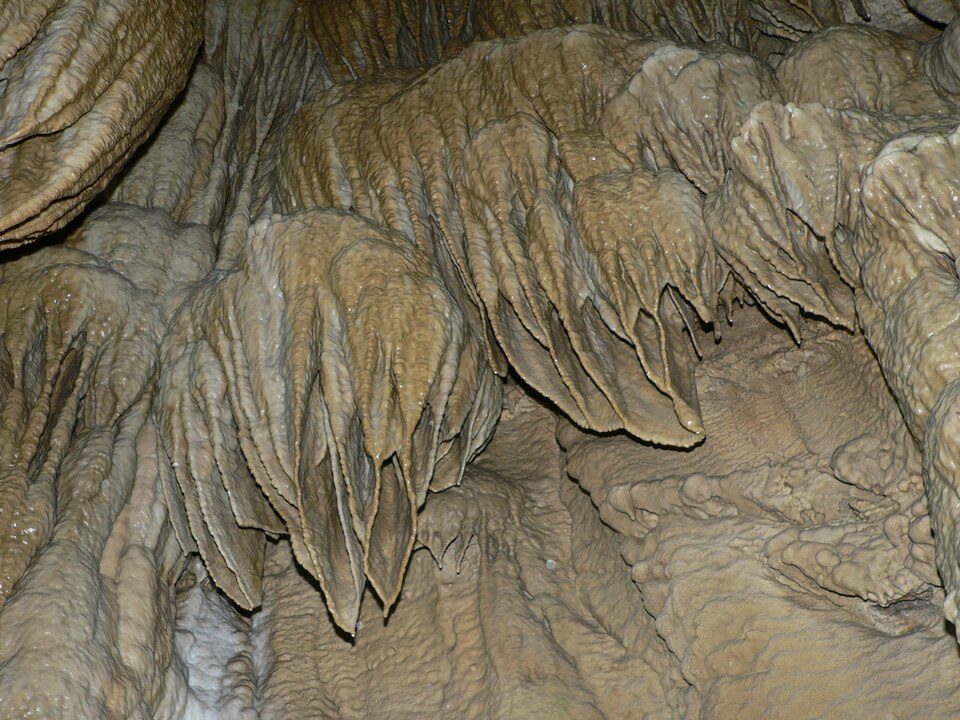 19 mi National MonumentOregon Caves National Monument and Preserve64K visitors a year
 20 mi Ski areaMount Ashland39 runs · 1,160 ft vertical
 17 mi GardenLithia Park
 18 mi MuseumScienceWorks Museum
Oregon Caves National Monument and Preserve: David Monniaux, CC BY-SA 3.0 · Mount Ashland: Alex Lockhart, Public domain · Lithia Park: Unknown, CC BY-SA 3.0 · ScienceWorks Museum: Roberto J. Galindo, CC BY-SA 3.0
1 within 15 miles of the center of Ruch
About 2 of every 100 Ruch residents are enrolled in college, against 6 across Oregon.
Where Ruch’s working residents go each day. Line width shows the share.
Census LEHD 2023
Unincorporated community in Oregon, US
Ruch is an unincorporated community and census-designated place (CDP) in Jackson County, Oregon, United States. It is located on Oregon Route 238, southeast of Grants Pass. As of the 2020 census, Ruch had a population of 819. Ruch was named after Casper M. Ruch, who bought a tract of land where the community now stands in 1896. He built a blacksmith shop, a store and a house. When he was appointed postmaster of the new post office in 1897 and allowed to name it, he named the post office after himself. The post office closed in 1939. There are two structures listed on the National Register of Historic Places in Ruch—McKee Bridge and Star Ranger Station. The Ruch area is home to several Orego…
From Wikipedia, licensed CC BY-SA 4.0 · facts via Wikidata (CC0)
Short answers, built from the data on this page.
Yes. The typical home is worth about $401,000, 19% below the Oregon typical home. Cost of living, which also weighs rents, property taxes and how many households pay 30% or more of their income for housing, grades D.


