
BLM Firefighters, Moonhill RX, 2011
Burns’s story
142 years in pictures
Census counts: 264 in 1890, 2,730 in 2020. The archive holds 2 old photos and papers going back to 2011 and 2 maps from 1960 on.
- 1884Burns is settled
Each edition grades its towns against each other only.
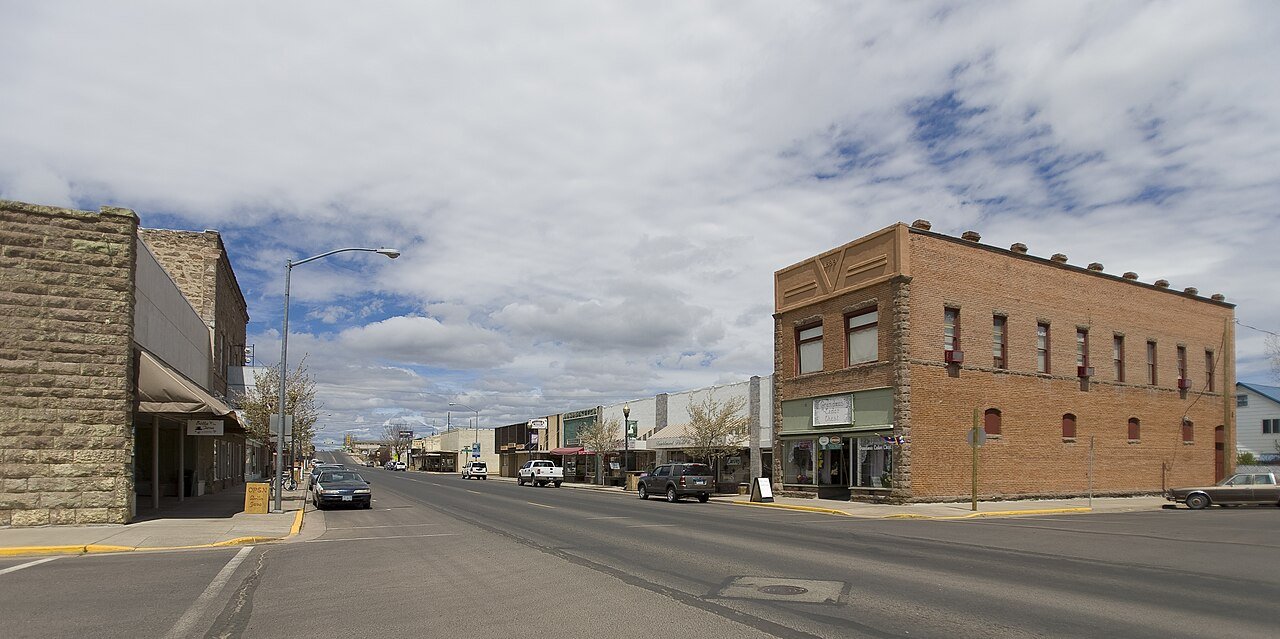
A town of 2,692, settled in 1884. 2.6 times the nonprofits per person than the typical Oregon town.
Burns grades D overall, 120th of 142 graded towns in Oregon, mostly because of schools and incomes. Its public schools trail 94% of Oregon towns on state tests and graduation. The median household income is $42K, and 16% of residents live below the poverty line. What it does well: it is easier to get around on foot or by transit than 83% of U.S. towns. 41% of working residents work locally in Burns, against 9.5% in Oregon’s towns and 8% across U.S. towns. Only 14 of Oregon’s 228 towns score lower on health. Burns's civic life (library use, community groups, volunteering) is stronger than in 96% of U.S. towns.
Where Burns beats most towns, and one thing worth knowing.
| School | Grades | Students |
|---|---|---|
| Henry L Slater Elementary School | K–5 | 297 |
| Burns High School | 9–12 | 215 |
| Monroe School | 6–12 | 15 |
Each subject compared with towns across the country (schools within Oregon), ordered by how far Burns is from typical.
How TownRatings grades towns →
Census counts: 264 in 1890, 2,730 in 2020. The archive holds 2 old photos and papers going back to 2011 and 2 maps from 1960 on.
Who provides power, water and the rest in Burns, and how to reach them.
EPA SDWIS (Oct 9, 2026) · HIFLD + EIA-861 2025 · Census 2020 ZCTAs · NCES 2024–25 · registration: vote.gov, updated Oct 2, 2026.
Ordered by what stands out in Burns.
Burns is healthier than towns with similar incomes and has home values climbing faster than Oregon’s, but it has household incomes well below the Oregon norm.
Home values rose 31% in five years, to about $186K, against 7% across Oregon. The median property tax bill is $1,707, against $3,876 across Oregon, another input to its cost-of-living grade.
The median rent in Burns is $734 a month. The typical Burns home is worth about $186,000, up 4.1% in a year, 62% below the Oregon typical home. 59% of households own their home in Burns.
| Burns | Oregon towns | U.S. towns | |
|---|---|---|---|
| Median rent | $734 a month | $1,415 a month | $1,185 a month |
| Households that own their home | 59% | 65% | 73% |
Census ACS, 2020–24 · Zillow Home Value Index · Redfin Data Center
Its public schools are run by Harney County SD 3. Two of its 4 schools are below, each with why it’s listed.
| School | Level | Students | Letter |
|---|---|---|---|
| Henry L Slater Elementary SchoolLargest public elementary schoolGrades K–5 | Grades K–5 | 297 | C+ |
| Burns High SchoolLargest public high schoolGrades 9–12 | Grades 9–12 | 215 | B+ |
NCES · EDFacts · graded within OR on state tests and graduation
Against the 2,979 U.S. towns with household incomes like Burns’s, it is healthier than 58%, so its C− isn’t only a matter of income.
Burns beats the Oregon average on 1 of 26 CDC measures and trails it on 13. 18% of Burns adults report frequent physical distress. Among 142 Oregon towns, just 6 have a higher share of adults who smoke cigarettes than Burns.
| Burns | Oregon towns | U.S. towns | |
|---|---|---|---|
| Frequent physical distress (CDC PLACES) | 18% | 15% | 14% |
| Diabetes (CDC PLACES) | 15% | 11% | 12% |
| Fair or poor health (CDC PLACES) | 25% | 20% | 19% |
| Smoke cigarettes (CDC PLACES) | 17% | 13% | 14% |
| What stands out | Burns | OR |
|---|---|---|
| More adults treating high blood pressure | 75.6% | 71.4% |
| More adults with COPD | 10.9% | 6.8% |
CDC PLACES 2025 · modeled estimates for adults · CMS · HRSA
Burns has chilly winters and warm summers, with very little rain. Burns’ July high is 87°F.
NOAA U.S. Climate Normals, 1991–2020
The average commute for its 1,071 working residents takes 12.9 minutes, against 23 across Oregon.
Jobs based in Burns grew to 1,306 in 2023, 73 more than in 2013. The top destinations are Hines (13%), Bend (4%) and Redmond (2%).
| Burns | Oregon towns | U.S. towns | |
|---|---|---|---|
| Average trip to work | 13 minutes | 23 minutes | 25 minutes |
| Median household income | $42,000 | $81,000 | $80,000 |
Census LEHD 2023 · ACS
Expected storm and flood damage is higher than in 62% of U.S. communities. Since 1982, 11 flood insurance claims have been paid out in Burns.
FEMA flood insurance claims · FEMA National Risk Index · OpenFEMA
1.4 miles of trail in 3 parks and preserves.
| Burns | Oregon towns | U.S. towns | |
|---|---|---|---|
| Miles of trail per square mile | 0.4 miles per square mile | 0.8 | 0.4 |
| Conserved land | 2.1% | 4.4% | 4.3% |
| Biggest places to walk | Trails | Acres |
|---|---|---|
| 1. Memorial Field | — | 5 |
| 2. Washington Park | — | 2 |
| 3. Triangle Park | — | 2 |
Trails & parks © OpenStreetMap contributors · Conserved land: USGS PAD-US
None within 15 miles of Burns; the nearest are
About 2 of every 100 Burns residents are enrolled in college, against 6 across Oregon.
City in Oregon, United States
Burns is a city in and the county seat of Harney County, in the U.S. state of Oregon. According to the 2020 census, the population was 2,730. Burns and the nearby city of Hines are home to about 60 percent of the people in the sparsely populated county, by area the largest in Oregon and the tenth largest in the United States. The Burns–Hines region has a high-desert climate but was much wetter in the recent geologic past. The Harney Basin was the largest of many depressions in which lakes formed in southeastern Oregon during the late Pleistocene. Remnants of an ancient lake that reached as far north as Burns are at the center of the Malheur National Wildlife Refuge, south of the city. North…
From Wikipedia, licensed CC BY-SA 4.0 · facts via Wikidata (CC0)
Short answers, built from the data on this page.
Burns grades D overall, better than 7% of U.S. towns and #120 of 142 in Oregon. It grades C− for health and D for schools. Schools is its weak spot, with a D.
Cost of living, which also weighs rents, property taxes and how many households pay 30% or more of their income for housing, grades B.
2 notable people were born here, including Kellen Clemens and Susannah Scaroni.