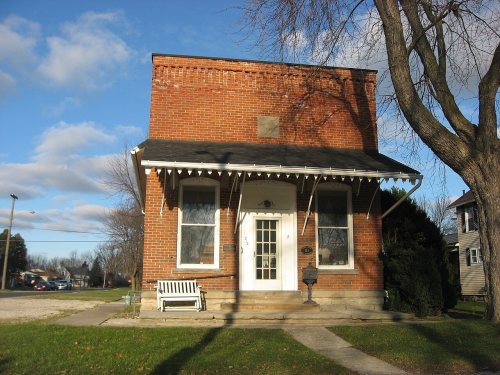
On its age, its old homes and the National Register, Woodville is more historic than 90% of U.S. towns. All 3 inputs are above most U.S. towns; its share of homes from before 1940 ranks highest and its National Register listings lowest.
A
HistoryA character grade: shown, never part of Woodville’s overall grade.
Ohio towns list about as much on the Register as the country (a typical Ohio town has 2.9 per 10,000 residents, the U.S. 2.4), so Woodville’s 15.1 sits above most of its state (78% of Ohio towns have fewer) while its 3 historic buildings outnumber those of 65% of U.S. towns.
How sure. Graded on any two of the three inputs instead, the letter would range from A− to A. The pre-1940 share is a Census survey estimate (±6.7 points). Two sources give 1836.
Founding year: Wikipedia (other dates in Quick answers). Homes: Census ACS 2020–24. National Register: National Park Service, May 2026 list; each listing counted once (boundary changes and added documentation belong to their listing), and a historic district counts its contributing buildings. How TownRatings grades history →
What stands out about Woodville’s past
Read from the archive, the National Register and the record. The page puts what stands out first.
Woodville was laid out and platted in 1836. It was named for General Amos E. Wood.
Woodville was the midway point on the Western Reserve and Maumee Turnpike, which was also known as the "Old Mud Pike" because of the thick mud that often mired animals and vehicles alike. It was the first permanent route across the Black Swamp. The toll road connected Perrysburg with Lower Sandusky, which has since been renamed Fremont.
A mile marker from the road remains at 100 East Main Street, in front of the village pharmacy. Several of the milestones are still in place along the 31 miles (50 km) stretch between present day Fremont and Perrysburg. The route is currently designated U.S. Route 20.
Passages that mention Woodville, cut from the printed page as they were published.
twentieth century history of sandusky county, ohio1909 · page 348Read the page →
Read the text
The; first grist-mill in Woodville Township was built by D. B. Banks in 1835 on the banks of the Portage River, a short distance from the present village of Woodville. There was also a saw-mill on the other side of the river.
Text read by machine from the scan; it may contain errors.
History of Sandusky County, Ohio1882 · page 789Read the page →
Read the text
The oldest burying ground in Woodville township is located in section thirtyfive, on Sugar Creek, about two miles southeast of the village of Woodville. The land was owned originally by C. B. Collins, who came from Sandusky about the year 1834 to superintend the grading of the old mud pike. In 1836 his wife
Text read by machine from the scan; it may contain errors.
History of Sandusky County, Ohio1882 · page 792Read the page →
Read the text
There is also a saw-mill in section four, on the farm of Caleb Klink. The steam saw-mill at Woodville is owned by Lewis Maynard. Since the early days there has been a carding machine at Woodville. The woollen-mill, as it now stands, is owned by W. J. Keil.
Text read by machine from the scan; it may contain errors.
Scans and text from the Internet Archive. Books published in 1930 or earlier, which are in the public domain.
Woodville’s post office has been open since 1839. Another post office, Clay, opened and closed inside today’s town.
Clay
1833–1839
Woodville
1839–today
18301930today
US Post Offices dataset (Blevins & Helbock, CC0). Places and cemeteries from the USGS Geographic Names Information System (2021).
Questions about Woodville’s history
What year was Woodville founded?
In 1836, according to Wikipedia’s history of the town. Woodville’s post office opened in 1833, and the census of 1880 counted 406 people here.
How does Woodville rank for history?
Woodville is more historic than 90% of U.S. towns. The History grade combines the town’s founding era, the share of homes built before 1940 and its National Register listings. It’s a character grade, so it isn’t part of the overall grade. How it works.
What is on the National Register in Woodville?
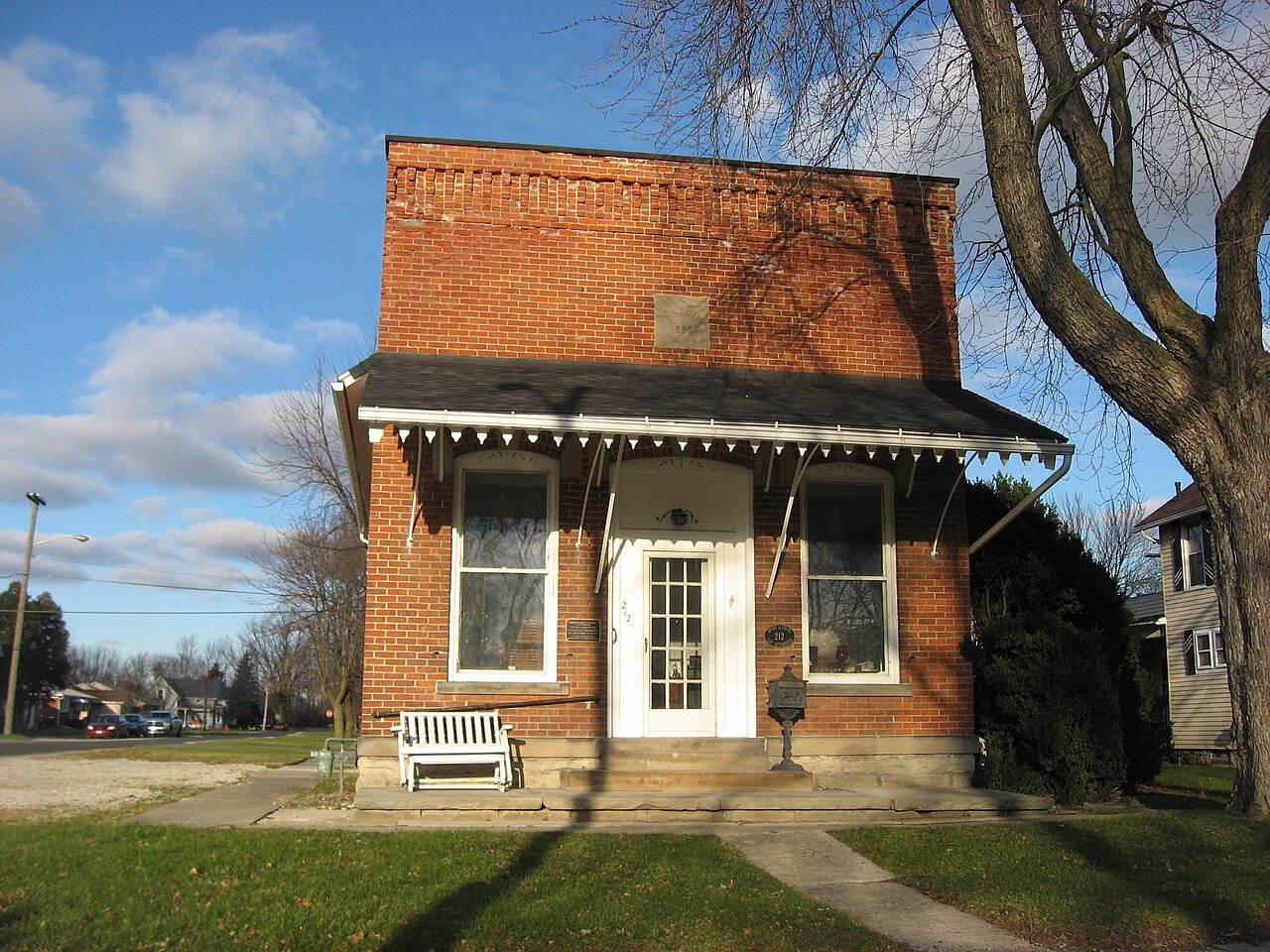
Two places: the Georg Cronenwett House (listed 1978) and the Layman, Christopher C., Law Office (1986).
How old are the homes in Woodville?
30% of Woodville’s homes were built before 1940 (Census estimate, ±6.7 points), against a typical 15% for an Ohio town; the median home was built in 1955.
Founding dates: Wikidata, Wikipedia, the U.S. post office records of Blevins & Helbock (CC0) and the Census. Homes by year built: Census ACS 2020–24. National Register of Historic Places: National Park Service (list of May 22, 2026). Old photos, postcards and papers: Wikimedia Commons, the Library of Congress and other public archives, credited on each item’s page. Maps: U.S. Geological Survey historical topographic maps (via Esri) and Sanborn fire-insurance maps (Library of Congress). History text and census tables: Wikipedia (CC BY-SA 4.0). Places that used to be: USGS Geographic Names Information System (2021).
From Wikimedia Commons (1), the National Register of Historic Places (2), Wikipedia, Wikidata and Wikipedia for famous people, U.S. Geological Survey historical maps, U.S. Census counts (via Wikipedia), the US Post Offices dataset (Blevins & Helbock), the USGS Geographic Names Information System and old county and town histories (Internet Archive). Archive images are copied here with their credits and licenses, shown on each photo’s page. Refreshed monthly.



 2004