Wellington’s post office opened in 1821, and 26% of its homes were built before 1940
More historic than 94% of U.S. towns · #75 of 993 in Ohio. What drives it
3 places in town are on the National Register, among them two historic districts with 90 buildings between them. Below: 4 old photos and papers, maps from 1884 on, and the census since 1860.
Founding year: the first Wellington post office (Blevins & Helbock, CC0). Wikidata: 1855.The full story ↓
History grade
What drives Wellington’s History grade
On its age, its old homes and the National Register, Wellington is more historic than 94% of U.S. towns, #75 of 993 in Ohio. All 3 inputs are above most U.S. towns; its National Register listings ranks highest and its age lowest.
A
HistoryA character grade: shown, never part of Wellington’s overall grade.
Ohio towns list about as much on the Register as the country (a typical Ohio town has 2.9 per 10,000 residents, the U.S. 2.4), so Wellington’s 198 sits above most of its state (96% of Ohio towns have fewer) while its 91 historic buildings outnumber those of 89% of U.S. towns.
How sure. Graded on any two of the three inputs instead, the letter would range from A− to A. The pre-1940 share is a Census survey estimate (±6.9 points). The founding year is the first post office, not a stated founding date; Wikidata gives 1855.
Founding year: the first post office (other dates in Quick answers). Homes: Census ACS 2020–24. National Register: National Park Service, May 2026 list; each listing counted once (boundary changes and added documentation belong to their listing), and a historic district counts its contributing buildings. How TownRatings grades history →
What stands out about Wellington’s past
Read from the archive, the National Register and the record. The page puts what stands out first.
National Park Service, National Register of Historic Places. Photos from Wikimedia Commons, credited on each place’s page.
Every building
Wellington, building by building, 1884–1922
Fire insurance maps drew every building, what it was made of and what it was used for, so insurers could price the risk of fire. Pick a year, then a sheet.
The rights to naming the village were given as a reward for how much road could be contracted to build. The original winner of the contest picked the name "Charlemont", to near universal disdain. The rights to name the town then went to William Welling, who chose the name "Wellington", either after himself or the Duke of Wellington. Wellington was incorporated as a village in 1855.
In 1858, the former American House Hotel (later torn down and replaced by Herrick Memorial Library) was the site of the Oberlin-Wellington Rescue. A group of men, both white and black and many from Oberlin, swarmed the hotel to rescue runaway slave John Price. He was being held by a US Marshal and his men, who intended to return him to his master in Kentucky.
Passages that mention Wellington, cut from the printed page as they were published.
A standard history of Lorain county, Ohio1916Read the page →
Read the text
Wellington had a history of about thirty-seven years before it was incorporated as a village in 1855. The first settlers in the township coiiimeneed to arrive in 1818, and for a number of years located near its center, where (|uite a settlement had been formed even before the railroad came in 1845.
Text read by machine from the scan; it may contain errors.
A standard history of Lorain county, Ohio1916Read the page →
Read the text
Trri!: Mictiiodist Ei'iscopai. Cihihcii By Dr. J. W. Houghton Almost from tlie bcginnin!,' of tlie settlement of Wellington the itinerant Metliodist circuit rider made his periodical visits. The first settlers came in 1818 and the first society was organized in 1826, probably by the Rev. John JIazzard, the members being John Clififord and wife who lived in the red house on the hill east of Wellington Creek ; Daniel Clifford and wife m'Iio lived west and south of tlie village ; a daughter
Text read by machine from the scan; it may contain errors.
History of the Oberlin-Wellington rescue1859 · page 116Read the page →
Read the text
Took him to Wellington. Arrived at Wellington between 1 and 2 o'clock. Left Jennings at Wack's. Had n't paid our bills.
Text read by machine from the scan; it may contain errors.
History of the Oberlin-Wellington rescue1859 · page 158Read the page →
Read the text
tiie rescue, it has escaped my notice. If any one has so sworn, if it should turn out so, all there is of it is that he was at Oberlin in the forenoon, and at Wellington at some three, four, or five o'clock in the afternoon ; but how he got to Wellington, or tor what purpose he came,
Text read by machine from the scan; it may contain errors.
Scans and text from the Internet Archive. Books published in 1930 or earlier, which are in the public domain.
Timeline
Wellington, 1821 to 1963
Woven from the archive, old maps, post office records, the National Register and the people born here.
Nothing in the archives for these yearsWeddings on Main Street, storms, parades, school pictures, the old store. If it’s in your family album, it belongs here.
The Wellington post office opened in 1821, the earliest record of the town by name (U.S. post office records). Wikidata gives 1855.
How does Wellington rank for history?
Wellington is more historic than 94% of U.S. towns, #75 of 993 in Ohio. The History grade combines the town’s founding era, the share of homes built before 1940 and its National Register listings. It’s a character grade, so it isn’t part of the overall grade. How it works.
What is on the National Register in Wellington?
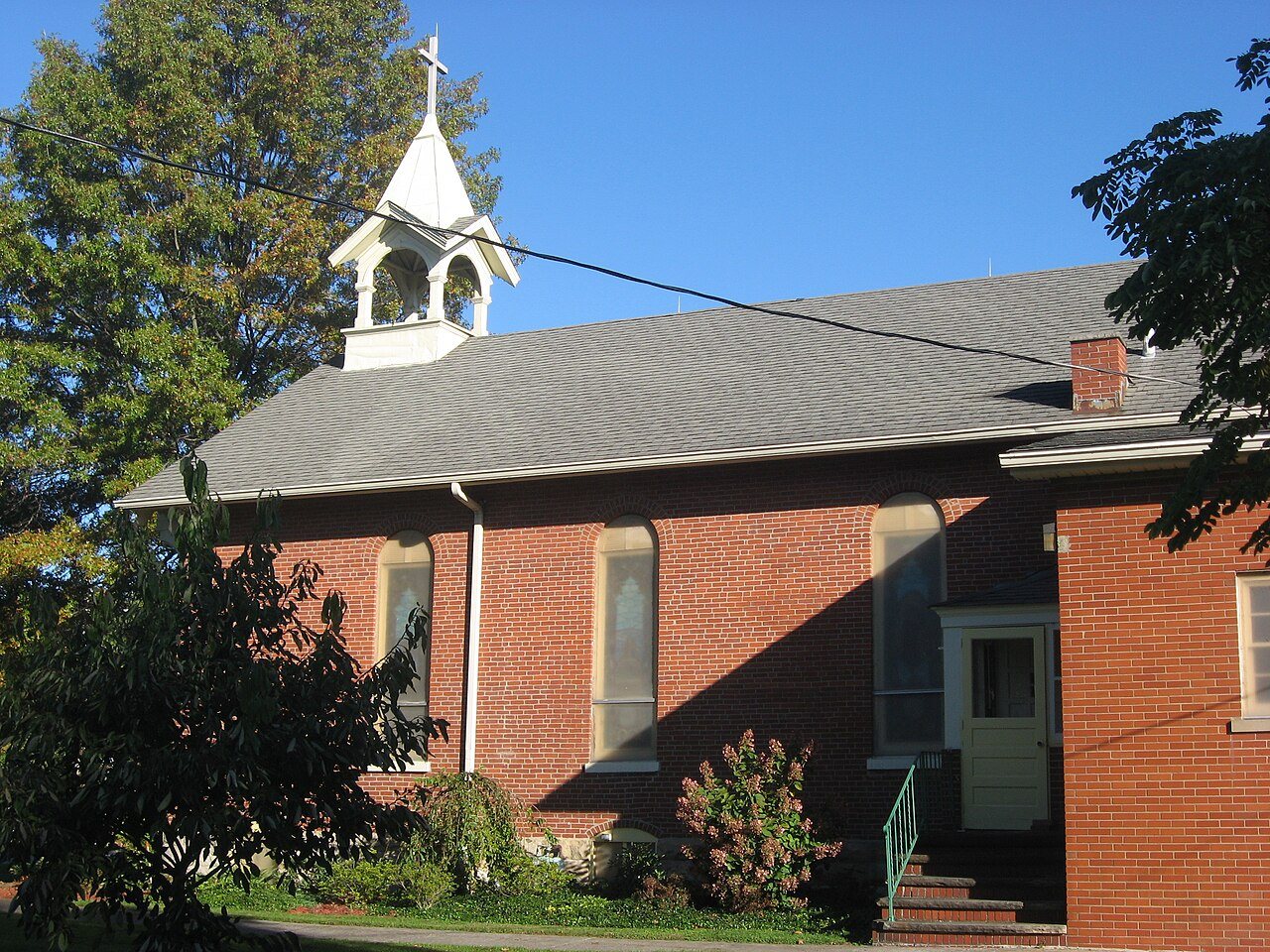
Three places: the Old St. Patrick's Church (listed 1979), the Wellington Center Historic District (1974) and the Wellington Historic District (1979).
How old are the homes in Wellington?
26% of Wellington’s homes were built before 1940 (Census estimate, ±6.9 points), against a typical 15% for an Ohio town; the median home was built in 1973.
Founding dates: Wikidata, Wikipedia, the U.S. post office records of Blevins & Helbock (CC0) and the Census. Homes by year built: Census ACS 2020–24. National Register of Historic Places: National Park Service (list of May 22, 2026). Old photos, postcards and papers: Wikimedia Commons, the Library of Congress and other public archives, credited on each item’s page. Maps: U.S. Geological Survey historical topographic maps (via Esri) and Sanborn fire-insurance maps (Library of Congress). History text and census tables: Wikipedia (CC BY-SA 4.0). Places that used to be: USGS Geographic Names Information System (2021).
From Wikimedia Commons (6), the National Register of Historic Places (3), Wikipedia, Wikidata and Wikipedia for famous people, U.S. Geological Survey historical maps, U.S. Census counts (via Wikipedia), the US Post Offices dataset (Blevins & Helbock), the USGS Geographic Names Information System, Sanborn fire insurance maps (Library of Congress) and old county and town histories (Internet Archive). Archive images are copied here with their credits and licenses, shown on each photo’s page. Refreshed monthly.


 1912
 1916
 2007
 2004


