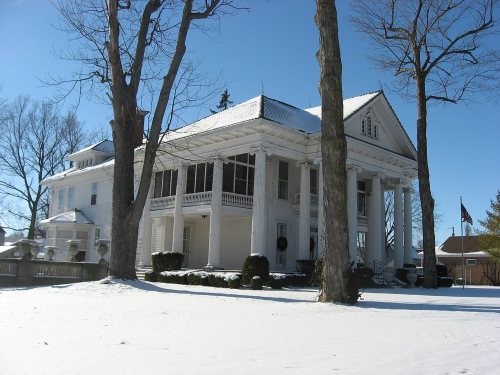
Founding year: Wikidata. First post office: 1832.The full story ↓
History grade
What drives St. Paris’ History grade
On its age, its old homes and the National Register, St. Paris is more historic than 94% of U.S. towns. All 3 inputs are above most U.S. towns; its share of homes from before 1940 ranks highest and its National Register listings lowest.
A
HistoryA character grade: shown, never part of St. Paris’ overall grade.
Ohio towns list about as much on the Register as the country (a typical Ohio town has 2.9 per 10,000 residents, the U.S. 2.4), so St. Paris’ 17.8 sits above most of its state (80% of Ohio towns have fewer) while its 4 historic buildings outnumber those of 68% of U.S. towns.
How sure. Graded on any two of the three inputs instead, the letter would range from A− to A+. The pre-1940 share is a Census survey estimate (±8.1 points). Two sources give 1831.
Founding year: Wikidata (other dates in Quick answers). Homes: Census ACS 2020–24. National Register: National Park Service, May 2026 list; each listing counted once (boundary changes and added documentation belong to their listing), and a historic district counts its contributing buildings. How TownRatings grades history →
What stands out about St. Paris’ past
Read from the archive, the National Register and the record. The page puts what stands out first.
The area where St. Paris now stands was originally inhabited by Native Americans. The first white settlers arrived in 1797 and the village was founded in Johnson Township in 1831 by David Huffman, who originally named it New Paris, after the French capital city of Paris. "On learning of a “New Paris” in this State, he prefixed to it the Saint, to avoid any difficulty that might occur in mail matter."
Passages that mention St. Paris, cut from the printed page as they were published.
History of Champaign County, Ohio, its people, industries and institutions1917Read the page →
Read the text
Simeon McMorran grew to manhood on the paternal farm north of St. Paris in Johnson township, receiving his schooling in the -district school in that vicinity, and after his marriage began farming on his own account on a portion of the home farm and later became owner of one hundred and twenty acres of the same, which tract he still owns and to the operation oi which he continues to give a good deal of his personal attention, although lie retired from the active labors of the farm in 1910 and moved to St. Paris, where he since has made his home and where, in addition to looking after
Text read by machine from the scan; it may contain errors.
The history of Champaign county, Ohio, containing a history of the county1881 · page 447Read the page →
Read the text
built and the pioneer’s work began. The father lived but a few years after his arrival, and the boys remained on the homestead ; Christian died prior to 1831, John living until some ten or twelve years ago. David Huffman, who proved a valuable man to the settlement, and to whom the inhabitants of St. Paris are indebted for their beautiful town, emigrated from Culpeper County, Va., in the year 1813, and entered a half-section of land, a portion of which was the present site of St. Paris. A brother, Jeremiah, accompanied him. The children of David Huffman were John, Julia, Samuel, Mary, Jacob and Reuben ; all
Text read by machine from the scan; it may contain errors.
History of Champaign County, Ohio, its people, industries and institutions1917 · page 785Read the page →
Read the text
at the age of sixteen, and at the time of his death was one of the wealthiest men in Champaign county. He was first a farm hand, later operated a saw-mill, then engaged in the buying and shipping of livestock — all in Johnson township, this county. He located in St. Paris in 1866 and lived there until 1875, when he moved to one of his farms near Millerstown in the same township. In 1886 he returned to St. Paris, where he lived until his death. His estate included about twelve hundred acres, two hundred in Shelby county and the remainder in Champaign county. He was married
Text read by machine from the scan; it may contain errors.
The history of Champaign county, Ohio, containing a history of the county1881 · page 436Read the page →
Read the text
The town now numbers about five hundred inhabitants, and has about one hundred houses and stores. There are two carriage-shops, two groceries, one clothing store, one dry-goods store, one carpenter-shop, a tile manufactory, two blacksmith-shops and one hotel. Its nearest railroad station is St. Paris, on the C. C. & I. C. Railroad, seven miles distant. This town promises, with fair advantages, to become one of the liveliest towns in the county.
Text read by machine from the scan; it may contain errors.
Scans and text from the Internet Archive. Books published in 1930 or earlier, which are in the public domain.
National Park Service, National Register of Historic Places. Photos from Wikimedia Commons, credited on each place’s page.
Places that used to be
Old corners
Old hamlets and crossroads still carry their names on the map.
Hamlets and corners on the map
Paris Court EastSaint Paris
US Post Offices dataset (Blevins & Helbock, CC0). Places and cemeteries from the USGS Geographic Names Information System (2021).
Questions about St. Paris’ history
What year was St. Paris founded?
In 1831, according to Wikidata. St. Paris’ post office opened in 1832.
How does St. Paris rank for history?
St. Paris is more historic than 94% of U.S. towns. The History grade combines the town’s founding era, the share of homes built before 1940 and its National Register listings. It’s a character grade, so it isn’t part of the overall grade. How it works.
What is on the National Register in St. Paris?
Two places: the Monitor House (listed 1974) and the Kiser Mansion (2011).
How old are the homes in St. Paris?
47% of St. Paris’ homes were built before 1940 (Census estimate, ±8.1 points), against a typical 15% for an Ohio town; the median home was built in 1944.
Founding dates: Wikidata, Wikipedia, the U.S. post office records of Blevins & Helbock (CC0) and the Census. Homes by year built: Census ACS 2020–24. National Register of Historic Places: National Park Service (list of May 22, 2026). Old photos, postcards and papers: Wikimedia Commons, the Library of Congress and other public archives, credited on each item’s page. Maps: U.S. Geological Survey historical topographic maps (via Esri) and Sanborn fire-insurance maps (Library of Congress). History text and census tables: Wikipedia (CC BY-SA 4.0). Places that used to be: USGS Geographic Names Information System (2021).
From Wikimedia Commons (6), the National Register of Historic Places (2), Wikipedia, Wikidata and Wikipedia for famous people, the US Post Offices dataset (Blevins & Helbock), the USGS Geographic Names Information System and old county and town histories (Internet Archive). Archive images are copied here with their credits and licenses, shown on each photo’s page. Refreshed monthly.

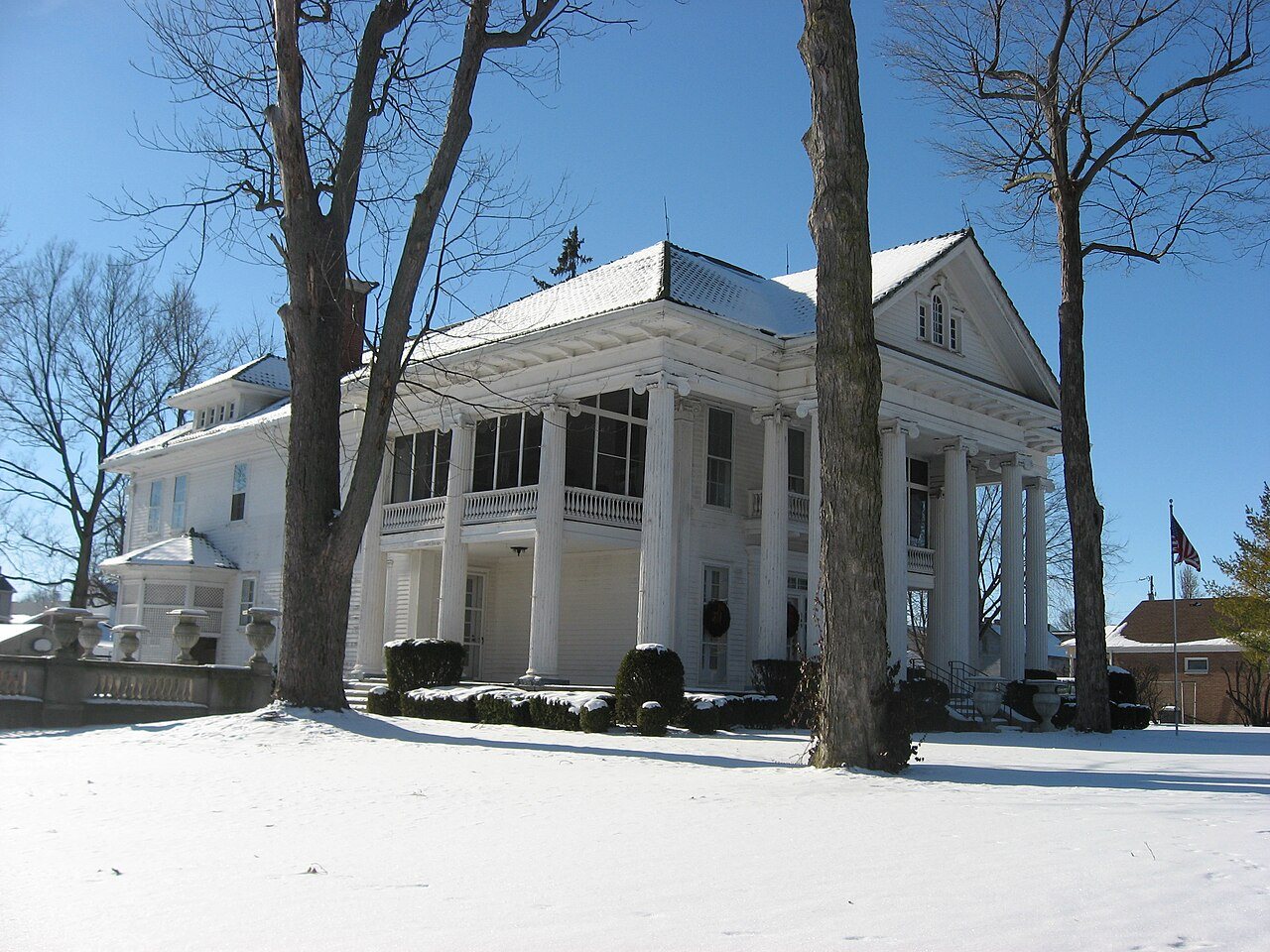


 2021
 2021
 2015
 2013
 2009
 2004