Piqua dates to 1780, and 36% of its homes were built before 1940
Among the most historic 1% of U.S. towns · #6 of 993 in Ohio. What drives it
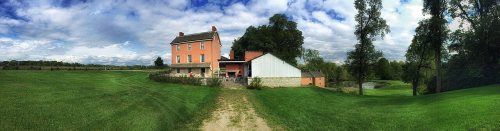
7 places in town are on the National Register, among them a historic district with 256 buildings. Below: 4 old photos and papers, maps from 1887 on, and the census since 1810.
Founding year: Wikipedia. First post office: 1811.The full story ↓
History grade
What drives Piqua’s History grade
On its age, its old homes and the National Register, Piqua is among the most historic 1% of U.S. towns, #6 of 993 in Ohio. All 2 inputs put Piqua near the top nationally; its National Register listings ranks highest.
A+
HistoryA character grade: shown, never part of Piqua’s overall grade.
Ohio towns list about as much on the Register as the country (a typical Ohio town has 2.9 per 10,000 residents, the U.S. 2.4), so Piqua’s 130 sits above most of its state (94% of Ohio towns have fewer) while its 268 historic buildings outnumber those of 95% of U.S. towns.
NoteThe founding year comes from Wikipedia alone; no second source gives 1780.
How sure. Graded on two of the three inputs, so a change in either one moves the letter more than it would with three. The pre-1940 share is a Census survey estimate (±3.9 points).
Founding year: Wikipedia (other dates in Quick answers). Homes: Census ACS 2020–24. National Register: National Park Service, May 2026 list; each listing counted once (boundary changes and added documentation belong to their listing), and a historic district counts its contributing buildings. How TownRatings grades history →
What stands out about Piqua’s past
Read from the archive, the National Register and the record. The page puts what stands out first.
Fire insurance maps drew every building, what it was made of and what it was used for, so insurers could price the risk of fire. Pick a year, then a sheet.
The word 'Piqua' is believed to be derived from a Shawnee language phrase: Othath-He-Waugh-Pe-Qua, translated as "He has risen from the ashes," related to a legend of the people. It became associated with the Pekowi, one of the five divisions of the Shawnee people, who were eventually known as the Piqua.
In 1749, Fort Pickawillany was constructed by the British to protect their trading post at a Miami village of the same name. It was located at the confluence of Loramie Creek and the Great Miami River.
Passages that mention Piqua, cut from the printed page as they were published.
Centennial history. Troy, Piqua and Miami county, Ohio1909 · page 137Read the page →
Read the text
which time an act of incorporation was granted by the General Assembly in which it was stated that "the householders in the town of Piqua in the county of Miami having complied with the provisions of the act of the General Assembly entitled : 'An Act to provide for incorporation of towns' and being filed in the office of the
Text read by machine from the scan; it may contain errors.
The History of Miami County, Ohio1880 · page 436Read the page →
Read the text
into the surrounding country. In 1820, there were already about four hundred inhabitants, and in 1830, nearly seven hundred. As early as 1823, an act of incorporation was granted by the General Assembly of the State, in which it is stated that “ the householders in the town of Piqua, in the county of Miami, having complied with the provisions of the act of the General Assembly, entitled ‘An act to provide for the incorporation of towns,’ and having filed in the office of the Secretary of State, the documents required by the above-recited act, etc.” This act of incorporation bears date January 7, 1823, and has the signature of Jeremiah
Text read by machine from the scan; it may contain errors.
The history of Miami county, Ohio1880 · page 301Read the page →
Read the text
last two were largely cultivated by the first settlers of the above station, and yielded them a bountiful support for themselves and animals. The fourth was a small tract situated in the bend of the river, now embraced within the corporate limits of Piqua. The fifth was in Washington Township, west of the river, beginning three miles north of the city of Piqua, with the farm of Col. Johnston and James Johnston, and extending two or three miles northeast to the mouth of Loraimie Greek, and was known as Johnston’s Prairie, after Col. Johnston. All these prairies were subject to overflow except the last, which was called “ second bottom,"
Text read by machine from the scan; it may contain errors.
The History of Miami County, Ohio1880 · page 266Read the page →
Read the text
Railroads and Pikes. — Through the northern tier of townships passes the Pan Handle Railroad to Piqua (with which Maj. Stephen Johnston, of Piqua, was early identified, in 1849 having drafted, upon a saddler’s bench, its first charter, and, for more than twenty years, acted as its attorney), which, deflecting south, passes through Covington, then on to Bradford. Cutting this at nearly right angles, and following the general course of the Miami through the center of the county, runs the Dayton & Michigan Railroad. Again, connecting with the Pan Handle at Covington, the Narrow Gauge, running from Dayton prospectively to Toledo, affords
Text read by machine from the scan; it may contain errors.
Scans and text from the Internet Archive. Books published in 1930 or earlier, which are in the public domain.
Timeline
Piqua, 1780 to 1979
Woven from the archive, old maps, post office records, the National Register and the people born here.
Nothing in the archives for these yearsWeddings on Main Street, storms, parades, school pictures, the old store. If it’s in your family album, it belongs here.
In 1780, according to Wikipedia’s history of the town. Piqua’s post office opened in 1811, and the census of 1810 counted 287 people here.
How does Piqua rank for history?
Piqua is among the most historic 1% of U.S. towns, #6 of 993 in Ohio. The History grade combines the town’s founding era, the share of homes built before 1940 and its National Register listings. It’s a character grade, so it isn’t part of the overall grade. How it works.
What is on the National Register in Piqua?
7 listings: 6 buildings, among them the Piqua Historical Area State Memorial (listed 1971, the first), and 1 historic district, the Piqua-Caldwell Historic District, with 256 contributing buildings. 268 historic buildings in all.
How old are the homes in Piqua?
36% of Piqua’s homes were built before 1940 (Census estimate, ±3.9 points), against a typical 15% for an Ohio town; the median home was built in 1953.
Founding dates: Wikidata, Wikipedia, the U.S. post office records of Blevins & Helbock (CC0) and the Census. Homes by year built: Census ACS 2020–24. National Register of Historic Places: National Park Service (list of May 22, 2026). Old photos, postcards and papers: Wikimedia Commons, the Library of Congress and other public archives, credited on each item’s page. Maps: U.S. Geological Survey historical topographic maps (via Esri) and Sanborn fire-insurance maps (Library of Congress). History text and census tables: Wikipedia (CC BY-SA 4.0). Places that used to be: USGS Geographic Names Information System (2021).
From Wikimedia Commons (4), Wikidata (2), the National Register of Historic Places (7), Wikipedia, Wikidata and Wikipedia for famous people, U.S. Geological Survey historical maps, U.S. Census counts (via Wikipedia), the US Post Offices dataset (Blevins & Helbock), the USGS Geographic Names Information System, Sanborn fire insurance maps (Library of Congress) and old county and town histories (Internet Archive). Archive images are copied here with their credits and licenses, shown on each photo’s page. Refreshed monthly.




 1907
 1907
 1908


