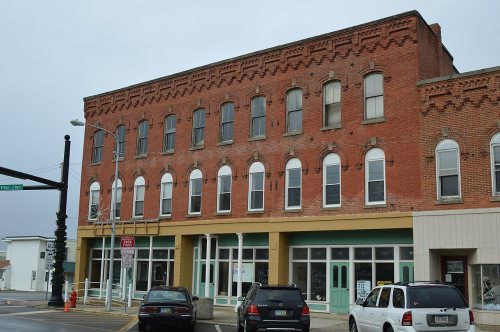
Founding year: the first New London post office (Blevins & Helbock, CC0).The full story ↓
History grade
What drives New London’s History grade
On its age, its old homes and the National Register, New London is more historic than 89% of U.S. towns. All 3 inputs are above most U.S. towns; its share of homes from before 1940 ranks highest and its National Register listings lowest.
A
HistoryA character grade: shown, never part of New London’s overall grade.
Ohio towns list about as much on the Register as the country (a typical Ohio town has 2.9 per 10,000 residents, the U.S. 2.4), so New London’s 3.7 sits near the middle of its state (59% of Ohio towns have fewer) while its 1 listings outnumber those of 51% of U.S. towns.
How sure. Graded on any two of the three inputs instead, the letter would range from B+ to A+. The pre-1940 share is a Census survey estimate (±8.3 points). The founding year is the first post office, not a stated founding date.
Founding year: the first post office (other dates in Quick answers). Homes: Census ACS 2020–24. National Register: National Park Service, May 2026 list; each listing counted once (boundary changes and added documentation belong to their listing), and a historic district counts its contributing buildings. How TownRatings grades history →
What stands out about New London’s past
Read from the archive, the National Register and the record. The page puts what stands out first.
Fire insurance maps drew every building, what it was made of and what it was used for, so insurers could price the risk of fire. Pick a year, then a sheet.
1884Sheet 1 of 1
Edition
Sheets
BrickWoodStone
Sanborn Map Company, via the Library of Congress. Editions published in 1930 or earlier, which are in the public domain.
The first permanent settlement at New London was made in 1816. The village was named after New London, Connecticut, the native home of a share of the early settlers. New London was incorporated in 1853. In the early 20th century, New London (popularly known as "Ferretville") was the center of the American ferret industry, with the surrounding region raising around 20,000 ferrets annually.
New London is home to a Carnegie library, built in 1914 and open since 1916.
Passages that mention New London, cut from the printed page as they were published.
History of Huron County Ohio Its Progress and Development1909 · page 201Read the page →
Read the text
ordered to be laid out as follows: “Beginning at the end of the north and south road which is now laid out from the lake to the south line of Jessup (now Florence), thence to continue through the twentieth range to the south line of said twentieth range through the settlement in New London." This road was cut out during the winter and is the one upon which the village of Clarksfield is located. Тһе settlement in New London was south of the present town of New London. On the 28th day of March, 1816, two brothers, Hosea and Hiram Townsend, left Florence with an ox team on their way from Massachusetts to New London, and are said
Text read by machine from the scan; it may contain errors.
History of Huron County Ohio Its Progress and Development1909 · page 238Read the page →
Read the text
New London township was settled prior to any township adjacent, and the first settlement was within what is now the village. Тһе first settlers were Abner Green, wife and three daughters, in the month of February, 1815, and located on lot number ten, third section. Here Mr. Green erected the first log house—a small cabin—using basswood bark as covering or roofing. His furniture, or rather cooking apparatus, and farming tools and implements were few and very simple. History tells us they were conveyed on his back in a box or "chest captured from General Proctor." Green was born in the state of Vermont at a day sufficiently early
Text read by machine from the scan; it may contain errors.
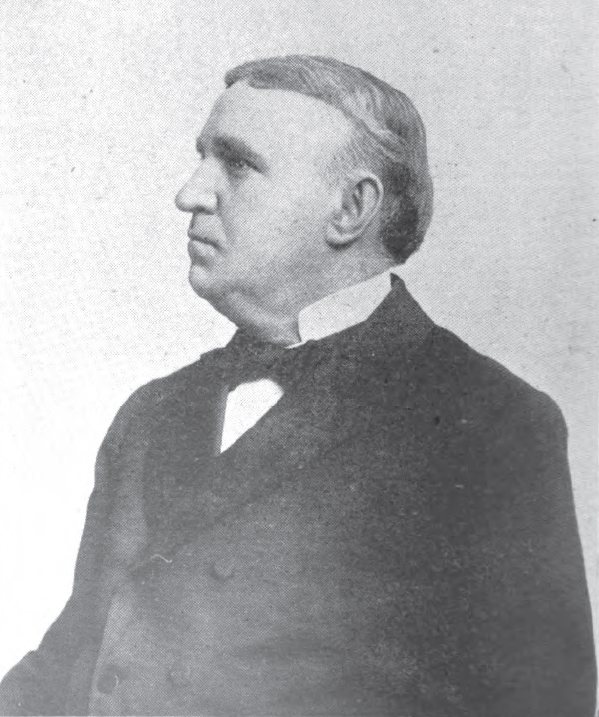
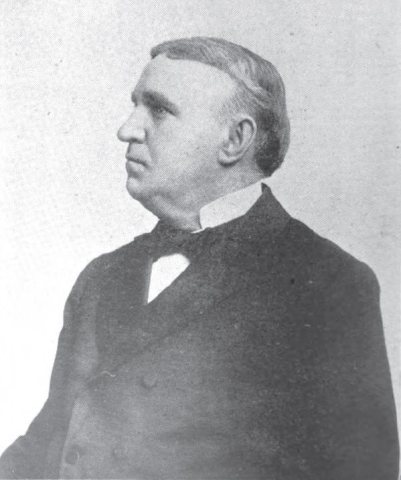
George E. Prosser, alert, energetic and enterprising, has won his success by persevering effort directed by sound and intelligent judgment. He now figures in the business circles of New London as one of the organizers and the cashier of the Savings and Loan Banking Company. He represents one ot the old families of the county, his birth having occurred in New London township, January 7, 1859. His father, William S. Prosser, was a native of Yates county, New York, and in his boyhood days, removed westward to Ohio with his father, Abraham Prosser, who brought his family to the Western Reserve and purchased a large
Text read by machine from the scan; it may contain errors.
Scans and text from the Internet Archive. Books published in 1930 or earlier, which are in the public domain.
Timeline
New London, 1831 to 1969
Woven from the archive, old maps, post office records, the National Register and the people born here.
Nothing in the archives for these yearsWeddings on Main Street, storms, parades, school pictures, the old store. If it’s in your family album, it belongs here.
The New London post office opened in 1831, the earliest record of the town by name (U.S. post office records).
How does New London rank for history?
New London is more historic than 89% of U.S. towns. The History grade combines the town’s founding era, the share of homes built before 1940 and its National Register listings. It’s a character grade, so it isn’t part of the overall grade. How it works.
What is on the National Register in New London?
One place: the Gregory House (listed 1984).
How old are the homes in New London?
49% of New London’s homes were built before 1940 (Census estimate, ±8.3 points), against a typical 15% for an Ohio town; the median home was built in 1942.
Founding dates: Wikidata, Wikipedia, the U.S. post office records of Blevins & Helbock (CC0) and the Census. Homes by year built: Census ACS 2020–24. National Register of Historic Places: National Park Service (list of May 22, 2026). Old photos, postcards and papers: Wikimedia Commons, the Library of Congress and other public archives, credited on each item’s page. Maps: U.S. Geological Survey historical topographic maps (via Esri) and Sanborn fire-insurance maps (Library of Congress). History text and census tables: Wikipedia (CC BY-SA 4.0). Places that used to be: USGS Geographic Names Information System (2021).
From Wikimedia Commons (6), the National Register of Historic Places (1), Wikipedia, Wikidata and Wikipedia for famous people, U.S. Geological Survey historical maps, U.S. Census counts (via Wikipedia), the US Post Offices dataset (Blevins & Helbock), the USGS Geographic Names Information System, Sanborn fire insurance maps (Library of Congress) and old county and town histories (Internet Archive). Archive images are copied here with their credits and licenses, shown on each photo’s page. Refreshed monthly.




 1907
 1907
 2015
 2014
 2004