Founding year: Wikidata; Wikipedia’s history section gives the same year. First post office: 1843.The full story ↓
History grade
What drives Montpelier’s History grade
On its age, its old homes and the National Register, Montpelier is more historic than 87% of U.S. towns, #190 of 993 in Ohio. All 3 inputs are above most U.S. towns; its share of homes from before 1940 ranks highest and its National Register listings lowest.
A
HistoryA character grade: shown, never part of Montpelier’s overall grade.
Ohio towns list about as much on the Register as the country (a typical Ohio town has 2.9 per 10,000 residents, the U.S. 2.4), so Montpelier’s 2.6 sits near the middle of its state (55% of Ohio towns have fewer) while its 1 listings outnumber those of 51% of U.S. towns.
How sure. Graded on any two of the three inputs instead, the letter would range from B+ to A. The pre-1940 share is a Census survey estimate (±7.8 points). Two sources give 1845.
Founding year: Wikidata (other dates in Quick answers). Homes: Census ACS 2020–24. National Register: National Park Service, May 2026 list; each listing counted once (boundary changes and added documentation belong to their listing), and a historic district counts its contributing buildings. How TownRatings grades history →
What stands out about Montpelier’s past
Read from the archive, the National Register and the record. The page puts what stands out first.
Fire insurance maps drew every building, what it was made of and what it was used for, so insurers could price the risk of fire. Pick a year, then a sheet.
Montpelier was platted in 1845. The village was named after Montpelier, Vermont. A post office has been in operation at Montpelier since 1846. Montpelier was incorporated as a village in 1875.
At just what time the early residents of Superior township secured the blessing of a grist mill in their midst, is uncertain; but there is good authority for stating that among the very first buildings erected on the present site of Montpelier was a grist mill, erected by Daniel Tucker and a Mr. Huston, and located near the spot of the present structure.
Text read by machine from the scan; it may contain errors.
A standard history of Williams County, Ohio1920 · page 201Read the page →
Read the text
life to the medical profession he matriculated in the medical department of the University of Michigan where he was graduated in 1886 with the degree of Doctor of Medicine. He first located for the practice of his profession in Montpelier, remaining here until October, 1897, when he accepted the chair of neurology in the Michigan College of Medicine and Surgery at Detroit, having served as professor of pathology from 1894 to 1897. In 1899 Doctor Weitz returned to Montpelier and re-engaged in the active practice of his profession,
Text read by machine from the scan; it may contain errors.
Blakeslee is an enterprising and busy trade center, located on the Wabash railroad, ten miles southwest of Montpelier, and in 1900 had a population of 239. It was laid out in 1882, by John Boman, at which time that branch of the Wabash was built.
Text read by machine from the scan; it may contain errors.
A standard history of Williams County, Ohio1920 · page 365Read the page →
Read the text
The next job Mr. Willis had was as watchman for three years in the Peninsular Car Company’s shops in Adrian. From there he came to Montpelier, where he was employed on the construction of the Wabash Railroad line to Chicago for one summer, and then he was made section foreman at Montpelier, holding the position twelve years.
Text read by machine from the scan; it may contain errors.
Scans and text from the Internet Archive. Books published in 1930 or earlier, which are in the public domain.
Timeline
Montpelier, 1843 to 1923
Woven from the archive, old maps, post office records, the National Register and the people born here.
Nothing in the archives for these yearsWeddings on Main Street, storms, parades, school pictures, the old store. If it’s in your family album, it belongs here.
In 1845, according to Wikidata and Wikipedia’s history of the town. Montpelier’s post office opened in 1843, and the census of 1880 counted 406 people here.
How does Montpelier rank for history?
Montpelier is more historic than 87% of U.S. towns, #190 of 993 in Ohio. The History grade combines the town’s founding era, the share of homes built before 1940 and its National Register listings. It’s a character grade, so it isn’t part of the overall grade. How it works.
What is on the National Register in Montpelier?
One place: the James Delos Hill House (listed 1997).
How old are the homes in Montpelier?
43% of Montpelier’s homes were built before 1940 (Census estimate, ±7.8 points), against a typical 15% for an Ohio town; the median home was built in 1952.
Founding dates: Wikidata, Wikipedia, the U.S. post office records of Blevins & Helbock (CC0) and the Census. Homes by year built: Census ACS 2020–24. National Register of Historic Places: National Park Service (list of May 22, 2026). Old photos, postcards and papers: Wikimedia Commons, the Library of Congress and other public archives, credited on each item’s page. Maps: U.S. Geological Survey historical topographic maps (via Esri) and Sanborn fire-insurance maps (Library of Congress). History text and census tables: Wikipedia (CC BY-SA 4.0). Places that used to be: USGS Geographic Names Information System (2021).
From Wikimedia Commons (6), the National Register of Historic Places (1), Wikipedia, Wikidata and Wikipedia for famous people, U.S. Geological Survey historical maps, U.S. Census counts (via Wikipedia), the US Post Offices dataset (Blevins & Helbock), the USGS Geographic Names Information System, Sanborn fire insurance maps (Library of Congress) and old county and town histories (Internet Archive). Archive images are copied here with their credits and licenses, shown on each photo’s page. Refreshed monthly.


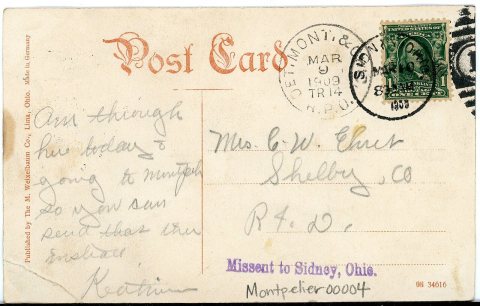 1909
 1923
 2010
 2004
