Founding year: the first Lynchburg post office (Blevins & Helbock, CC0).The full story ↓
History grade
What drives Lynchburg’s History grade
On its age, its old homes and the National Register, Lynchburg is more historic than 88% of U.S. towns. All 3 inputs are above most U.S. towns; its share of homes from before 1940 ranks highest and its National Register listings lowest.
A
HistoryA character grade: shown, never part of Lynchburg’s overall grade.
Ohio towns list about as much on the Register as the country (a typical Ohio town has 2.9 per 10,000 residents, the U.S. 2.4), so Lynchburg’s 6.7 sits above most of its state (69% of Ohio towns have fewer) while its 1 listings outnumber those of 51% of U.S. towns.
How sure. Graded on any two of the three inputs instead, the letter would range from B+ to A. The pre-1940 share is a Census survey estimate (±13.9 points). The founding year is the first post office, not a stated founding date.
Founding year: the first post office (other dates in Quick answers). Homes: Census ACS 2020–24. National Register: National Park Service, May 2026 list; each listing counted once (boundary changes and added documentation belong to their listing), and a historic district counts its contributing buildings. How TownRatings grades history →
What stands out about Lynchburg’s past
Read from the archive, the National Register and the record. The page puts what stands out first.
1851 it was concluded by the members of the Christian church that their building was too near the railroad and a new church was built near the present neat brick structure, which was erected in 1887 at a cost of $4,000. In 1848 the village of Lynchburg had increased in size to thirty-two dwelling houses. In 1851 the Marietta railroad was surveyed through Lynchburg and in 1852 completed to that point and the next year to Hillsboro. In 1857 the distillery was built by Berryhill & Bowen and within a year or two by Frei-
Text read by machine from the scan; it may contain errors.
A man by the name of Botts, from Lynchburg, Va., first owned the land where Lynchburg now stands. He sold out to John Morrow and others.* The first settlement made in the vicinity of Lynchburg was by William Spickard, David Hays, and William Smith in 1806. In 1820 Lynchburg contained some six or seven houses, and then received the name it now bears, being named by settlers who came from Lynchburg, Va,, or from near that place, the Hundleys, Ihidleys, and Botts doubtless giving it the name. It was laid
Text read by machine from the scan; it may contain errors.
Scans and text from the Internet Archive. Books published in 1930 or earlier, which are in the public domain.
The Lynchburg post office opened in 1833, the earliest record of the town by name (U.S. post office records).
How does Lynchburg rank for history?
Lynchburg is more historic than 88% of U.S. towns. The History grade combines the town’s founding era, the share of homes built before 1940 and its National Register listings. It’s a character grade, so it isn’t part of the overall grade. How it works.
What is on the National Register in Lynchburg?
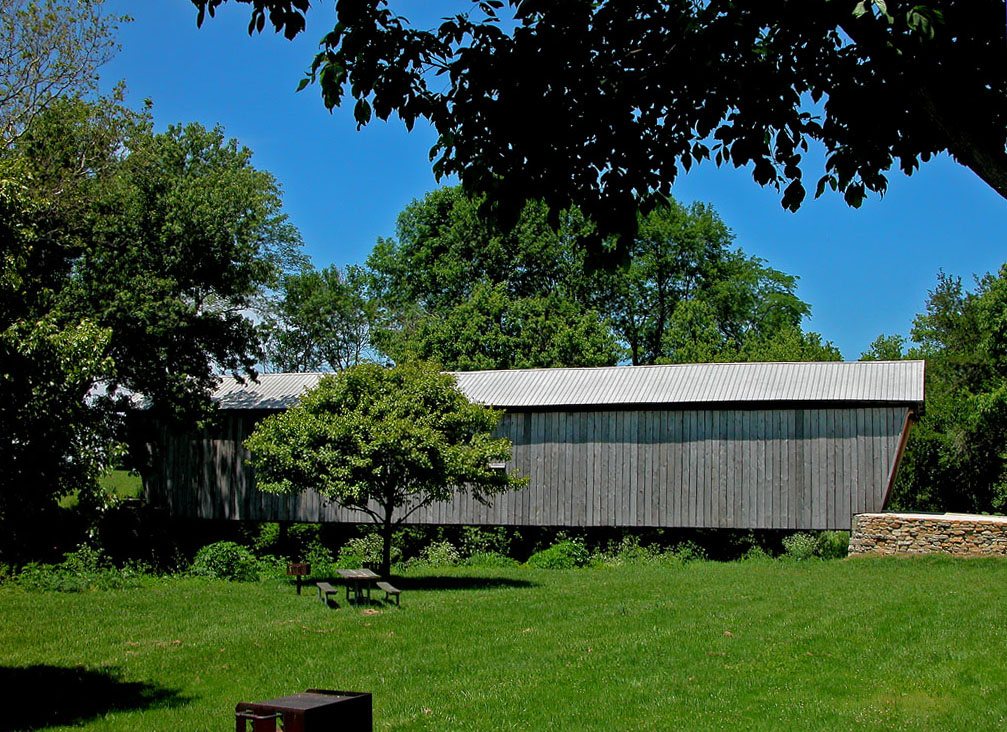
One place: the Lynchburg Covered Bridge (listed 1976).
How old are the homes in Lynchburg?
36% of Lynchburg’s homes were built before 1940 (Census estimate, ±13.9 points), against a typical 15% for an Ohio town; the median home was built in 1960.
Founding dates: Wikidata, Wikipedia, the U.S. post office records of Blevins & Helbock (CC0) and the Census. Homes by year built: Census ACS 2020–24. National Register of Historic Places: National Park Service (list of May 22, 2026). Old photos, postcards and papers: Wikimedia Commons, the Library of Congress and other public archives, credited on each item’s page. Maps: U.S. Geological Survey historical topographic maps (via Esri) and Sanborn fire-insurance maps (Library of Congress). History text and census tables: Wikipedia (CC BY-SA 4.0). Places that used to be: USGS Geographic Names Information System (2021).
From Wikimedia Commons (6), the National Register of Historic Places (1), Wikipedia, the US Post Offices dataset (Blevins & Helbock), the USGS Geographic Names Information System and old county and town histories (Internet Archive). Archive images are copied here with their credits and licenses, shown on each photo’s page. Refreshed monthly.


 2013
 2012
 2012
 2012
 2011
 2004