Loudonville’s post office opened in 1820, and 32% of its homes were built before 1940
More historic than 90% of U.S. towns · #153 of 993 in Ohio. What drives it
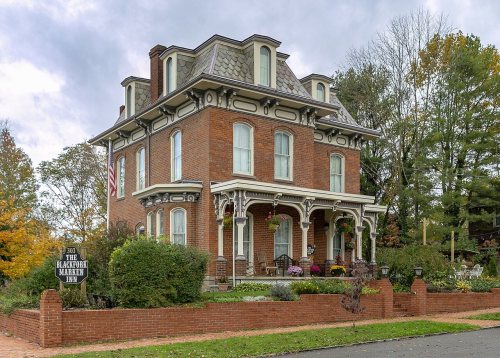
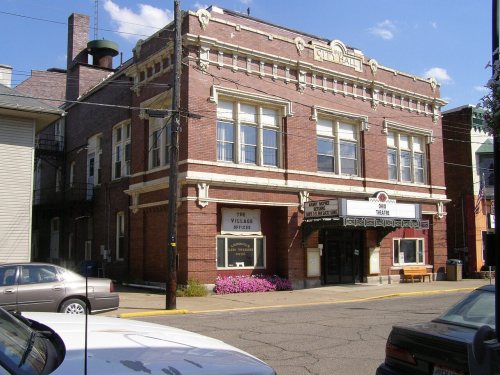
Its Register listings are the Philip J. Black House, the City Hall and Opera House and the T.J. and Sarah Bull House. Its Register listings are the Philip J. Black House, the City Hall and Opera House and the T.J. and Sarah Bull House. Below: 5 old photos and papers, maps from 1884 on, and the census since 1860.
Founding year: the first Loudonville post office (Blevins & Helbock, CC0).The full story ↓
History grade
What drives Loudonville’s History grade
On its age, its old homes and the National Register, Loudonville is more historic than 90% of U.S. towns, #153 of 993 in Ohio. All 3 inputs are above most U.S. towns; its share of homes from before 1940 ranks highest and its National Register listings lowest.
A
HistoryA character grade: shown, never part of Loudonville’s overall grade.
Ohio towns list about as much on the Register as the country (a typical Ohio town has 2.9 per 10,000 residents, the U.S. 2.4), so Loudonville’s 9.3 sits above most of its state (73% of Ohio towns have fewer) while its 3 listings outnumber those of 65% of U.S. towns.
How sure. Graded on any two of the three inputs instead, the letter would range from A− to A. The pre-1940 share is a Census survey estimate (±6.5 points). The founding year is the first post office, not a stated founding date.
Founding year: the first post office (other dates in Quick answers). Homes: Census ACS 2020–24. National Register: National Park Service, May 2026 list; each listing counted once (boundary changes and added documentation belong to their listing), and a historic district counts its contributing buildings. How TownRatings grades history →
What stands out about Loudonville’s past
Read from the archive, the National Register and the record. The page puts what stands out first.
Fire insurance maps drew every building, what it was made of and what it was used for, so insurers could price the risk of fire. Pick a year, then a sheet.
1884Sheet 1 of 1
Edition
Sheets
BrickWoodStone
Sanborn Map Company, via the Library of Congress. Editions published in 1930 or earlier, which are in the public domain.
On the map
Loudonville on the map, 1912 to 1978
Every edition of the U.S. Geological Survey’s map of Loudonville. Tap a year, or press play to watch the town change.
1912Loudonville sheet · 1:62,500
U.S. Geological Survey historical topographic maps (public domain), via Esri’s collection of the scans. The red ring marks the center of Loudonville.
Timeline
Loudonville, 1820 to 1937
Woven from the archive, old maps, post office records, the National Register and the people born here.
Loudonville was first inhabited by Delaware Nation peoples. The first white settlement was in 1810 when Stephen Butler built a single log cabin on the Black Fork of the Mohican River. In 1814, Thomas Jelloway and James Loudon Priest (the town's namesake) laid out the village of Loudonville, starting with twelve plots. A post office called Loudonville has been in operation since 1820. The town cemetery had its first burial in 1815. The town was officially incorporated on March 27, 1850.
Passages that mention Loudonville, cut from the printed page as they were published.
History of Ashland County, Ohio1909 · page 187Read the page →
Read the text
Loudonville was laid out August 6, 1814, by Stephen Butler and James Loudon Priest, and was named for the latter. The first sale of lots was made September 14, 1814. There was one cabin on the site of Loudonville before the town was platted and was the home of Stephen Butler. It had but one room, but was used as a tavern, and was therefore the first hotel in the place, and the town was laid out around it. Chappel, who settled near the town site in 1814, was Mr. Butler’s nearest neighbor. The early reminiscences of the place are similar to those already given of other communities, and the struggles
Text read by machine from the scan; it may contain errors.
A brief centennial history of Loudonville, Ohio1914Read the page →
Read the text
The first town officers were elected, as shown by Council Journal No. 1, as follows: Pursuant to notice dated 10th April, A. D. 1850, the voters of the town of Loudonville met on the 22d day of April, 1850, for the purpose of electing town officers. John Robeson and Adam Koenrick were chosen viva voce as judges and Nathaniel Ilaskell, clerk. These were qualified by George W. Bull, a justice of the Peace for Hanover
Text read by machine from the scan; it may contain errors.
History of Ashland County, Ohio1909 · page 266Read the page →
Read the text
Judge Stewart did not confine his attention alone to merchandising although he met with creditable and gratifying success in that direction and was one of the leading early merchants of the town. In many other ways he contributed to the growth and upbuilding of Loudonville. In 1845 in partnership with Arvine Wales of Massillon, he laid out Wales addition to the town of Loudonville. The greater part of the succeeding winter was passed by him in Columbus in an effort to secure the organization of Ashland county, and when this was accomplished he received legislative appointment to the position of associate
Text read by machine from the scan; it may contain errors.
A brief centennial history of Loudonville, Ohio1914Read the page →
Read the text
Hurd, of Mt. Vernon, be retained as attorney and counselor to institute and prosecute such legal proceedings as he may judge expedient to obtain final settlement of the right and claim of the village of Loudonville to the Public Square, as against claims of certain heirs of J. L. Priest, deceased. In 1870 the village council issued a lease on the Public Square to the Board of Education for 999 years, for purpose of erecting a Public School. Again the Priest
Text read by machine from the scan; it may contain errors.
Scans and text from the Internet Archive. Books published in 1930 or earlier, which are in the public domain.
By decade
Loudonville, decade by decade
One decade in the archive so far: the 1900s. Scroll each row; tap a photo for its story.
Nothing in the archives for these yearsWeddings on Main Street, storms, parades, school pictures, the old store. If it’s in your family album, it belongs here.
The Loudonville post office opened in 1820, the earliest record of the town by name (U.S. post office records).
How does Loudonville rank for history?
Loudonville is more historic than 90% of U.S. towns, #153 of 993 in Ohio. The History grade combines the town’s founding era, the share of homes built before 1940 and its National Register listings. It’s a character grade, so it isn’t part of the overall grade. How it works.
What is on the National Register in Loudonville?
Three places: the Philip J. Black House (listed 1980), the City Hall and Opera House (1997) and the T.J. and Sarah Bull House (2007).
How old are the homes in Loudonville?
32% of Loudonville’s homes were built before 1940 (Census estimate, ±6.5 points), against a typical 15% for an Ohio town; the median home was built in 1955.
Founding dates: Wikidata, Wikipedia, the U.S. post office records of Blevins & Helbock (CC0) and the Census. Homes by year built: Census ACS 2020–24. National Register of Historic Places: National Park Service (list of May 22, 2026). Old photos, postcards and papers: Wikimedia Commons, the Library of Congress and other public archives, credited on each item’s page. Maps: U.S. Geological Survey historical topographic maps (via Esri) and Sanborn fire-insurance maps (Library of Congress). History text and census tables: Wikipedia (CC BY-SA 4.0). Places that used to be: USGS Geographic Names Information System (2021).
From Wikimedia Commons (12), the National Register of Historic Places (3), Wikipedia, Wikidata and Wikipedia for famous people, U.S. Geological Survey historical maps, U.S. Census counts (via Wikipedia), the US Post Offices dataset (Blevins & Helbock), the USGS Geographic Names Information System, Sanborn fire insurance maps (Library of Congress) and old county and town histories (Internet Archive). Archive images are copied here with their credits and licenses, shown on each photo’s page. Refreshed monthly.


 1909
 1909
 1909
 1909
 2012
 2008
 2008
 2007
 2004
 2004
 2004