Lebanon dates to 1802, and 17 of its places are on the National Register
More historic than 83% of U.S. towns · #261 of 993 in Ohio. What drives it
Most of Lebanon was built recently: 8% of its homes predate 1940 and the median home dates from 1986. 17 places in town are on the National Register, among them four historic districts with 343 buildings between them. Below: 5 old photos and papers, maps from 1885 on, and the census since 1820.
Founding year: Wikidata; Wikipedia’s history section gives the same year. First post office: 1805.The full story ↓
History grade
What drives Lebanon’s History grade
On its age, its old homes and the National Register, Lebanon is more historic than 83% of U.S. towns, #261 of 993 in Ohio. Its National Register listings hold the grade up; its share of homes from before 1940 pulls it down.
A−
HistoryA character grade: shown, never part of Lebanon’s overall grade.
Ohio towns list about as much on the Register as the country (a typical Ohio town has 2.9 per 10,000 residents, the U.S. 2.4), so Lebanon’s 168 sits above most of its state (96% of Ohio towns have fewer) while its 362 historic buildings outnumber those of 96% of U.S. towns.
How sure. Graded on any two of the three inputs instead, the letter would range from B to A. The pre-1940 share (±2.8 points) is firm at this size. Two sources give 1802.
Founding year: Wikidata (other dates in Quick answers). Homes: Census ACS 2020–24. National Register: National Park Service, May 2026 list; each listing counted once (boundary changes and added documentation belong to their listing), and a historic district counts its contributing buildings. How TownRatings grades history →
What stands out about Lebanon’s past
Read from the archive, the National Register and the record. The page puts what stands out first.
National Park Service, National Register of Historic Places. Photos from Wikimedia Commons, credited on each place’s page.
Every building
Lebanon, building by building, 1885–1917
Fire insurance maps drew every building, what it was made of and what it was used for, so insurers could price the risk of fire. Pick a year, then a sheet.
Lebanon is in the Symmes Purchase. The first European settler in what is now Lebanon was Ichabod Corwin, uncle of Ohio Governor Thomas Corwin, who came to Ohio from Bourbon County, Kentucky, and settled on the north branch of Turtle Creek in March 1796. The site of his cabin is now on the grounds of Berry Intermediate School on North Broadway and is marked with a monument erected by the Warren County Historical Society.
Passages that mention Lebanon, cut from the printed page as they were published.
The History of Warren County, Ohio1882 · page 451Read the page →
Read the text
elected by the people consisted of a President, Recorder and five Trustees, who were required to be either freeholders or householders of the town. These officers appointed a Marshal, Collector and Treasurer. The name of the body corporate was w the President, Recorder and Trustees of the Town of Lebanon.” In after years, a Mayor, Clerk and six Councilmen took the places of the President, Recorder and Trustees, and the legal style of the corporation became M the Incorporated Village of Lebanon.” Since 1878, the legal style has been the village of Lebanon.” The device of the corporate seal is M a cedar tree
Text read by machine from the scan; it may contain errors.
The History of Warren County, Ohio1882 · page 477Read the page →
Read the text
Enos Williams taught the first school in the town of Lebanon after it became a town. In the winter of 1804-5, Elder Jacob Grigg moved from Richmond, Va., to Lebanon. Elder Grigg was a Baptist preacher and a man of good education; his object in coming to Lebanon was to establish a school of a high order. Thomas Corwin was one of his pupils. His school was continued for three years; he gave instruction in ancient languages and higher mathematics, as well as the common branches.
Text read by machine from the scan; it may contain errors.
history of national normal university of lebanon, ohio1903 · page 15Read the page →
Read the text
Mention has already been made of the difficulty encountered in the very beginning to secure suitable quarters for the non-resident students in the town of Lebanon. These buildings were remodeled in such a manner as to be more suitable for housing students. In addition to this, a@ number of large square wooden buildings, some with two storied porches running around them, were built as dormitories. These buildings were listed in the catalogues under a variety of euphonious names. The following list of names was copied from the 20th annual catalogue:
Text read by machine from the scan; it may contain errors.
history of national normal university of lebanon, ohio1903 · page 20Read the page →
Read the text
suffered a number of family misfortunes that were a strain on his financial resources. In 1868, his son, Alfred Henry, aged fifteen, was drowned in the artificial lake called the “Reservoir” that lay just north of Lebanon. In 1884, his dearly beloved wife, Melissa, who had for so many years been his comfort and inspiration and who was in all probability the most highly esteemed of all the Holbrooks in Lebanon, died after a long and painful illness. ; It is related of her, that during her illness while still able to walk
Text read by machine from the scan; it may contain errors.
Scans and text from the Internet Archive. Books published in 1930 or earlier, which are in the public domain.
Timeline
Lebanon, 1802 to 1962
Woven from the archive, old maps, post office records, the National Register and the people born here.
Nothing in the archives for these yearsWeddings on Main Street, storms, parades, school pictures, the old store. If it’s in your family album, it belongs here.
In 1802, according to Wikidata and Wikipedia’s history of the town. Lebanon’s post office opened in 1805, and the census of 1820 counted 1,079 people here.
How does Lebanon rank for history?
Lebanon is more historic than 83% of U.S. towns, #261 of 993 in Ohio. The History grade combines the town’s founding era, the share of homes built before 1940 and its National Register listings. It’s a character grade, so it isn’t part of the overall grade. How it works.
What is on the National Register in Lebanon?
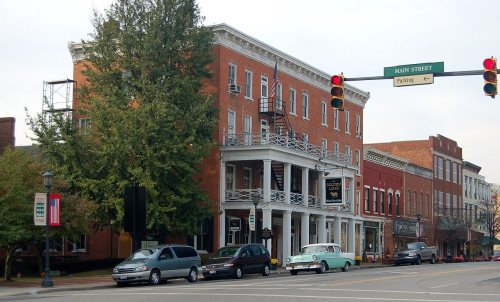
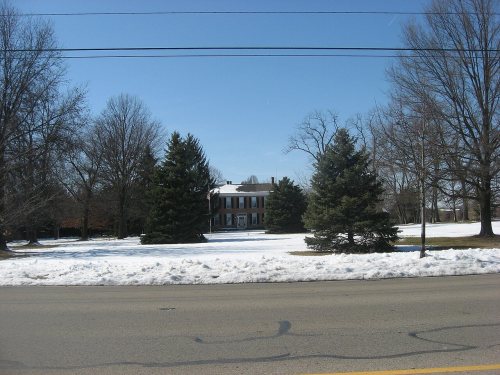
17 listings: 12 buildings, among them the Glendower (listed 1970, the first), 4 historic districts with 343 contributing buildings, and 1 structure. 362 historic buildings in all.
How old are the homes in Lebanon?
8% of Lebanon’s homes were built before 1940 (Census estimate, ±2.8 points), against a typical 15% for an Ohio town; the median home was built in 1986.
Founding dates: Wikidata, Wikipedia, the U.S. post office records of Blevins & Helbock (CC0) and the Census. Homes by year built: Census ACS 2020–24. National Register of Historic Places: National Park Service (list of May 22, 2026). Old photos, postcards and papers: Wikimedia Commons, the Library of Congress and other public archives, credited on each item’s page. Maps: U.S. Geological Survey historical topographic maps (via Esri) and Sanborn fire-insurance maps (Library of Congress). History text and census tables: Wikipedia (CC BY-SA 4.0). Places that used to be: USGS Geographic Names Information System (2021).
From Wikimedia Commons (5), Wikidata (1), the National Register of Historic Places (17), Wikipedia, Wikidata and Wikipedia for famous people, U.S. Geological Survey historical maps, U.S. Census counts (via Wikipedia), the US Post Offices dataset (Blevins & Helbock), the USGS Geographic Names Information System, Sanborn fire insurance maps (Library of Congress) and old county and town histories (Internet Archive). Archive images are copied here with their credits and licenses, shown on each photo’s page. Refreshed monthly.







 1907
 1909
 1909


