During the period of active American participation in the Vietnam War in the 1960s, Beallsville gained brief notoriety for the loss of five of its citizens in the conflict — a traumatic rate of loss for the village of fewer than 500 residents that was estimated at 75 times the national average. The plight of the community drew wire service coverage and was the subject of a lengthy illustrated spread in the glossy left-wing magazine Ramparts. Moved by the magnitude of the loss, Congressman Clarence Miller made a formal request to Secretary of Defense Melvin Laird and President Richard Nixon to withdraw the village's other six servicemen from combat, which was denied.
Nothing in the archives for these yearsWeddings on Main Street, storms, parades, school pictures, the old store. If it’s in your family album, it belongs here.
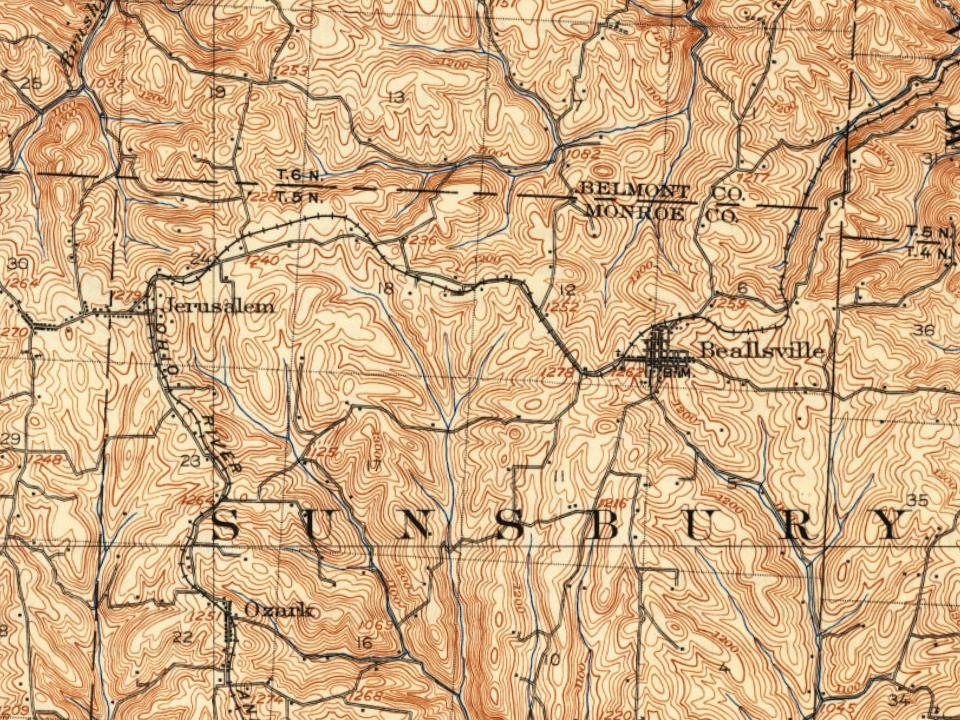
Founding dates: Wikidata, Wikipedia, the U.S. post office records of Blevins & Helbock (CC0) and the Census. Homes by year built: Census ACS 2020–24. National Register of Historic Places: National Park Service (list of May 22, 2026). Old photos, postcards and papers: Wikimedia Commons, the Library of Congress and other public archives, credited on each item’s page. Maps: U.S. Geological Survey historical topographic maps (via Esri) and Sanborn fire-insurance maps (Library of Congress). History text and census tables: Wikipedia (CC BY-SA 4.0). Places that used to be: USGS Geographic Names Information System (2021). How TownRatings grades history →
From Wikimedia Commons (5), Wikipedia, Wikidata and Wikipedia for famous people, U.S. Geological Survey historical maps, U.S. Census counts (via Wikipedia), the US Post Offices dataset (Blevins & Helbock) and the USGS Geographic Names Information System. Archive images are copied here with their credits and licenses, shown on each photo’s page. Refreshed monthly.




 2016
 2015
 2015
 2004