Akron’s post office opened in 1825, and 34% of its homes were built before 1940
More historic than 95% of U.S. towns · #54 of 993 in Ohio. What drives it
63 places in town are on the National Register, among them 2 National Historic Landmarks and ten historic districts with 240 buildings between them. Below: 14 old photos and papers, maps from 1886 on, and the census since 1840.
The Akron post office opened in 1825, the earliest record of the town by name. Ten smaller post offices, Middlebury (1823), Buckeye (1866) and Thomastown (1872), opened inside today’s city and later closed.
First census: 1,664 in 18402020 census: 190,469201 years
How did Akron get its name?
Akron’s name is derived from the Greek word ἄκρον (ákron), meaning summit.
How historic is Akron?
A+
More historic than 95% of U.S. towns, on its age, its old homes and the National Register.
On its age, its old homes and the National Register, Akron is more historic than 95% of U.S. towns, #54 of 993 in Ohio. All 3 inputs are above most U.S. towns; its share of homes from before 1940 ranks highest and its age lowest.
A+
HistoryA character grade: shown, never part of Akron’s overall grade.
Among the 400 U.S. cities of 100,000 or more, Akron ranks #44 on History.
Ohio towns list about as much on the Register as the country (a typical Ohio town has 2.9 per 10,000 residents, the U.S. 2.4), so Akron’s 16.3 sits above most of its state (79% of Ohio towns have fewer) while its 308 historic buildings outnumber those of 95% of U.S. towns.
How sure. Graded on any two of the three inputs instead, the letter would range from A to A+. The pre-1940 share (±1.2 points) is firm at this size. The founding year is the first post office, not a stated founding date.
Founding year: the first post office (other dates in Quick answers). Homes: Census ACS 2020–24. National Register: National Park Service, May 2026 list; each listing counted once (boundary changes and added documentation belong to their listing), and a historic district counts its contributing buildings. How TownRatings grades history →
What stands out about Akron’s past
Read from the archive, the National Register and the record. The page puts what stands out first.
The country’s official list of buildings and places worth saving. 2 are National Historic Landmarks, the highest tier. Boundary changes and added documentation are counted with their listing.
Belt JunctionlocaleBotzum Post Officepost officeBrittain Post Officepost officeCranmer Post Officepost officeEllet Post Officepost officeLawndale Post Officepost officeSecond Congregational ChurchchurchSimmons HallbuildingThomastown Post Officepost officeZion Christian Schoolschool
12cemeteries and burying grounds inside Akron
Akron HebrewEast AkronElletGlendaleGreenlawn Memorial ParkLakewoodMiddlesburyMount HopeSaint AugustineSaint VincentsSpicerSpringfield Presbyterian
US Post Offices dataset (Blevins & Helbock, CC0). Places and cemeteries from the USGS Geographic Names Information System (2021).
The first settler in the Akron area was Major Miner Spicer, who came from Groton, Connecticut. He built a log cabin in the forest in 1810, and became the region's first citizen. In June 1811, Spicer sent for his family, who came that same year by ox teams accompanied by Capt. Amos Spicer and Paul Williams.
Passages that mention Akron, cut from the printed page as they were published.
A history of the establishment of the Municipal University of Akron1914 · page 16Read the page →
Read the text
Whereas, the Board of Trustees of Buchtel College has made an offer to the Council of the City of Akron to transfer, turn over and convey to the City of Akron the entire property and plant and endowment of Buchtel College and Academy for the purposes and upon the conditions named in said offer, which is as follows : To the City Council of the City of Akron : Gentlemen : — The Board of Trustees of Buchtel College,
Text read by machine from the scan; it may contain errors.
Centennial history of Summit County, Ohio1908 · page 171Read the page →
Read the text
lire of these concerns, nor yet in the loss of their business to Akron, but in the fact that their failures caused a large financial loss to many of those outside banks located all over the country, and who had for years been loaning to Akron concerns. These losses, all coming within a few months, so shook their confidence in Akron and Akron concerns that for
Text read by machine from the scan; it may contain errors.
Centennial history of Summit County, Ohio1908 · page 46Read the page →
Read the text
The only changes which have been made in the territory of Summit County, were to establish townships co-extensive with the municipalities of Akron, Cuyahoga Falls and Middlebury, for purposes of government. Thus in 1851 Cuyahoga Falls Township was created; in 1857, the township of Middlebury, and, in 1888, the township of Akron.
Text read by machine from the scan; it may contain errors.
Scans and text from the Internet Archive. Books published in 1930 or earlier, which are in the public domain.
Timeline
Akron, 1823 to 1981
Woven from the archive, old maps, post office records, the National Register and the people born here.
Nothing in the archives for these yearsWeddings on Main Street, storms, parades, school pictures, the old store. If it’s in your family album, it belongs here.
Every edition of the U.S. Geological Survey’s map of Akron. Tap a year, or press play to watch the town change.
1903Akron sheet · 1:62,500
U.S. Geological Survey historical topographic maps (public domain), via Esri’s collection of the scans. The red ring marks the center of Akron.
Every building
Akron, building by building, 1886–1916
Fire insurance maps drew every building, what it was made of and what it was used for, so insurers could price the risk of fire. Pick a year, then a sheet.
The Akron post office opened in 1825, the earliest record of the town by name (U.S. post office records).
How does Akron rank for history?
Akron is more historic than 95% of U.S. towns, #54 of 993 in Ohio. The History grade combines the town’s founding era, the share of homes built before 1940 and its National Register listings. It’s a character grade, so it isn’t part of the overall grade. How it works.
What is on the National Register in Akron?
63 listings, 2 of them National Historic Landmarks: 52 buildings, among them the Stan Hywet Hall-Frank A. Seiberling House (a National Historic Landmark since 1981) and the Old Akron Post Office (listed 1972, the first), 10 historic districts with 240 contributing buildings, and 1 structure. 308 historic buildings in all.
How old are the homes in Akron?
34% of Akron’s homes were built before 1940 (Census estimate, ±1.2 points), against a typical 15% for an Ohio town; the median home was built in 1954.
Founding dates: Wikidata, Wikipedia, the U.S. post office records of Blevins & Helbock (CC0) and the Census. Homes by year built: Census ACS 2020–24. National Register of Historic Places: National Park Service (list of May 22, 2026). Old photos, postcards and papers: Wikimedia Commons, the Library of Congress and other public archives, credited on each item’s page. Maps: U.S. Geological Survey historical topographic maps (via Esri) and Sanborn fire-insurance maps (Library of Congress). History text and census tables: Wikipedia (CC BY-SA 4.0). Places that used to be: USGS Geographic Names Information System (2021).
From Wikimedia Commons (14), Wikidata (4), the National Register of Historic Places (63), Wikipedia, Wikidata and Wikipedia for famous people, U.S. Geological Survey historical maps, U.S. Census counts (via Wikipedia), the US Post Offices dataset (Blevins & Helbock), the USGS Geographic Names Information System, Sanborn fire insurance maps (Library of Congress) and old county and town histories (Internet Archive). Archive images are copied here with their credits and licenses, shown on each photo’s page. Refreshed monthly.


 ★ Landmark
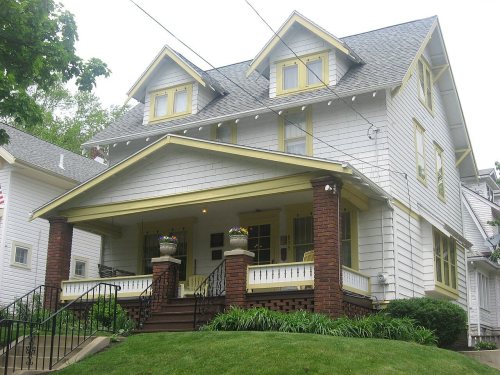 ★ Landmark
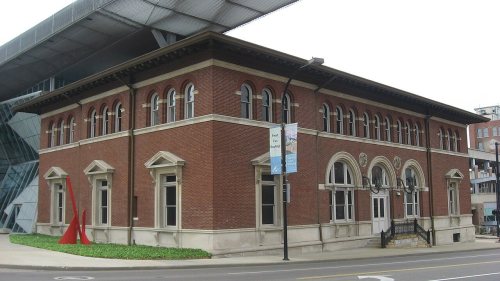


 c. 1865
 1899
 1899
 1899
 1899
 1899
 1899
 1899
 1899
 1899
 1901


