Sodus’ post office opened in 1817, and 36% of its homes were built before 1940
More historic than 92% of U.S. towns · #229 of 758 in New York. What drives it
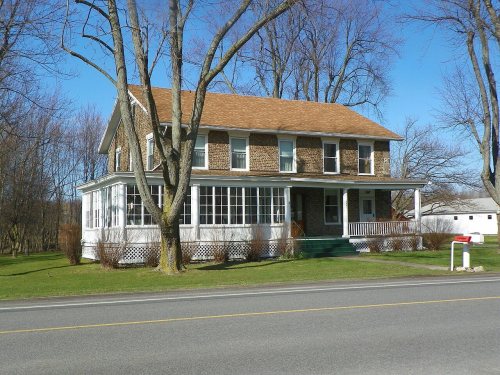
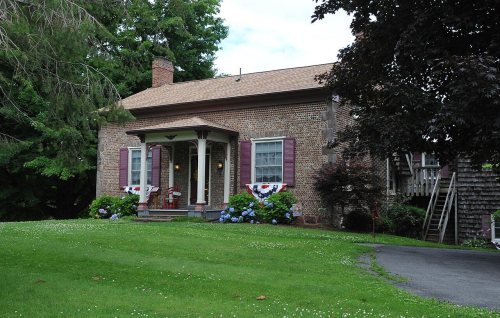
9 places in town are on the National Register, among them a historic district with 15 buildings. Below: 5 old photos and papers, maps from 1889 on, and the census since 1820.
The Sodus post office opened in 1817, the earliest record of the town by name. Three smaller post offices, South Sodus (1828), Joy (1849) and Wallington (1873), opened inside today’s town and later closed.
First census: 2,013 in 18202020 census: 8,028209 years
How historic is Sodus?
A
More historic than 92% of U.S. towns, on its age, its old homes and the National Register.
Founding year: the first Sodus post office (Blevins & Helbock, CC0).The full story ↓
History grade
What drives Sodus’ History grade
On its age, its old homes and the National Register, Sodus is more historic than 92% of U.S. towns, #229 of 758 in New York. All 3 inputs are above most U.S. towns; its share of homes from before 1940 ranks highest and its National Register listings lowest.
A
HistoryA character grade: shown, never part of Sodus’ overall grade.
New York towns list more on the Register than most of the country (a typical New York town has 12.3 per 10,000 residents, the U.S. 2.4), so Sodus’ 29.7 sits near the middle of its state (61% of New York towns have fewer) while its 24 historic buildings outnumber those of 80% of U.S. towns.
How sure. Graded on any two of the three inputs instead, the letter would range from A− to A. The pre-1940 share is a Census survey estimate (±5.3 points). The founding year is the first post office, not a stated founding date.
Founding year: the first post office (other dates in Quick answers). Homes: Census ACS 2020–24. National Register: National Park Service, May 2026 list; each listing counted once (boundary changes and added documentation belong to their listing), and a historic district counts its contributing buildings. How TownRatings grades history →
What stands out about Sodus’ past
Read from the archive, the National Register and the record. The page puts what stands out first.
Lost post offices, old corners, places now gone and burying grounds
Sodus’s post office has been open since 1817. Three other post offices opened and closed inside today’s town.
Sodus
1817–today
Sodus Point
1826–today
South Sodus
1828–1902
Alton
1830–today
Sodus Centre
1840–today
Joy
1849–1902
Wallington
1873–1965
18101920today
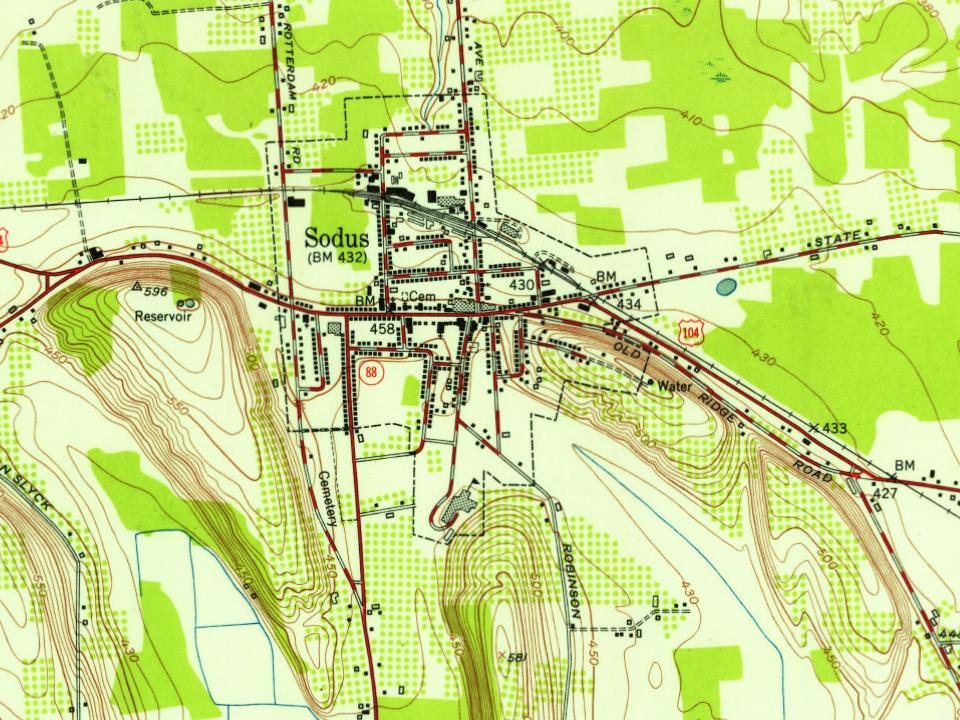
Hamlets and corners on the map
AltonAlton Mobile Home ParkIdlewood On The LakeJoyLime KilnSodus CenterSodus Mobile Home ParkSodus PointSouth SodusThorntons CornerWallington
Gone or out of use
Beckens PitmineSchool Number 10schoolSchool Number 13schoolSchool Number 14schoolSchool Number 15schoolSchool Number 17schoolSchool Number 18schoolSchool Number 19schoolSchool Number 2schoolSchool Number 20schoolSchool Number 21schoolSchool Number 22schoolSchool Number 3schoolSchool Number 5schoolSchool Number 6schoolSchool Number 7schoolSchool Number 8schoolSchool Number 9school
US Post Offices dataset (Blevins & Helbock, CC0). Places and cemeteries from the USGS Geographic Names Information System (2021).
Every building
Sodus, building by building, 1889–1915
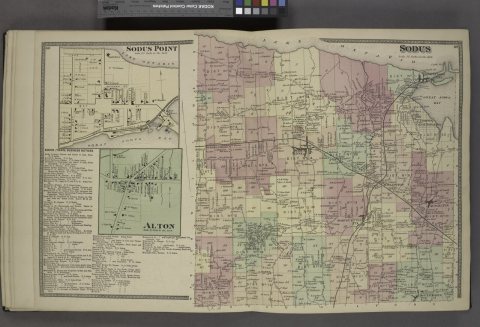
Fire insurance maps drew every building, what it was made of and what it was used for, so insurers could price the risk of fire. Pick a year, then a sheet.
The Town of Sodus was formed in 1789 from the older "District of Sodus" while still part of Ontario County. The town's Adam territory was substantially reduced by the formation of newer towns in the county: Williamson (1802) and Lyons (1811).
The town contains a village also named Sodus and another named Sodus Point. Sodus Point was settled around 1794 because of a road constructed from Palmyra, but the first settlers did not arrive at the Village of Sodus until about 1809.
In 1813, the British attacked and burned the village of Sodus Point.
Members of the Shakers settled in the early town, but moved away, when they believed Sodus was becoming too worldly.
Passages that mention Sodus, cut from the printed page as they were published.
Rose neightborhood sketches, Wayne County, New York1893Read the page →
Read the text
hended within the following boundaries (viz.) beginning at the southwest corner of said town and running from thence east, on the south line thereof, seven miles ; thence north five miles, thence west seven miles, or until it strikes the division line between said town and the town of Sodus ; thence south, and along the east line of the town of Sodus, to the place of beginning, shall be, and the same is, hereby erected into a separate town by .the name of Rose, and that the first town meeting, to be holden therein, shall be held on the first Tuesday of April next, at the house of Charles Thomas,
Text read by machine from the scan; it may contain errors.
Rose neighborhood sketches. Wayne County, New York1893Read the page →
Read the text
hended within the following boundaries (viz.) beginning at the southwest corner of said town and running from thence east, on the south line thereof, seven miles ; thence north five miles, thence west seven miles, or until it strikes the division line between said town^and the town of Sodus ; thence south, and along the east line of the town of Sodus, to the place of beginning, shall be, and the same is, hereby erected into a separate town by the name of Rose, and that the first town meeting, to be holden therein, shall be held on the first Tuesday of April next, at the house of Charles Thomas,
Text read by machine from the scan; it may contain errors.
Rose neightborhood sketches, Wayne County, New York1893 · page 327Read the page →
Read the text
century. Oneida and Cayuga are found in 1799. In 1803 appears Ontario, and in 1806 we have the very neighborly name of Lyons. The moving into that town of Methodists from Maryland, gave the denomination an early start there. Sodus is the next name in which we are interested, and this is in 1813. In 1817 a division occurs, and we form a part of Cato, and so continue till 1821, when we take the significant title,
Text read by machine from the scan; it may contain errors.
Rose neighborhood sketches. Wayne County, New York1893 · page 225Read the page →
Read the text
would result in familiar acquaintance throughout its limits. As it is, we find here, in the extreme northwestern part, people who have scarcely heard of the first settlers along the eastern border. In fact, as the post office address here is either South Sodus or Alton, in almost every instance, and as going to Eose Valley simply to vote does not necessarily beget intimacy, many of our Eose dwellers in this district are more like Sodus people than Eose citizens. I don't mean to intimate that a stranger would be able to detect any physical characteristics peculiar to either town, but
Text read by machine from the scan; it may contain errors.
Scans and text from the Internet Archive. Books published in 1930 or earlier, which are in the public domain.
Timeline
Sodus, 1817 to 1988
Woven from the archive, old maps, post office records, the National Register and the people born here.
Nothing in the archives for these yearsWeddings on Main Street, storms, parades, school pictures, the old store. If it’s in your family album, it belongs here.
The Sodus post office opened in 1817, the earliest record of the town by name (U.S. post office records).
How does Sodus rank for history?
Sodus is more historic than 92% of U.S. towns, #229 of 758 in New York. The History grade combines the town’s founding era, the share of homes built before 1940 and its National Register listings. It’s a character grade, so it isn’t part of the overall grade. How it works.
What is on the National Register in Sodus?
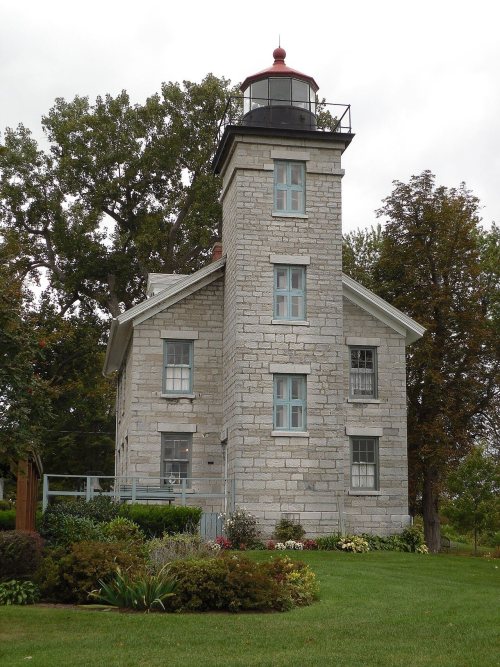
9 listings: 6 buildings, 1 historic district, the Alasa Farms, with 15 contributing buildings, and 2 structures. 24 historic buildings in all.
How old are the homes in Sodus?
36% of Sodus’ homes were built before 1940 (Census estimate, ±5.3 points), against a typical 27% for a New York town; the median home was built in 1958.
Founding dates: Wikidata, Wikipedia, the U.S. post office records of Blevins & Helbock (CC0) and the Census. Homes by year built: Census ACS 2020–24. National Register of Historic Places: National Park Service (list of May 22, 2026). Old photos, postcards and papers: Wikimedia Commons, the Library of Congress and other public archives, credited on each item’s page. Maps: U.S. Geological Survey historical topographic maps (via Esri) and Sanborn fire-insurance maps (Library of Congress). History text and census tables: Wikipedia (CC BY-SA 4.0). Places that used to be: USGS Geographic Names Information System (2021).
From Wikimedia Commons (5), Wikidata (1), the National Register of Historic Places (9), Wikipedia, Wikidata and Wikipedia for famous people, U.S. Geological Survey historical maps, U.S. Census counts (via Wikipedia), the US Post Offices dataset (Blevins & Helbock), the USGS Geographic Names Information System, Sanborn fire insurance maps (Library of Congress) and old county and town histories (Internet Archive). Archive images are copied here with their credits and licenses, shown on each photo’s page. Refreshed monthly.


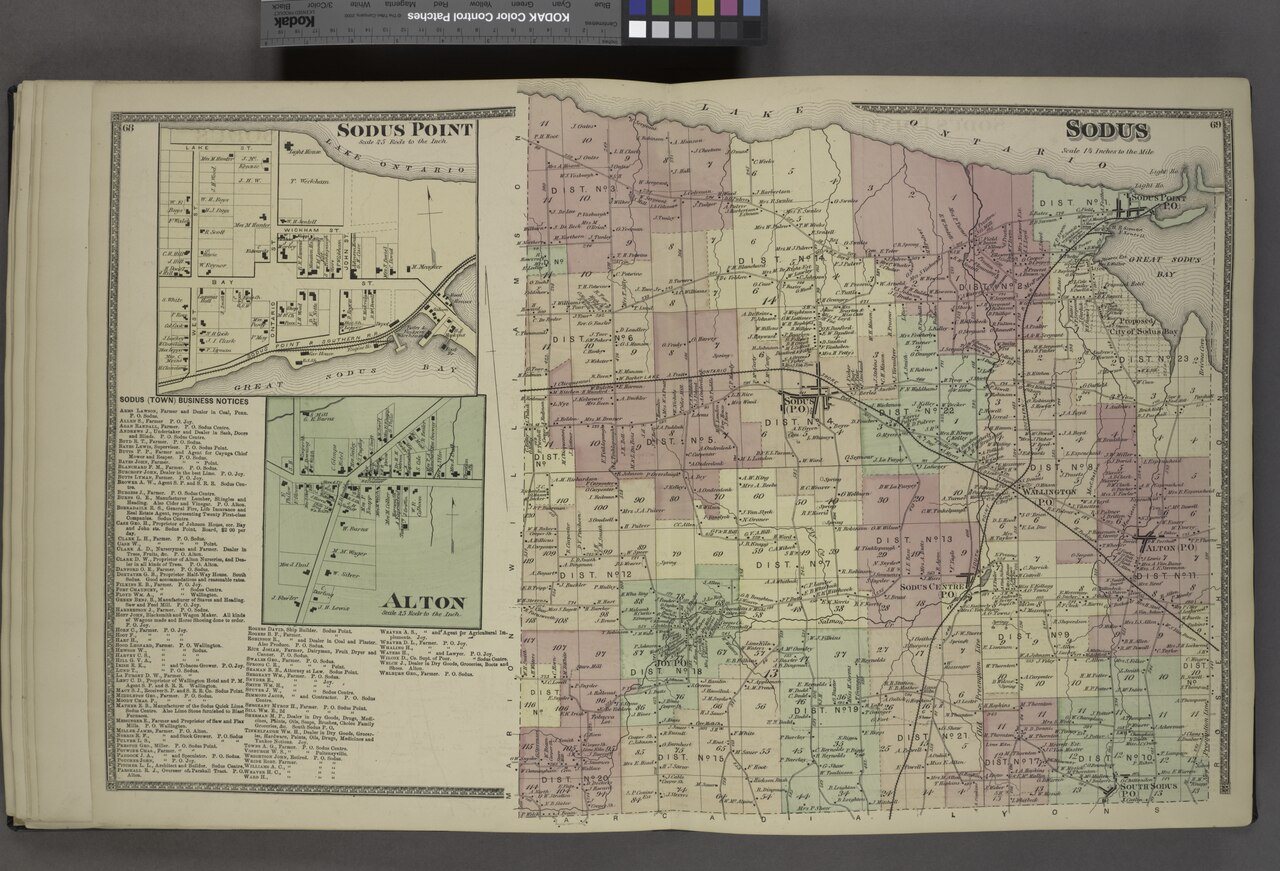






 1874
 1874