Founding year: the first Scotia post office (Blevins & Helbock, CC0).The full story ↓
History grade
What drives Scotia’s History grade
On its age, its old homes and the National Register, Scotia is more historic than 85% of U.S. towns, #355 of 758 in New York. Its share of homes from before 1940 holds the grade up; its National Register listings pull it down.
A−
HistoryA character grade: shown, never part of Scotia’s overall grade.
New York towns list more on the Register than most of the country (a typical New York town has 12.3 per 10,000 residents, the U.S. 2.4), so Scotia’s 2.8 sits below most of its state (28% of New York towns have fewer) while its 2 listings outnumber those of 60% of U.S. towns.
How sure. Graded on any two of the three inputs instead, the letter would range from B to A+. The pre-1940 share is a Census survey estimate (±6.4 points). The founding year is the first post office, not a stated founding date.
Founding year: the first post office (other dates in Quick answers). Homes: Census ACS 2020–24. National Register: National Park Service, May 2026 list; each listing counted once (boundary changes and added documentation belong to their listing), and a historic district counts its contributing buildings. How TownRatings grades history →
What stands out about Scotia’s past
Read from the archive, the National Register and the record. The page puts what stands out first.
The land was purchased by Alexander Lindsay Glen, a native of Scotland, from the Mohawk people in the 17th century. Glen named his estate Scotia (Latin for "Scotland") after his home country. Scotia was the location of a military encampment during both the French and Indian War of 1754 and again during the War of 1812. During the 1800s, Scotia was known for its production of brooms, over 1 million annually for a time. In the 20th century, Scotia became a thriving bedroom community for employees of Schenectady employers such as General Electric. During World War II the Scotia Naval Supply Depot (1942–1971) employed over 2000 workers.
Passages that mention Scotia, cut from the printed page as they were published.
An historical and descriptive account of British America [microform]1841 · page 284Read the page →
Read the text
Halifax city, Nova Scotia, first settlement of, ii., 47; important as a naval station, 25; its situation, population, 25, 26; description, 255 society, 26.
Text read by machine from the scan; it may contain errors.
An historical and descriptive account of British America1901 · page 68Read the page →
Read the text
Society in Nova Scotia has been composed of a great variety of elements. In Hahfax and other populous districts, the inhabitants of British origin have shown a strong disposition to assimilate ; but in the remoter settlements, founded by detached bodies from different countries, the peculiarities of each have continued more unaltered than if they had remained in their native seats.
Text read by machine from the scan; it may contain errors.
Scans and text from the Internet Archive. Books published in 1930 or earlier, which are in the public domain.
Timeline
Scotia, 1893 to 1975
Woven from the archive, old maps, post office records, the National Register and the people born here.
Nothing in the archives for these yearsWeddings on Main Street, storms, parades, school pictures, the old store. If it’s in your family album, it belongs here.
The Scotia post office opened in 1836, the earliest record of the town by name (U.S. post office records).
How does Scotia rank for history?
Scotia is more historic than 85% of U.S. towns, #355 of 758 in New York. The History grade combines the town’s founding era, the share of homes built before 1940 and its National Register listings. It’s a character grade, so it isn’t part of the overall grade. How it works.
How old are the homes in Scotia?
49% of Scotia’s homes were built before 1940 (Census estimate, ±6.4 points), against a typical 27% for a New York town; the median home was built in 1942.
Founding dates: Wikidata, Wikipedia, the U.S. post office records of Blevins & Helbock (CC0) and the Census. Homes by year built: Census ACS 2020–24. National Register of Historic Places: National Park Service (list of May 22, 2026). Old photos, postcards and papers: Wikimedia Commons, the Library of Congress and other public archives, credited on each item’s page. Maps: U.S. Geological Survey historical topographic maps (via Esri) and Sanborn fire-insurance maps (Library of Congress). History text and census tables: Wikipedia (CC BY-SA 4.0). Places that used to be: USGS Geographic Names Information System (2021).
From Wikimedia Commons (11), Wikidata (1), Wikipedia, Wikidata and Wikipedia for famous people, U.S. Geological Survey historical maps, U.S. Census counts (via Wikipedia), Sanborn fire insurance maps (Library of Congress) and old county and town histories (Internet Archive). Archive images are copied here with their credits and licenses, shown on each photo’s page. Refreshed monthly.


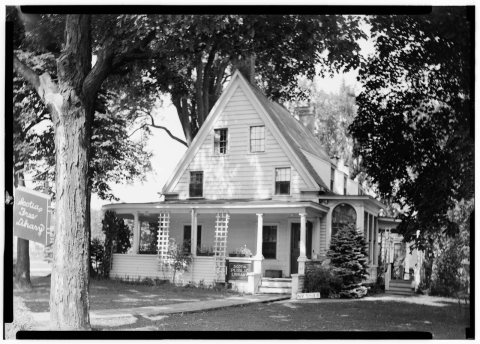


 1933
 1933
 1933
 1933
 1933
 1933
 1933
 1933
 1933
 1933
