Guest, Sign inJoin

Post to New Lebanon

We’ll email a one-tap link to publish your post. No password, and nothing is public until you click it.
Already a member? Sign in
AHistory
History · New Lebanon

27% of New Lebanon’s homes were built before 1940

More historic than 94% of U.S. towns. What drives it

8 places in town are on the National Register, among them the Mount Lebanon Shaker Society, a National Historic Landmark, and two historic districts with 37 buildings between them. Below: 6 old photos and papers, maps from 1888 on, and the census since 1820.

8on the National Register
27%homes built before 1940
6old photos & papers
8famous people
From New Lebanon’s archive · credits on each photo
Quick answers

About New Lebanon’s history

How historic is New Lebanon?

A

More historic than 94% of U.S. towns, on its age, its old homes and the National Register.

What drives the grade ↓
History grade

What drives New Lebanon’s History grade

On its age, its old homes and the National Register, New Lebanon is more historic than 94% of U.S. towns. All 2 inputs are above most U.S. towns; its National Register listings ranks highest and its share of homes from before 1940 lowest.

A
HistoryA character grade: shown, never part of New Lebanon’s overall grade.
All U.S. towns we grade (21,289)Ahead of 94%
NewerOlder

New York towns list more on the Register than most of the country (a typical New York town has 12.3 per 10,000 residents, the U.S. 2.4), so New Lebanon’s 207 sits above most of its state (83% of New York towns have fewer) while its 47 historic buildings outnumber those of 84% of U.S. towns.

How sure. Graded on two of the three inputs, so a change in either one moves the letter more than it would with three. The pre-1940 share is a Census survey estimate (±5.6 points).

Founding year: our sources. Homes: Census ACS 2020–24. National Register: National Park Service, May 2026 list; each listing counted once (boundary changes and added documentation belong to their listing), and a historic district counts its contributing buildings. How TownRatings grades history →

What stands out about New Lebanon’s past

Read from the archive, the National Register and the record. The page puts what stands out first.

★ What stands out · Places that used to be

Lost post offices, old corners, places now gone and burying grounds

New Lebanon’s post office has been open since 1794. Four other post offices opened and closed inside today’s town.

New Lebanon
1794–today
Moffett's Store
1822–1871
New Britain
1833–1858
New Lebanon Springs
1841–1871
New Lebanon Centre
1844–1988
Lebanon Springs
1871–today
West Lebanon
1871–today
17901910today
Hamlets and corners on the map
Adams Crossing Mobile Home ParkHansons Mobile Home ParkLebanon SpringsNew BritainNew Lebanon CenterWest Lebanon
Gone or out of use
Lebanon Springs Limestone Quarrymine
4cemeteries and burying grounds inside New Lebanon
Cemetery of the EvergreensCornwall - TildenImmaculate ConceptionMott

US Post Offices dataset (Blevins & Helbock, CC0). Places and cemeteries from the USGS Geographic Names Information System (2021).

People over time

New Lebanon, census by census

05001,0001,5002,0002,5003,00018501900195020002,808 in 1820Low: 1,081

Lost half of its people between 1820 and 1930, then more than doubled.

21 censuses, 1820–2020.

U.S. Census Bureau decennial counts, from the census table on New Lebanon’s Wikipedia page.

On the map

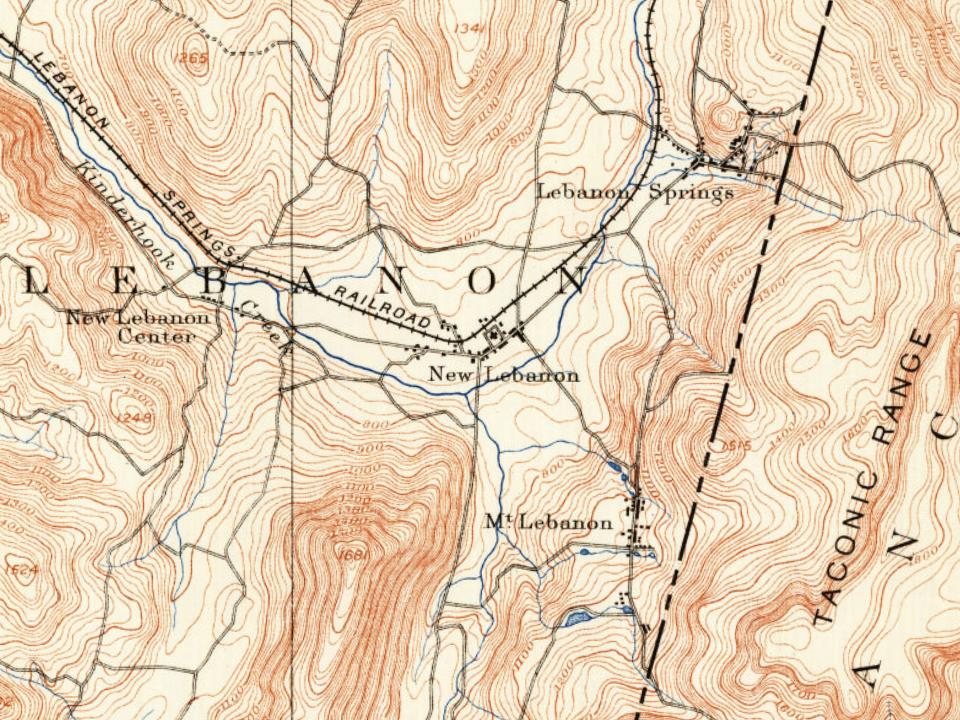
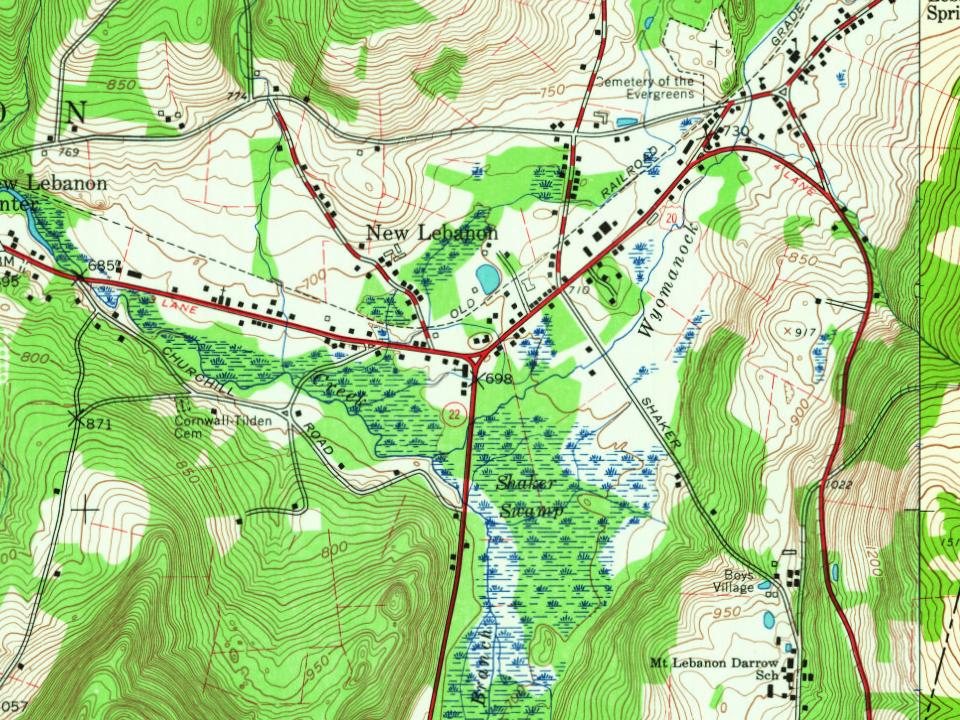
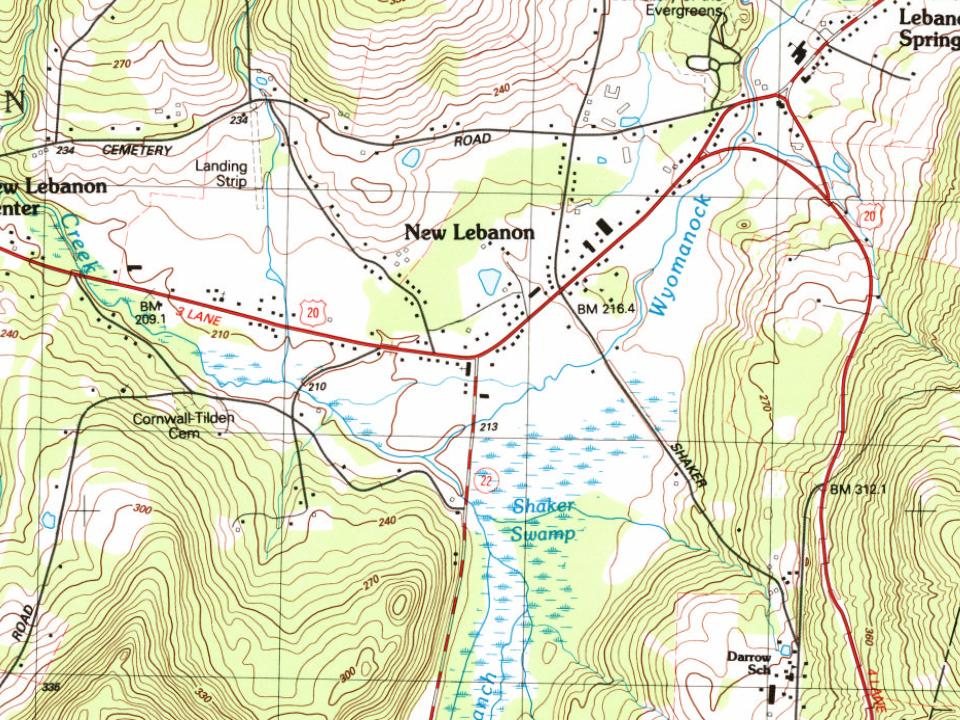
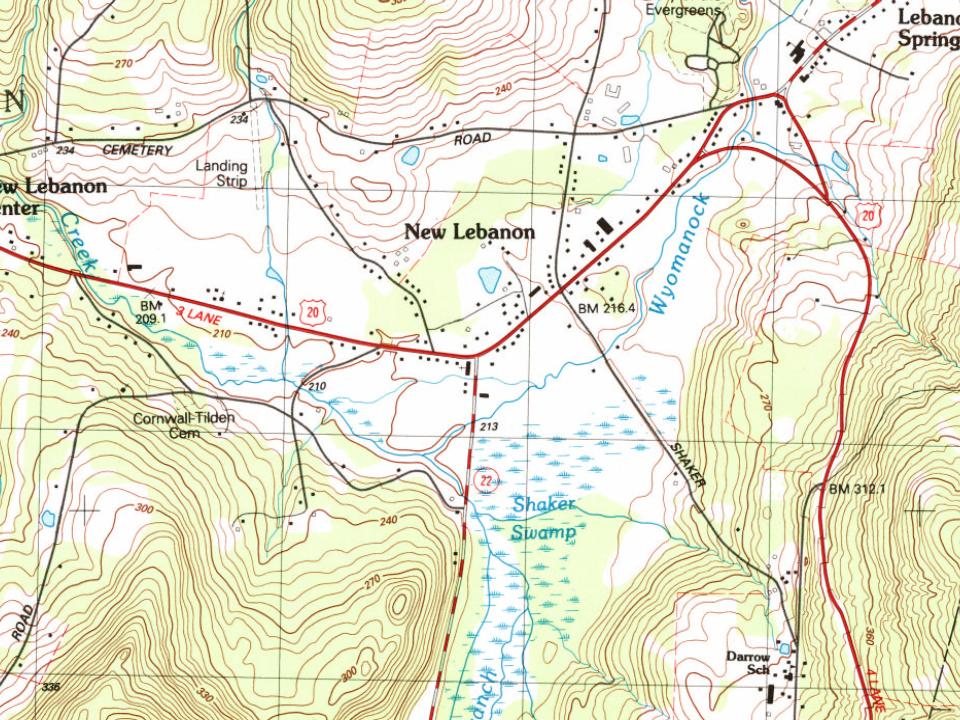
New Lebanon on the map, 1888 to 1998

Every edition of the U.S. Geological Survey’s map of New Lebanon. Tap a year, or press play to watch the town change.

New Lebanon on the 1888 USGS mapNew Lebanon on the 1890 USGS mapNew Lebanon on the 1946 USGS mapNew Lebanon on the 1959 USGS mapNew Lebanon on the 1973 USGS mapNew Lebanon on the 1988 USGS mapNew Lebanon on the 1998 USGS map1888Pittsfield sheet · 1:62,500

U.S. Geological Survey historical topographic maps (public domain), via Esri’s collection of the scans. The red ring marks the center of New Lebanon.

The story

How New Lebanon came to be

From Wikipedia’s history of New Lebanon.

Read it all →

New Lebanon was the main spiritual home of the Shakers. The Mount Lebanon Shaker Society had 609 members in 1864. The most historic structures now belong to the Shaker Museum | Mount Lebanon. Some of the other surviving buildings are home to the Darrow School. Still others have been converted into a Sufi retreat center called The Abode of the Message. The latter is the former residence of Vilayat Inayat Khan, and was the home of the current Pir of the Inayati Order, Zia Inayat Khan until 2017.

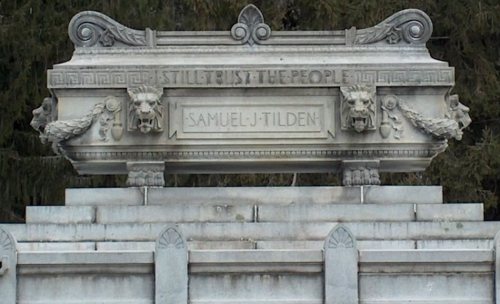
In addition to the Mount Lebanon Shaker Society, the Church of Our Saviour, Donnelly House, Elisha Gilbert House, Lebanon Springs Union Free School, and Gov. Samuel J. Tilden Monument are listed on the National Register of Historic Places.

Text from Wikipedia, licensed CC BY-SA 4.0.

From the old history books

What they wrote about New Lebanon in 1878

Passages that mention New Lebanon, cut from the printed page as they were published.

The New Lebanon Glass Works are located at the village of New Lebanon, and were established in 1873 by a company organized for this purpose, March 18, 1873. The capital stock was fixed at sixteen thousand dollars, and Joseph S. Reed, Ezra W. Drake, Thomas F. Conway, Jacob Wainwright, and Samuel M. …
History of Columbia County, New York. With illustrations and biographical sketches of some of its prominent men and pioneers1878Read the page →
Read the text

The New Lebanon Glass Works are located at the village of New Lebanon, and were established in 1873 by a company organized for this purpose, March 18, 1873. The capital stock was fixed at sixteen thousand dollars, and Joseph S. Reed, Ezra W. Drake, Thomas F. Conway, Jacob Wainwright, and Samuel M. Bassett chosen trustees. A building fifty feet square was erected for the works, containing six furnaces and pots, and employing fifty hands.

Text read by machine from the scan; it may contain errors.
A new meeting-house had previously been built near the present edifice, in the village of New Lebanon. It was a very plain structure, standing in tlie middle of the square, with doors on three sides, and from its uncouth appearance was irreverently called " God's barn." About fifty years ago the ho…
History of Columbia County, New York. With illustrations and biographical sketches of some of its prominent men and pioneers1878Read the page →
Read the text

A new meeting-house had previously been built near the present edifice, in the village of New Lebanon. It was a very plain structure, standing in tlie middle of the square, with doors on three sides, and from its uncouth appearance was irreverently called " God's barn." About fifty years ago the house was moved back to its present place, adorned with a steeple, and invested with a more churchly aspect.

Text read by machine from the scan; it may contain errors.

Scans and text from the Internet Archive. Books published in 1930 or earlier, which are in the public domain.

Timeline

New Lebanon, 1794 to 1965

Woven from the archive, old maps, post office records, the National Register and the people born here.

  1. 18th century
  2. 1794Post officeThe New Lebanon post office opens
  3. 19th century
  4. 1804Born hereAbraham Phineas Grant is born here
  5. 1814Born hereSamuel J. Tilden is born here
  6. 1820CensusPopulation peaks at 2,808
  7. 1822Post officeThe Moffett's Store post office opens
  8. 1823Born hereGeorge Henry Williams is born here
  9. 1831Born herePhineas Hitchcock is born here
  10. 1833Post officeThe New Britain post office opens
  11. 1858Post officeThe New Britain post office closes
  12. 1871Post officeThe Moffett's Store post office closes
  13. 1888On the mapFirst mapped by the U.S. Geological Survey
  14. 20th century
  15. 1965LandmarkMount Lebanon Shaker Society named a National Historic Landmark
By decade

New Lebanon, decade by decade

Then & now

Stand where they stood

No then-and-now pairs yet. Take a photo from the same spot as an old one and they appear here side by side.

North Family, Mount Lebanon Shaker Village, 202 Shaker Road
Retake this viewNorth Family, Mount Lebanon Shaker Village, 202 Shaker Road

Find the spot, match the angle, and add your photo. It becomes the first then-and-now pair on New Lebanon’s page.

Retake this view · +15
On the National Register

8 listings protect 47 historic buildings

The country’s official list of buildings and places worth saving. One is a National Historic Landmark, the highest tier.

places listed
8
National Historic Landmark
1
Mount Lebanon Shaker Society
historic buildings protected
47
each building in a district counts
first listed
1966
Mount Lebanon Shaker Society
BuildingsDistrictsObjects★ landmark

Architectural styles listings

Arts and Crafts1
Gothic Revival1
Classical Revival1
Federal1
Postmedieval English Colonial1
All 8 listings

National Park Service, National Register of Historic Places. Photos from Wikimedia Commons, credited on each place’s page.

Famous people

8 famous people were born in New Lebanon

Writers, athletes, leaders and more, ranked by how widely they’re known.

See all →
Help out

Start New Lebanon’s collection

The first neighbors to add old photos shape how New Lebanon’s history is told.

Decades since 1900 with photos
00s10s20s30s40s50s60s70s80s90s
0 of 10 decades. The empty ones are waiting for someone’s album.
Stories next door

History across the town line

Each neighbor’s History grade, on the same three inputs.

Questions about New Lebanon’s history

How does New Lebanon rank for history?

New Lebanon is more historic than 94% of U.S. towns. The History grade combines the town’s founding era, the share of homes built before 1940 and its National Register listings. It’s a character grade, so it isn’t part of the overall grade. How it works.

What is on the National Register in New Lebanon?

8 listings: 5 buildings, 2 historic districts, the Mount Lebanon Shaker Society and the Bigelow-Finch-Fowler Farm, with 37 contributing buildings, and 1 object. 47 historic buildings in all.

How old are the homes in New Lebanon?

27% of New Lebanon’s homes were built before 1940 (Census estimate, ±5.6 points), against a typical 27% for a New York town; the median home was built in 1972.

Memory lane

What the archives can’t tell you, neighbors can.

Town Square →
Start a conversation
Sources

Where this page comes from

Founding dates: Wikidata, Wikipedia, the U.S. post office records of Blevins & Helbock (CC0) and the Census. Homes by year built: Census ACS 2020–24. National Register of Historic Places: National Park Service (list of May 22, 2026). Old photos, postcards and papers: Wikimedia Commons, the Library of Congress and other public archives, credited on each item’s page. Maps: U.S. Geological Survey historical topographic maps (via Esri) and Sanborn fire-insurance maps (Library of Congress). History text and census tables: Wikipedia (CC BY-SA 4.0). Places that used to be: USGS Geographic Names Information System (2021).

From the Library of Congress (6), the National Register of Historic Places (8), Wikipedia, Wikidata and Wikipedia for famous people, U.S. Geological Survey historical maps, U.S. Census counts (via Wikipedia), the US Post Offices dataset (Blevins & Helbock), the USGS Geographic Names Information System and old county and town histories (Internet Archive). Archive images are copied here with their credits and licenses, shown on each photo’s page. Refreshed monthly.