Little Falls ranks 502nd of 745 in New York, with a C+ overall. Nationally, it does better than 36% of U.S. towns. Its lowest grade is for incomes: the median household income is $54K, and 24% of residents live below the poverty line. Where it does best is safety: it reports less crime per resident than 78% of U.S. towns. Cost of living is another plus: a typical home costs about $173K, 2.5 years of the Utica metro’s $70K median household income. Little Falls's civic life (library use, community groups, volunteering) is stronger than in 90% of U.S. towns. On health, just 23 of New York’s 1,213 towns do worse. History is its standout character grade: an A+, better than 99% of U.S. towns, with 8 places on the National Register.
Figures: FBI crime data, 2025 · home values, Zillow · incomes, Census ACS, 2020–24 · health, CDC PLACES.
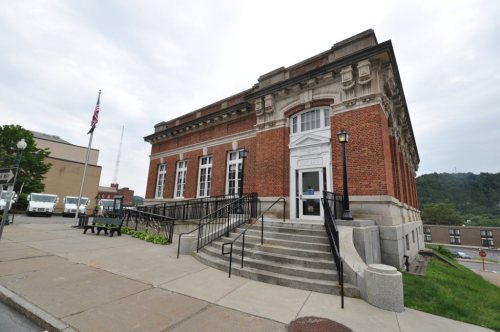
Herkimer County Trust Company Building · National Register of Historic Places
Little Falls’s story
303 years in pictures
Census counts: 5,387 in 1870, a peak of 13,029 in 1920, 4,605 in 2020. The archive holds 6 old photos and papers going back to 1831 and 3 maps from 1900 on.
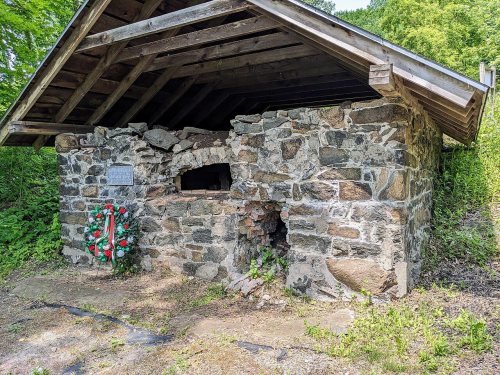
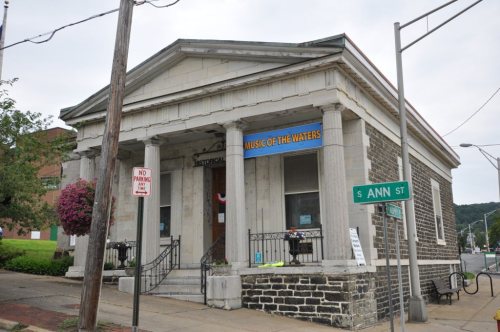
8 places on the National Register of Historic Places.
Little Falls trades lower home prices for longer drives to work, is healthier than towns with similar incomes and is safe by national standards but not by New York’s.
Homes are within reach (about $173K for the typical one, B+ for cost of living), but half of working residents commute more than 21 miles. The median property tax bill is $2,697, against $6,582 across New York, another input to its cost-of-living grade.
In Little Falls, nearly two thirds of households own their home. Over the 12 months to September 2026, the typical home gained 5.9% in value. Little Falls’ midpoint rent stands at $804 a month, below both New York’s towns ($1,103 a month) and U.S. towns ($1,185 a month). On the market here: a median 175 days to sell.
Against the 6,965 U.S. towns with household incomes like Little Falls’s, it is less healthy than 69%, so its C− isn’t only a matter of income.
Among adults in Little Falls, 39% have high blood pressure. The share of adults in Little Falls who say their health is fair or poor is 23%, above both the New York town median (17%) and the median of U.S. towns (19%). Against the New York average, Little Falls comes out ahead on 1 CDC measures out of 32, and behind on 19. Two figures for adults here: 33% get no exercise outside work, 18% smoke cigarettes.
16%healthier than U.S. townsC−Health Grade
Little Falls
New York towns
U.S. towns
Frequent physical distress (CDC PLACES)
17%
14%
14%
Get no exercise (CDC PLACES)
33%
25%
25%
Smoke cigarettes (CDC PLACES)
18%
13%
14%
Obesity (CDC PLACES)
41%
33%
35%
32 measures vs. New York
1 better12 too close to call19 worse
What stands out
Little Falls
NY
Fewer adults lacking emotional support
22.7%
26.4%
More adults with COPD
10.9%
6%
Little Falls Hospital
0.5 mi away · emergency room
3 of 3
care shortages: primary care, dental, mental health
1.3 miles of trail in 5 parks and preserves. The biggest park or preserve is Moreland Park, at 22 acres. Parks and preserves in Little Falls: 5, covering 44 acres.
Little Falls has about as many jobs (1,793) as working residents, but only 353 people both live and work here. The average commute takes 22.2 minutes, against 32.6 across New York.
Jobs in Little Falls grew by 163 from 2013 to 2023, reaching 1,793. Little Falls’ mean commuting time stands at 22 minutes. The top destinations are Herkimer (9%), Utica (9%) and New Hartford (5%).
18%work in town
Little Falls
New York towns
U.S. towns
Below the poverty line
24%
9.5%
9.6%
Working residents who work in town
18%
10%
8%
Median household income
$54,000
$82,000
$80,000
Average trip to work
22 minutes
25 minutes
25 minutes
Where working residents work
In Little Falls18%
Herkimer9%
Utica9%
New Hartford5%
New York3%
21 mi
median commute distance
1,793
jobs based in Little Falls
Balanced
jobs vs. working residents
B+
Walkability grade: more walkable than 74% of U.S. towns
Households in Little Falls have drawn federal disaster aid in 11 declared disasters, most recently in 2019. Expected damage from storms and floods is lower here than in just over half of U.S. communities. Since 1979, Little Falls has seen 18 flood insurance claims paid out. FEMA puts 84% of the town’s expected hazard losses down to inland flooding.
Little Falls is a city in Herkimer County, New York, United States. The population was 4,605 at the time of the 2020 census, which is the second-smallest city population in the state, ahead of only the city of Sherrill. The city is built on both sides of the Mohawk River, at a point at which rapids had impeded travel upriver. Transportation through the valley was improved by construction of the Erie Canal, completed in 1825 and connecting the Great Lakes with the Hudson River. The city is located at the northeastern corner of the town of Little Falls and is east of Utica. Little Falls has a picturesque location on the slope of a narrow and rocky defile, through which the Mohawk River falls …
Little Falls has fewer than 2,500 residents, so it gets subject grades but no overall grade. Little Falls and Manheim report no FBI crime data of their own. Danube isn’t graded (fewer than 1,000 residents, or not enough data). Compare Little Falls with a neighbor →
Questions about Little Falls
Short answers, built from the data on this page.
Is Little Falls, NY a good place to live?
Little Falls grades C+ overall, better than 36% of U.S. towns and #502 of 745 in New York. It grades C− for health, A− for safety and C for schools. Jobs & income is its weak spot, with a D.
Is Little Falls, NY expensive?
Not for the area. Cost of living, which also weighs rents, property taxes and how many households pay 30% or more of their income for housing, grades B+.
What is Little Falls, NY known for?
14 notable people were born here, including George E. Wiley and William J. Scherle.



 32 mi
 20 mi
 20 mi