Founding year: Wikipedia. First post office: 1797.The full story ↓
History grade
What drives Granville’s History grade
On its age, its old homes and the National Register, Granville is more historic than 85% of U.S. towns. Its share of homes from before 1940 holds the grade up; its National Register listings pull it down.
A−
HistoryA character grade: shown, never part of Granville’s overall grade.
New York towns list more on the Register than most of the country (a typical New York town has 12.3 per 10,000 residents, the U.S. 2.4), so Granville’s 4.3 sits below most of its state (33% of New York towns have fewer) while its 1 listings outnumber those of 51% of U.S. towns.
NoteThe founding year comes from Wikipedia alone; no second source gives 1780.
How sure. Graded on any two of the three inputs instead, the letter would range from B to A+. The pre-1940 share is a Census survey estimate (±5.8 points).
Founding year: Wikipedia (other dates in Quick answers). Homes: Census ACS 2020–24. National Register: National Park Service, May 2026 list; each listing counted once (boundary changes and added documentation belong to their listing), and a historic district counts its contributing buildings. How TownRatings grades history →
What stands out about Granville’s past
Read from the archive, the National Register and the record. The page puts what stands out first.
From evidence discovered circa 1850, the St. Francis Native Americans appear to have used the town for hunting and making tools in the past.
This border area between Vermont and New York was, for a long period, not clearly under control of either state. Arrivals from New England settled here, hoping to gain the benefits of New England in areas such as land ownership and voting rights. Early settlers arrived before 1770, but the state line was not established until 1790, leaving settlers in this town within New York State.
Early agricultural efforts included dairy herds and sheep raising.
Fire insurance maps drew every building, what it was made of and what it was used for, so insurers could price the risk of fire. Pick a year, then a sheet.
1884Sheet 1 of 1
Edition
Sheets
BrickWoodStone
Sanborn Map Company, via the Library of Congress. Editions published in 1930 or earlier, which are in the public domain.
From the old history books
What they wrote about Granville, 1871–1901
Passages that mention Granville, cut from the printed page as they were published.
In addition to his drug business, which is complete in every department, Mr. Haskins is also interested in farming. In i883 he built a fine residence in Granville, which he subsequently traded for a farm of 107 acres in South Granville, where he carries on a fine dairy business. along with general farming. He is an enterprising and progressive business man, always ready to support any undertaking looking to the advancement of his town or county, and was one of the promoters of the Granville Telephone Company at Granville, which he
Text read by machine from the scan; it may contain errors.
Notwithstanding his large business responsibilities General Hughes has found time to render the people service in different public capacities. He has been County Treasurer for one term, was President of the village of Granville seven years and was one of the promoters and is a director of the Granville Telephone Company. Pie is also a director of the Peoples’ National Bank of Salem, N. Y.
Text read by machine from the scan; it may contain errors.
Granville is on the forks of Pike Run. It contains 25 dwellinghouses, a population of 130, and has an extensive pottery and a woollen factory. In the township is one woollen factory, one distillery, two grist-mills, and a saw-mill. There are also two excellent shipping coal works in this township.
Text read by machine from the scan; it may contain errors.
Scans and text from the Internet Archive. Books published in 1930 or earlier, which are in the public domain.
Timeline
Granville, 1780 to 1931
Woven from the archive, old maps, post office records, the National Register and the people born here.
Nothing in the archives for these yearsWeddings on Main Street, storms, parades, school pictures, the old store. If it’s in your family album, it belongs here.
In 1780, according to Wikipedia. Granville’s post office opened in 1797, and the census of 1820 counted 3,727 people here.
How does Granville rank for history?
Granville is more historic than 85% of U.S. towns. The History grade combines the town’s founding era, the share of homes built before 1940 and its National Register listings. It’s a character grade, so it isn’t part of the overall grade. How it works.
How old are the homes in Granville?
58% of Granville’s homes were built before 1940 (Census estimate, ±5.8 points), against a typical 27% for a New York town; the median home was built in 1938.
Founding dates: Wikidata, Wikipedia, the U.S. post office records of Blevins & Helbock (CC0) and the Census. Homes by year built: Census ACS 2020–24. National Register of Historic Places: National Park Service (list of May 22, 2026). Old photos, postcards and papers: Wikimedia Commons, the Library of Congress and other public archives, credited on each item’s page. Maps: U.S. Geological Survey historical topographic maps (via Esri) and Sanborn fire-insurance maps (Library of Congress). History text and census tables: Wikipedia (CC BY-SA 4.0). Places that used to be: USGS Geographic Names Information System (2021).
From Wikimedia Commons (1), the Library of Congress (4), Wikidata (1), Wikipedia, Wikidata and Wikipedia for famous people, U.S. Geological Survey historical maps, U.S. Census counts (via Wikipedia), Sanborn fire insurance maps (Library of Congress) and old county and town histories (Internet Archive). Archive images are copied here with their credits and licenses, shown on each photo’s page. Refreshed monthly.
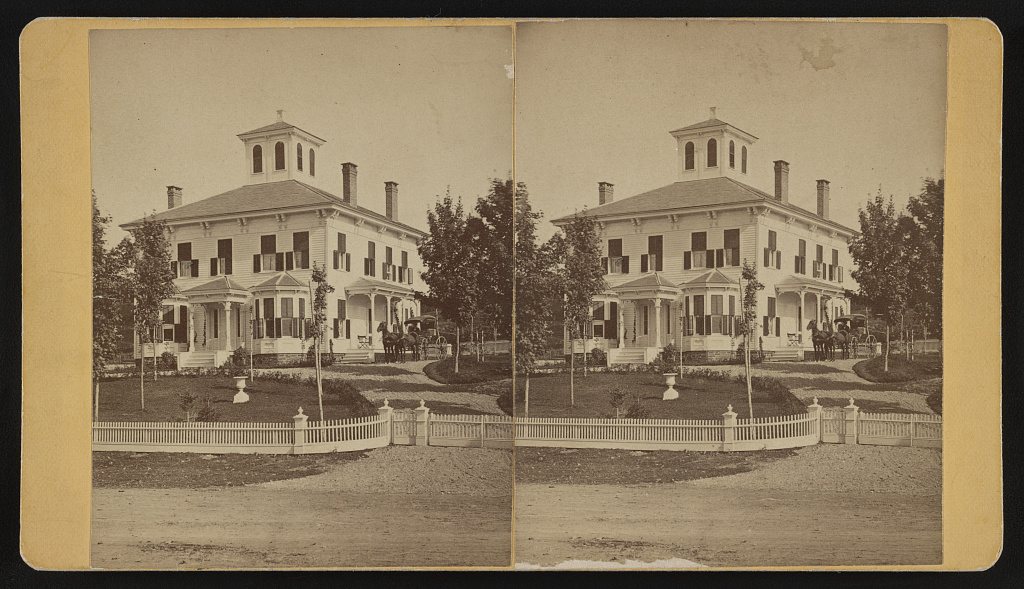


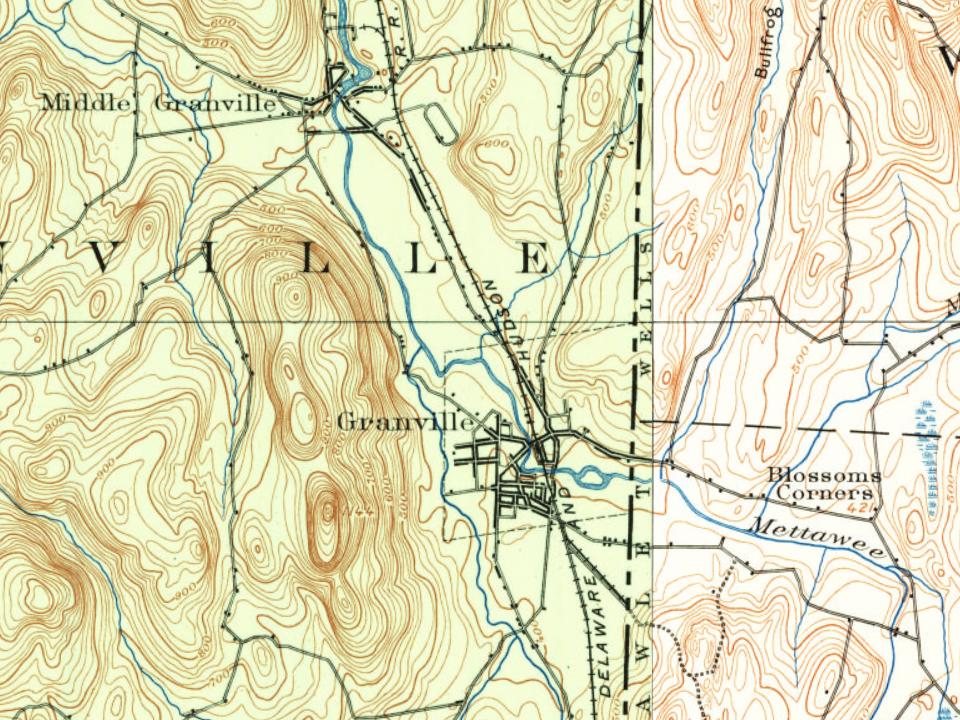





 1860
