On its age, its old homes and the National Register, Burlington is more historic than 81% of U.S. towns. Its share of homes from before 1940 holds the grade up; its National Register listings pull it down.
A−
HistoryA character grade: shown, never part of Burlington’s overall grade.
New York towns list more on the Register than most of the country (a typical New York town has 12.3 per 10,000 residents, the U.S. 2.4), so Burlington’s 9.5 sits near the middle of its state (45% of New York towns have fewer) while its 1 listings outnumber those of 51% of U.S. towns.
How sure. Graded on two of the three inputs, so a change in either one moves the letter more than it would with three. The pre-1940 share is a Census survey estimate (±8.2 points).
Founding year: our sources. Homes: Census ACS 2020–24. National Register: National Park Service, May 2026 list; each listing counted once (boundary changes and added documentation belong to their listing), and a historic district counts its contributing buildings. How TownRatings grades history →
What stands out about Burlington’s past
Read from the archive, the National Register and the record. The page puts what stands out first.
Early settlers came from New England. Township named after Burlington, New Jersey by William Cooper and Andrew Craig, early land patent owners. At an early time the Butternut Creek was dubbed "Burlington Creek" as well but the name did not stick.
Burlington was formed from the Town of Otsego, April 10, 1792. It retained its original dimensions until 1797, when Pittsfield (and what would come to be New Lisbon) was set off. It was further diminished in area by the creation of Edmeston, in 1808.
Passages that mention Burlington, cut from the printed page as they were published.
An historical narrative of the Ely, Revell and Stacye families who were among the founders of Trenton and Burlington in the province of West Jersey 1678-1683, with the genealogy of the Ely descendants in America1910Read the page →
Read the text
Revell first settled at Burlington, where he built a residence and later acquired "Boythorpe." He took an active interest in the affairs of the colony. He was a Freeholder and clerk of the town of Burlington in 1680, Recorder in 1696, one of the Collectors of the Province in 1700 and a member of the Council and Treasurer in 1701.
Text read by machine from the scan; it may contain errors.
An historical narrative of the Ely, Revell and Stacye families who were among the founders of Trenton and Burlington in the province of West Jersey 1678-1683, with the genealogy of the Ely descendants in America1910Read the page →
Read the text
All the New Jersey records seem to confirm Thomas Revell as the son of Edward of Chesterfield. The name of Whiston is not found in the American settlement, while one township near Burlington was named Chesterfield, another Mansfield, while Thomas Revell's estate near Burlington was named Boythorpe and the Plantation adjoining called Ogston. Boythorpe was no doubt named after the Boythorpe Estate near Ogston Hall in
Text read by machine from the scan; it may contain errors.
Scans and text from the Internet Archive. Books published in 1930 or earlier, which are in the public domain.
Timeline
Burlington, 1800 to 1935
Woven from the archive, old maps, post office records, the National Register and the people born here.
Burlington is more historic than 81% of U.S. towns. The History grade combines the town’s founding era, the share of homes built before 1940 and its National Register listings. It’s a character grade, so it isn’t part of the overall grade. How it works.
What is on the National Register in Burlington?
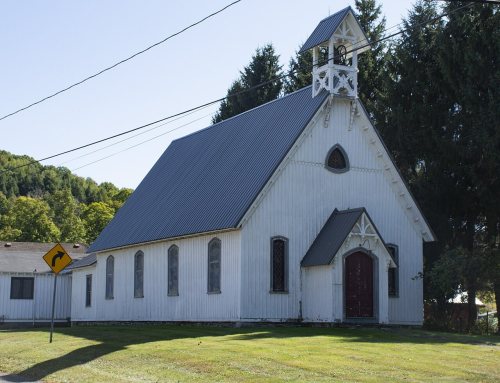
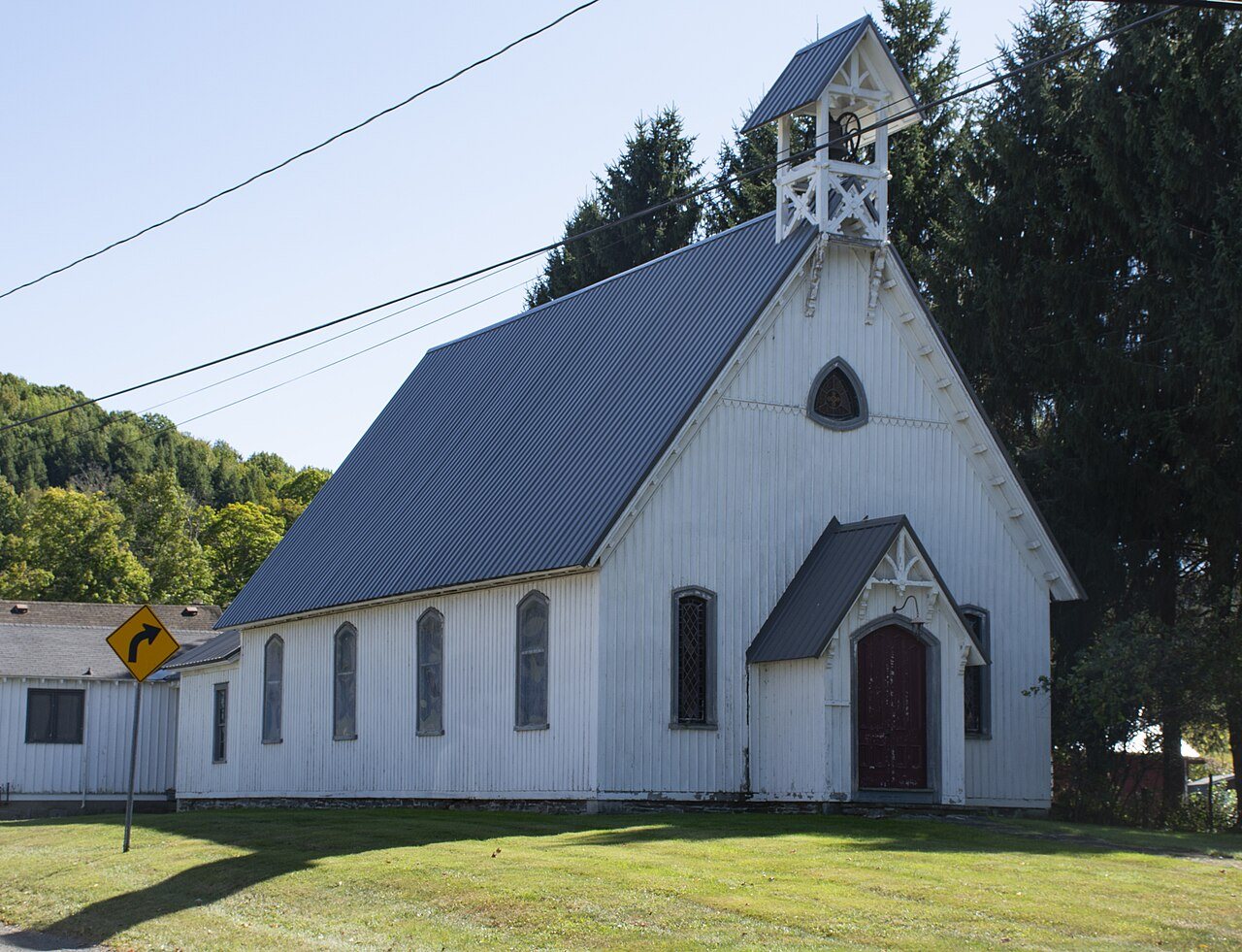
One place: the West Burlington Memorial Church (listed 2001).
How old are the homes in Burlington?
35% of Burlington’s homes were built before 1940 (Census estimate, ±8.2 points), against a typical 27% for a New York town; the median home was built in 1973.
Founding dates: Wikidata, Wikipedia, the U.S. post office records of Blevins & Helbock (CC0) and the Census. Homes by year built: Census ACS 2020–24. National Register of Historic Places: National Park Service (list of May 22, 2026). Old photos, postcards and papers: Wikimedia Commons, the Library of Congress and other public archives, credited on each item’s page. Maps: U.S. Geological Survey historical topographic maps (via Esri) and Sanborn fire-insurance maps (Library of Congress). History text and census tables: Wikipedia (CC BY-SA 4.0). Places that used to be: USGS Geographic Names Information System (2021).
From Wikimedia Commons (3), the National Register of Historic Places (1), Wikipedia, Wikidata and Wikipedia for famous people, U.S. Geological Survey historical maps, U.S. Census counts (via Wikipedia), the US Post Offices dataset (Blevins & Helbock), the USGS Geographic Names Information System and old county and town histories (Internet Archive). Archive images are copied here with their credits and licenses, shown on each photo’s page. Refreshed monthly.


 2020
 2010
 2010