Plainfield dates to 1684, and 36% of its homes were built before 1940
More historic than 98% of U.S. towns · #14 of 468 in New Jersey. What drives it
19 places in town are on the National Register, among them seven historic districts with 323 buildings between them. Below: 9 old photos and papers, maps from 1888 on, and the census since 1870.
Founding year: Wikipedia. First post office: 1800.The full story ↓
History grade
What drives Plainfield’s History grade
On its age, its old homes and the National Register, Plainfield is more historic than 98% of U.S. towns, #14 of 468 in New Jersey. All 2 inputs put Plainfield near the top nationally; its share of homes from before 1940 ranks highest.
A+
HistoryA character grade: shown, never part of Plainfield’s overall grade.
New Jersey towns list more on the Register than most of the country (a typical New Jersey town has 3.7 per 10,000 residents, the U.S. 2.4), so Plainfield’s 61.4 sits above most of its state (82% of New Jersey towns have fewer) while its 339 historic buildings outnumber those of 96% of U.S. towns.
NoteThe founding year comes from Wikipedia alone; no second source gives 1684.
How sure. Graded on two of the three inputs, so a change in either one moves the letter more than it would with three. The pre-1940 share (±2.3 points) is firm at this size.
Founding year: Wikipedia (other dates in Quick answers). Homes: Census ACS 2020–24. National Register: National Park Service, May 2026 list; each listing counted once (boundary changes and added documentation belong to their listing), and a historic district counts its contributing buildings. How TownRatings grades history →
What stands out about Plainfield’s past
Read from the archive, the National Register and the record. The page puts what stands out first.
Plainfield was settled in 1684 by Quakers, and incorporated as a city in 1869. Formerly a bedroom suburb in the New York metropolitan area, it has become the urban center of 10 closely allied municipalities, with diversified industries, including printing and the manufacture of chemicals, clothing, electronic equipment, and vehicular parts. Among the several 18th-century buildings remaining are a Friends' meetinghouse (1788), the Martine house (1717), and the Nathaniel Drake House (1746), known as George Washington's headquarters during the Battle of Short Hills in June 1777. Nearby Washington Rock is a prominent point of the Watchung Mountains and is reputed to be the vantage point from which Washington watched British troop movements.
Passages that mention Plainfield, cut from the printed page as they were published.
History of Plainfield and North Plainfield1901Read the page →
Read the text
of old landmarks. The circumstances of its early settlement, and its connection with the Revolutionary War, were such that not many old landmarks remain. One link which connected the settlements at Plainfield with Woodbridge and Perth Amboy was a Quaker meeting-house. The Quakers were prominent in the settlements of Shrewsbury, Perth Amboy and Woodbridge. The first Quaker meeting-house in New Jersey was built at Woodbridge about 1713. In
Text read by machine from the scan; it may contain errors.
History of Plainfield and North Plainfield1901Read the page →
Read the text
A meeting of the citizens of Plainfield township was held in Laing’s hall, April 20, 1869, for the purpose of forming a city government for Plainfield. The act of incorporation, entitled, “An Act to Incorporate the City of Plainfield,” _approved April 6, 1869, was read and accepted.
Text read by machine from the scan; it may contain errors.
History of Union County, New Jersey1897 · page 395Read the page →
Read the text
HE township of Plainfield was created, by an act of the legislature, March 4, 1847. The city was incorporated in 1869, and the borough of North Plainfield in 1885. The two contain about twenty square miles, and the population is seventeen thousand. The first settlement in this section was made by Robert Fullerton, in what is now South Plainfield, at or near the place now called New Brooklyn, or sometimes "Tow Town," on the borders of this township. In a letter written by Robert Fullerton to
Text read by machine from the scan; it may contain errors.
Scans and text from the Internet Archive. Books published in 1930 or earlier, which are in the public domain.
Timeline
Plainfield, 1684 to 1969
Woven from the archive, old maps, post office records, the National Register and the people born here.
Nothing in the archives for these yearsWeddings on Main Street, storms, parades, school pictures, the old store. If it’s in your family album, it belongs here.
In 1684, according to Wikipedia’s history of the town. Plainfield’s post office opened in 1800, and the census of 1870 counted 5,095 people here.
How does Plainfield rank for history?
Plainfield is more historic than 98% of U.S. towns, #14 of 468 in New Jersey. The History grade combines the town’s founding era, the share of homes built before 1940 and its National Register listings. It’s a character grade, so it isn’t part of the overall grade. How it works.
What is on the National Register in Plainfield?
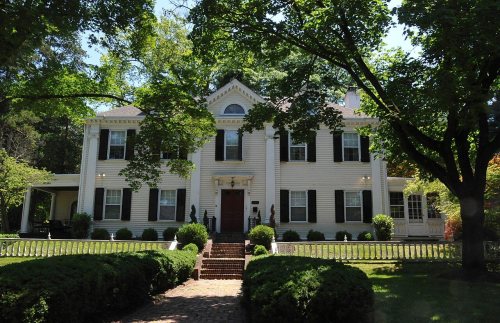
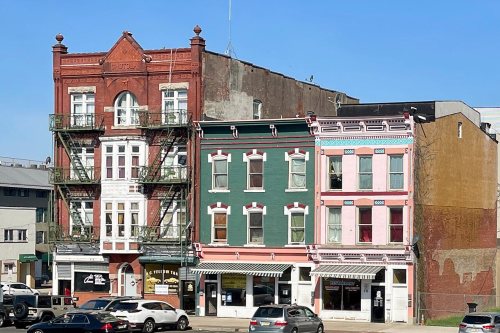
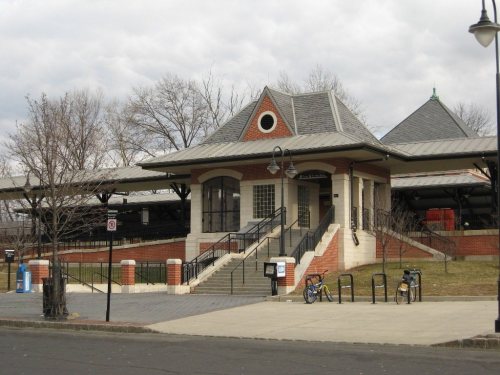
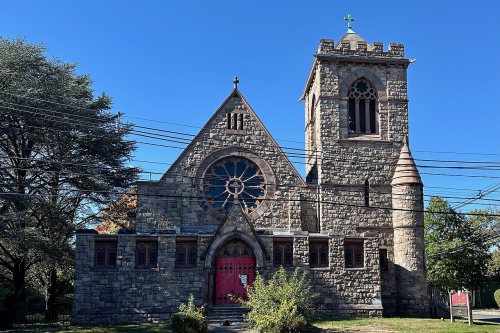
19 listings: 12 buildings, among them the Nathaniel Drake House (listed 1973, the first), and 7 historic districts with 323 contributing buildings. 339 historic buildings in all.
How old are the homes in Plainfield?
36% of Plainfield’s homes were built before 1940 (Census estimate, ±2.3 points), against a typical 15% for a New Jersey town; the median home was built in 1952.
Founding dates: Wikidata, Wikipedia, the U.S. post office records of Blevins & Helbock (CC0) and the Census. Homes by year built: Census ACS 2020–24. National Register of Historic Places: National Park Service (list of May 22, 2026). Old photos, postcards and papers: Wikimedia Commons, the Library of Congress and other public archives, credited on each item’s page. Maps: U.S. Geological Survey historical topographic maps (via Esri) and Sanborn fire-insurance maps (Library of Congress). History text and census tables: Wikipedia (CC BY-SA 4.0). Places that used to be: USGS Geographic Names Information System (2021).
From Wikimedia Commons (7), the Library of Congress (2), Wikidata (3), the National Register of Historic Places (19), Wikipedia, Wikidata and Wikipedia for famous people, U.S. Geological Survey historical maps, U.S. Census counts (via Wikipedia), the US Post Offices dataset (Blevins & Helbock), the USGS Geographic Names Information System and old county and town histories (Internet Archive). Archive images are copied here with their credits and licenses, shown on each photo’s page. Refreshed monthly.







 1906
 1906
 1906
 1912
 1918

