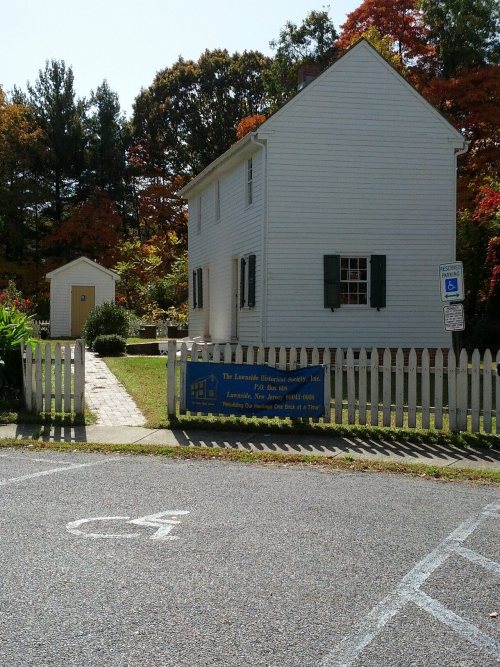
The Lawnside post office opened in 1907, the earliest record of the town by name. Another post office, Snow Hill (1893), opened inside today’s town and later closed.
First census: 1,379 in 19302020 census: 2,955119 years
How historic is Lawnside?
C+
More historic than 36% of U.S. towns, on its age, its old homes and the National Register.
Founding year: the first Lawnside post office (Blevins & Helbock, CC0).The full story ↓
History grade
What drives Lawnside’s History grade
On its age, its old homes and the National Register, Lawnside is more historic than 36% of U.S. towns, #375 of 468 in New Jersey. Its National Register listings hold the grade up; its age pulls it down.
C+
HistoryA character grade: shown, never part of Lawnside’s overall grade.
New Jersey towns list more on the Register than most of the country (a typical New Jersey town has 3.7 per 10,000 residents, the U.S. 2.4), so Lawnside’s 6.3 sits near the middle of its state (61% of New Jersey towns have fewer) while its 2 listings outnumber those of 60% of U.S. towns.
How sure. Graded on any two of the three inputs instead, the letter would range from C− to B. The pre-1940 share is a Census survey estimate (±5.8 points). The founding year is the first post office, not a stated founding date.
Founding year: the first post office (other dates in Quick answers). Homes: Census ACS 2020–24. National Register: National Park Service, May 2026 list; each listing counted once (boundary changes and added documentation belong to their listing), and a historic district counts its contributing buildings. How TownRatings grades history →
What stands out about Lawnside’s past
Read from the archive, the National Register and the record. The page puts what stands out first.
Lawnside has been home to African Americans since the late 18th century. Methodist gatherings were established by 1797, and in 1811, Bishop Richard Allen of Philadelphia founded the local African Methodist Episcopal Church (AME), which eventually became the Mount Pisgah AME Church today. AME churches were premised on abolition and civil rights, primarily serving former slaves and their descendants. Additionally, freedmen often sought safety and support by concentrating near Quaker allies, which in the case of Lawnside was the Haddonfield Quaker Society of Friends, with support from the Gloucester County Abolition Society and Vigilant Association of Philadelphia. In 1840, these latter abolitionists further advanced the settlement by purchasing land to convert into inexpensive lots for sale to African Americans. The original name of this community, Free Haven, was due to its crucial role …
the hands of receivers, and on September 20, 1883, was sold under foreclosure and reorganized with the word "Railway" in its title changed to "Railroad." It is now a part of the Reading route. The station here has been changed three times — Denton, Lawnton, Lawnside. UNITED STATES GOVERNMENT. Now, in concluding my story, before bringing to you the History of Lawnside, I wish to impress on you the necessity of knowing these documents of national importance. I shall not take space to write
Text read by machine from the scan; it may contain errors.
Scans and text from the Internet Archive. Books published in 1930 or earlier, which are in the public domain.
Timeline
Lawnside, 1891 to 1940
Woven from the archive, old maps, post office records, the National Register and the people born here.
Nothing in the archives for these yearsWeddings on Main Street, storms, parades, school pictures, the old store. If it’s in your family album, it belongs here.
The Lawnside post office opened in 1907, the earliest record of the town by name (U.S. post office records).
How does Lawnside rank for history?
Lawnside is more historic than 36% of U.S. towns, #375 of 468 in New Jersey. The History grade combines the town’s founding era, the share of homes built before 1940 and its National Register listings. It’s a character grade, so it isn’t part of the overall grade. How it works.
What is on the National Register in Lawnside?
Two places: the Peter Mott House (listed 1994) and the Lawnside School (2015).
How old are the homes in Lawnside?
12% of Lawnside’s homes were built before 1940 (Census estimate, ±5.8 points), against a typical 15% for a New Jersey town; the median home was built in 1965.
Founding dates: Wikidata, Wikipedia, the U.S. post office records of Blevins & Helbock (CC0) and the Census. Homes by year built: Census ACS 2020–24. National Register of Historic Places: National Park Service (list of May 22, 2026). Old photos, postcards and papers: Wikimedia Commons, the Library of Congress and other public archives, credited on each item’s page. Maps: U.S. Geological Survey historical topographic maps (via Esri) and Sanborn fire-insurance maps (Library of Congress). History text and census tables: Wikipedia (CC BY-SA 4.0). Places that used to be: USGS Geographic Names Information System (2021).
From Wikimedia Commons (6), the National Register of Historic Places (2), Wikipedia, Wikidata and Wikipedia for famous people, U.S. Geological Survey historical maps, U.S. Census counts (via Wikipedia), the US Post Offices dataset (Blevins & Helbock), the USGS Geographic Names Information System and old county and town histories (Internet Archive). Archive images are copied here with their credits and licenses, shown on each photo’s page. Refreshed monthly.


 c. 1940
 c. 1940
 2012
 2012
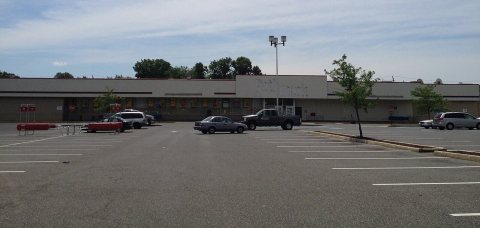 2012